
Free Safe Operating Procedure (Picnic Area Cleaning) Template
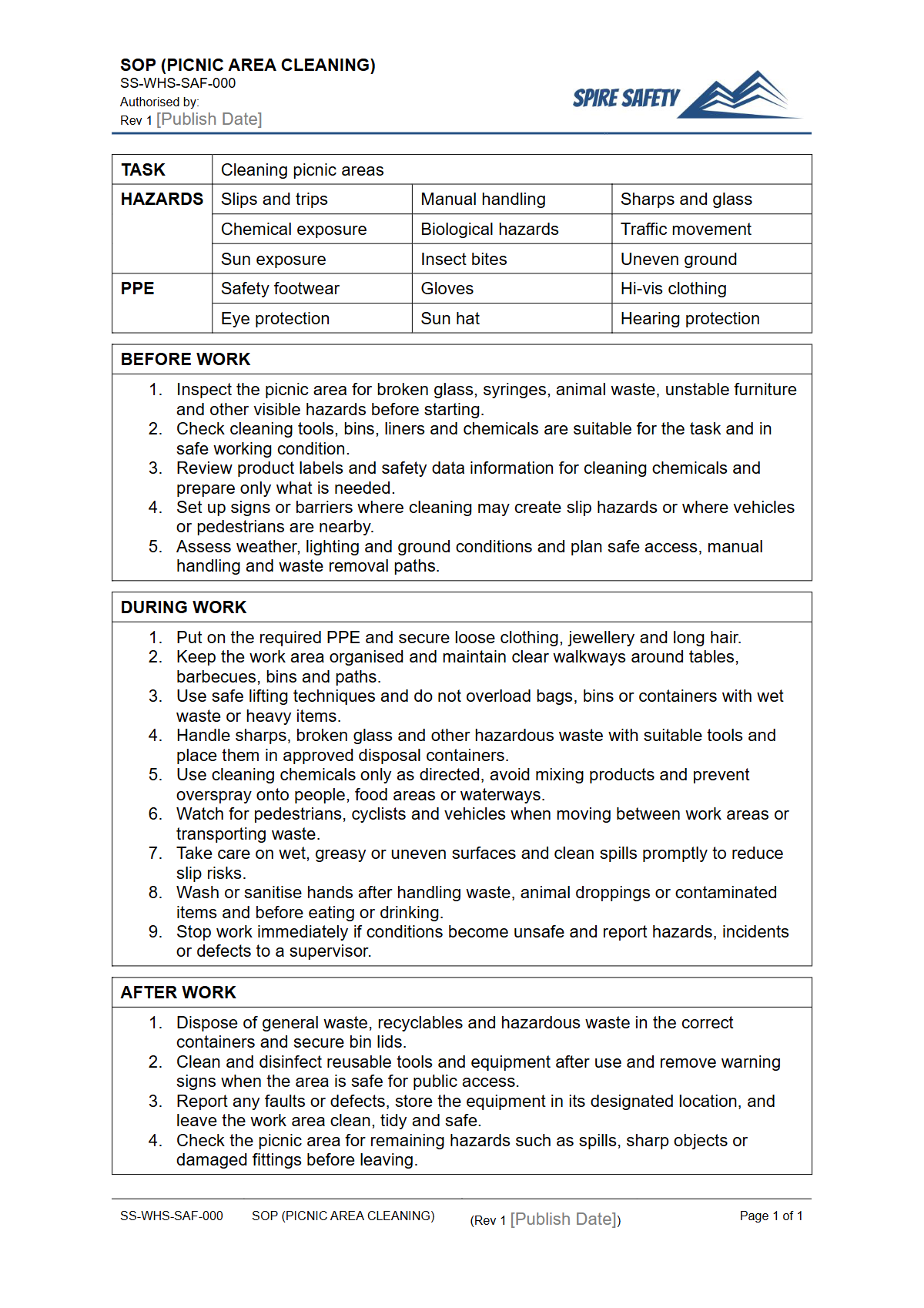
Our free Safe Operating Procedure (Picnic Area Cleaning) template helps formalise your cleaning processes and manage associated risks.
Free Safe Operating Procedure (Picnic Area Cleaning) Template
DOCX • 126 KB + PDF
Updated Oct 2026
No signup required
Purpose of the Free Safe Operating Procedure (Picnic Area Cleaning) Template
Maintaining clean and safe public picnic areas is essential for community wellbeing and worker safety. This task, however, comes with its own set of risks, including manual handling, exposure to hazardous substances, and biological hazards.
Our free Safe Operating Procedure (Picnic Area Cleaning) template provides a structured framework for documenting the safest way to perform these cleaning tasks. It helps organisations standardise procedures, train workers effectively, and systematically control identified hazards. Formalising these steps is a fundamental component of building and maintaining effective WHS management systems.
Video walkthrough
How to use the Free Safe Operating Procedure (Picnic Area Cleaning) Template
This template is designed as a comprehensive starting point. To implement it effectively, you should download the DOCX or PDF and adapt it to your specific operational context.
This involves consulting with the workers who perform the cleaning tasks to identify site-specific hazards, such as uneven terrain, local wildlife, or common types of waste. The procedure should detail pre-operational checks, the step-by-step cleaning process, required Personal Protective Equipment (PPE), and waste disposal protocols. A similar customisation process should be applied if the role involves other groundskeeping duties, such as using our safe operating procedure for spreaders.
Customisation is Essential
Please note: this document is a template and is not a complete safety solution on its own. It must be customised in consultation with your team to address the unique hazards, equipment, chemicals, and environmental conditions of your specific workplace.
We strongly advise that a thorough risk assessment is conducted and its findings are incorporated before you finalise and implement this Safe Operating Procedure.
When to use a Safe Operating Procedure
A Safe Operating Procedure (SOP) for picnic area cleaning should be a core part of your daily operations. It should be used as the primary training document for new staff and for regular refresher training for existing employees.
Workers should be encouraged to review the SOP before commencing work, especially if the task is performed infrequently. Furthermore, the SOP is a critical reference document during incident investigations and should be reviewed as part of any regular WHS compliance auditing to ensure it remains current and effective.
Who should use this procedure
This SOP is intended for all personnel involved in the cleaning and maintenance of outdoor picnic facilities. This includes council and park groundskeepers, cleaning contractors, and staff at hospitality venues or tourist parks.
Supervisors and managers will also use the document to guide their training, supervision, and risk management responsibilities. For organisations facing complex hazards or needing help to integrate SOPs into their safety framework, engaging specialist WHS consulting services can provide valuable guidance and support.
For other related tasks in a hospitality setting, you may find resources like our deep fryer SOP template useful. By clearly defining safe work methods, this SOP helps protect workers and demonstrates a commitment to workplace health and safety.
Common mistakes
Common mistakes to avoid
- Using the template without customising it for specific site hazards and equipment.
- Failing to adequately train workers on the finalised procedure and confirm their understanding.
- Not providing or maintaining the correct Personal Protective Equipment (PPE) listed in the SOP.
- Neglecting to review and update the SOP after an incident or change in work practice.
Legal references
Legal considerations
The following legal requirements may be relevant to this type of work.
- Work Health and Safety Act (Harmonised) — Provides the primary duties for protecting workers and other people from work health and safety risks.
- Work Health and Safety Regulations (Harmonised) — Sets out requirements supporting the management of workplace hazards and risks.
The following codes may be relevant to this type of work.
- Managing WHS Risks Code of Practice — Provides practical guidance on identifying hazards, assessing risks and applying effective controls.
- Work Health and Safety Consultation, Cooperation and Coordination Code of Practice — Provides practical guidance on consulting workers and coordinating with other duty holders.
- Managing the Work Environment and Facilities Code of Practice — Provides practical guidance on safe work environments, workplace facilities and related controls.
Did you know
Slips and Trips
Slips, trips, and falls are a leading cause of workplace injury in Australia, and outdoor environments with unpredictable surfaces can significantly increase this risk for maintenance and cleaning staff.
Manual Handling Risks
Lifting and emptying heavy rubbish bins is a primary source of musculoskeletal injuries for cleaners and groundskeepers. Correct manual handling techniques documented in an SOP are crucial for prevention.
FAQ
Frequently asked questions
01What hazards are involved in picnic area cleaning?
02Is a Safe Operating Procedure legally required for cleaning tasks?
03How often should a picnic area cleaning SOP be reviewed?
04Can this SOP template be used for indoor cleaning as well?
Share this resource
Free Safe Operating Procedure (Picnic Area Cleaning) Template
Browse Categories
How To Use It
- 1Download and open in Word or PDF.
- 2Replace the placeholders with your business details.
- 3Get it reviewed by a WHS specialist before rollout.
Need it customised?
Our WHS consultants can adapt this template to your site, run a gap analysis, or audit what you already have in place.
Book a Free Consultation WHS consulting servicesor call 1300 156 382
Related templates
- Free Safe Operating Procedure (Picnic Table Cleaning) Template
- Free Safe Operating Procedure (Pie Warmer) Template
- Free Safe Operating Procedure (Piezometer) Template
- Free Safe Operating Procedure (Pile Cropper) Template
- Free Safe Operating Procedure (Piling Hammer) Template
- Free Safe Operating Procedure (Pipe Bender) Template