
Free Safe Operating Procedure (Pie Warmer) Template
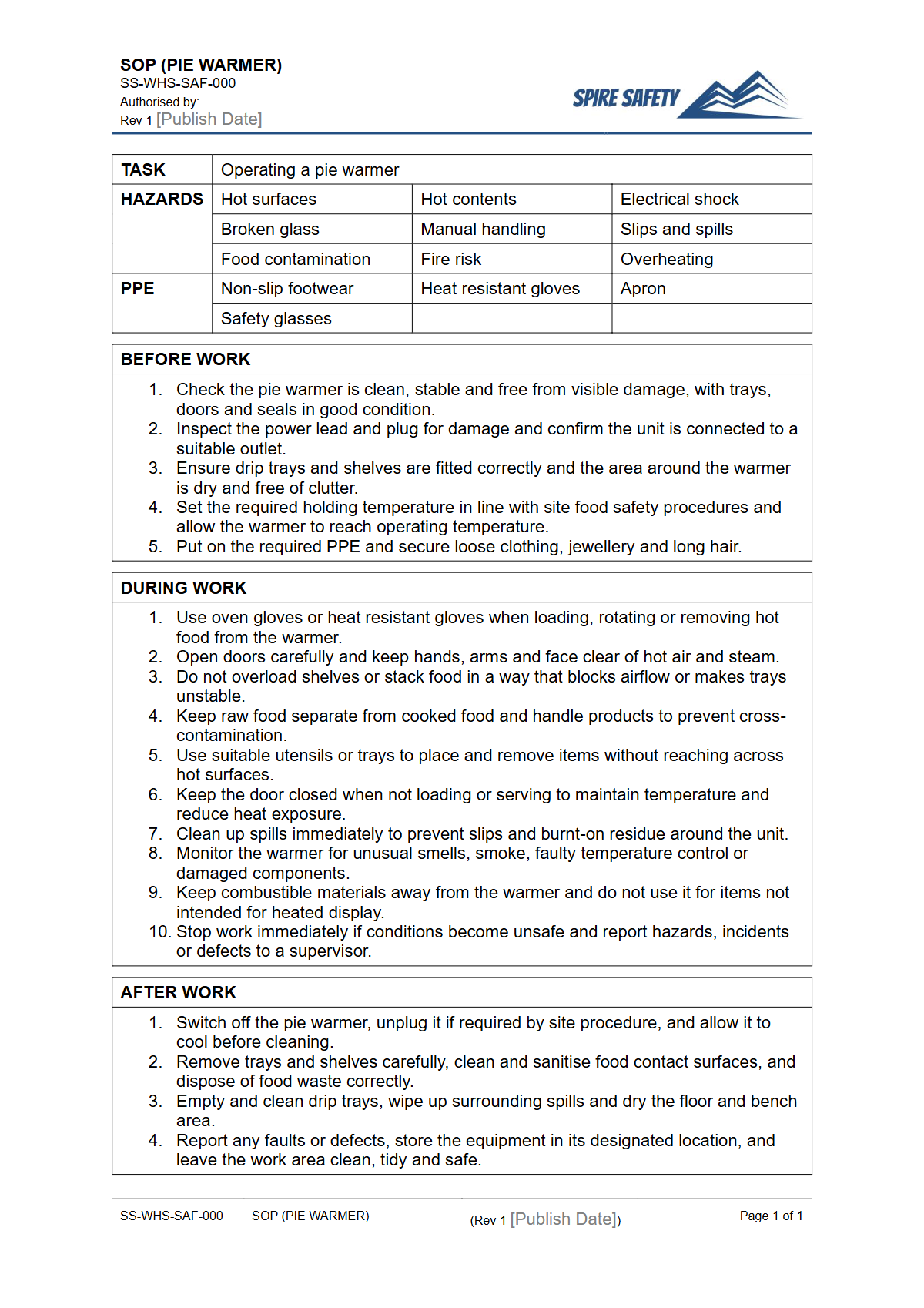
Download our free Safe Operating Procedure (Pie Warmer) template to manage risks associated with heated food displays. Customise this structured DOCX or PDF.
Free Safe Operating Procedure (Pie Warmer) Template
DOCX • 126 KB + PDF
Updated Oct 2026
No signup required
Purpose of the Free Safe Operating Procedure (Pie Warmer) Template
Managing workplace safety, even for seemingly simple equipment like a pie warmer, is a critical responsibility for any Australian business. Our Free Safe Operating Procedure (Pie Warmer) Template provides a structured starting point for documenting the required safety steps.
This resource helps you control hazards like burns, electrical faults, and food contamination, ensuring your team can operate equipment safely and effectively. This Safe Operating Procedure (SOP) template is designed to help you create a detailed guide for the safe use of a commercial pie warmer.
Its primary purpose is to minimise the risk of injury and illness by outlining clear, step-by-step instructions for pre-operational checks, operation, cleaning, and maintenance. By implementing a formal procedure, you establish a consistent standard of safety, meet training obligations, and demonstrate due diligence in managing workplace hazards.
Video walkthrough
Key Hazards Addressed by the Pie Warmer Safe Operating Procedure
Commercial pie warmers introduce several specific risks that must be managed through a robust Safe Operating Procedure. This template prompts you to consider and document controls for:
- Thermal Hazards: Hot surfaces, doors, and internal components, as well as steam, can cause serious burns. The SOP outlines controls like using appropriate Personal Protective Equipment (PPE) and maintaining safe clearance zones around the unit.
- Electrical Hazards: As a mains-powered appliance, a pie warmer poses a risk of electric shock, particularly in a kitchen environment where moisture is present. Proper inspection of cords, plugs, and electrical components is essential, similar to the safety checks outlined in our free Air Compressor SOP for other electrical equipment.
- Food Safety Hazards: Incorrect temperature control can lead to the rapid growth of bacteria and cause foodborne illness. The procedure reinforces the need to maintain internal food temperatures above 60°C, keeping it out of the temperature 'danger zone' (5°C to 60°C).
- Manual Handling: Lifting and moving the unit for deep cleaning or relocation can pose ergonomic risks if not performed correctly. The SOP should include instructions on safe lifting techniques or team lifting requirements.
How to use the Free Safe Operating Procedure (Pie Warmer) Template
Download the template in your preferred format (DOCX for easy editing or PDF) and begin customising it for your workplace. It is crucial to adapt this document to your specific needs.
We have provided a comprehensive framework, but you must make it your own. Walk through the procedure on-site with the actual pie warmer model you use. Involve the workers who operate the equipment in the review process to ensure the steps are practical and reflect your operational reality.
A well-customised SOP is a foundational element of effective WHS management systems that protect your people and your business.
When to use it
An SOP for a pie warmer should be a living document, used consistently in your daily operations. It is particularly important during:
- New Worker Induction: Use it as a training and assessment tool for all new employees before they are authorised to use the equipment.
- Refresher Training: Conduct regular refresher training to reinforce safe work practices and address any complacency.
- Introducing New Equipment: Adapt the SOP for any new models of heated food displays you introduce into the workplace.
- Following an Incident: Review and update the procedure after any near misses or incidents involving the equipment to prevent recurrence.
Just as you would have a specific SOP for a deep fryer, having a dedicated procedure for each piece of high-risk kitchen equipment is best practice.
Who should use it
Safety is a shared responsibility, and different roles within an organisation interact with the SOP in different ways:
- PCBU / Business Owner: Is ultimately responsible for ensuring that a safe system of work, like this SOP, is developed, implemented, and regularly reviewed.
- Managers and Supervisors: Are responsible for training workers on the SOP, ensuring it is followed correctly during every shift, and conducting spot checks or observations.
- Workers: Are responsible for understanding and following the SOP every time they operate the equipment, and for reporting any faults or hazards immediately.
- Health and Safety Representatives (HSRs): Should be consulted during the development and review of the SOP, providing valuable input from the workgroup.
If your organisation needs help defining roles and responsibilities or tailoring documents for your specific risks, our WHS consulting support can provide expert guidance.
Review and Improvement
To remain effective, your pie warmer SOP must be reviewed regularly. Best practice is to schedule a review at least annually, or sooner if there is a change in the workplace, equipment, or relevant legislation.
A scheduled review process, which can be integrated into a broader WHS compliance auditing program, ensures your safety documents do not become outdated and continue to effectively manage risk. This SOP is just one of many tools available in our free WHS resources library to help you build a safer workplace.
Common mistakes
Common mistakes to avoid
- Using the downloaded template 'as-is' without customising it for the specific workplace and equipment model.
- Neglecting to include a detailed cleaning and maintenance schedule in the procedure.
- Failing to adequately train new, casual, or temporary staff on the specific SOP before they use the equipment.
- Setting the thermostat based on the dial display instead of periodically checking the internal food temperature with a calibrated thermometer.
Legal references
Legal considerations
The following legal requirements may be relevant to this type of work.
- Work Health and Safety Act (Harmonised) — Provides the primary duties for protecting workers and other people from work health and safety risks.
- Work Health and Safety Regulations (Harmonised) — Sets out requirements supporting the management of workplace hazards and risks.
The following codes may be relevant to this type of work.
- Managing WHS Risks Code of Practice — Provides practical guidance on identifying hazards, assessing risks and applying effective controls.
- Work Health and Safety Consultation, Cooperation and Coordination Code of Practice — Provides practical guidance on consulting workers and coordinating with other duty holders.
- Managing the Work Environment and Facilities Code of Practice — Provides practical guidance on safe work environments, workplace facilities and related controls.
Did you know
The Temperature Danger Zone
The temperature range between 5°C and 60°C is known as the 'danger zone' because it's where food poisoning bacteria grow most rapidly. Australian food safety standards require hot food to be kept at 60°C or hotter.
FAQ
Frequently asked questions
01What are the main hazards of a commercial pie warmer?
02How often should a pie warmer Safe Operating Procedure be reviewed?
03Is specific training required to use a commercial pie warmer?
04Can I use this template for other heated food displays like a bain-marie?
Share this resource
Free Safe Operating Procedure (Pie Warmer) Template
Browse Categories
How To Use It
- 1Download and open in Word or PDF.
- 2Replace the placeholders with your business details.
- 3Get it reviewed by a WHS specialist before rollout.
Need it customised?
Our WHS consultants can adapt this template to your site, run a gap analysis, or audit what you already have in place.
Book a Free Consultation WHS consulting servicesor call 1300 156 382
Related templates
- Free Safe Operating Procedure (Piezometer) Template
- Free Safe Operating Procedure (Pile Cropper) Template
- Free Safe Operating Procedure (Piling Hammer) Template
- Free Safe Operating Procedure (Pipe Bender) Template
- Free Safe Operating Procedure (Pipe Beveler) Template
- Free Safe Operating Procedure (Pipe Camera) Template