
Free Safe Operating Procedure (Pipe Vice) Template
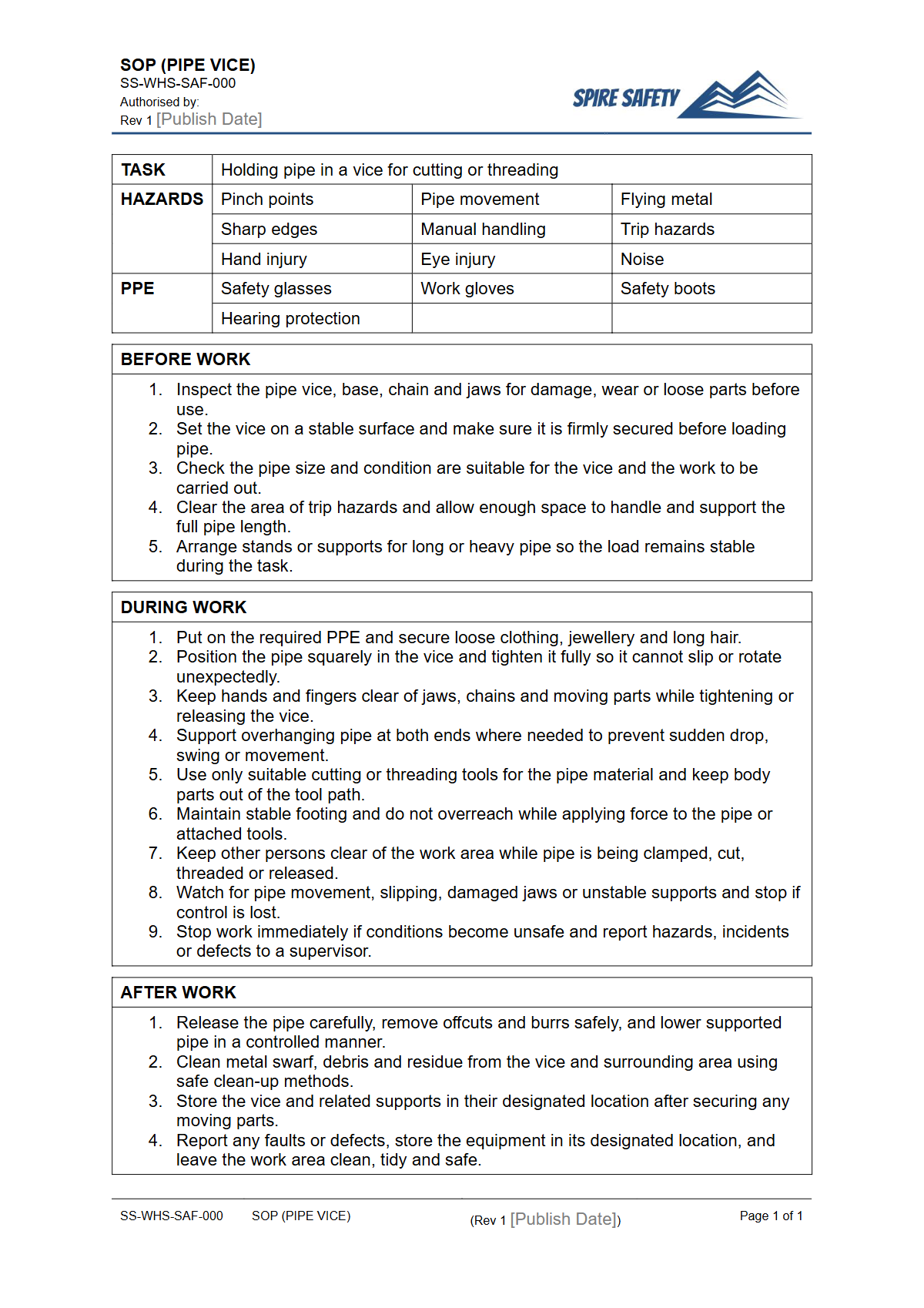
Establish clear, safe work instructions for using a pipe vice with our structured template. Download this free Safe Operating Procedure to get started.
Free Safe Operating Procedure (Pipe Vice) Template
DOCX • 126 KB + PDF
Updated Oct 2026
No signup required
Purpose of the Free Safe Operating Procedure (Pipe Vice) Template
A Safe Operating Procedure (SOP) is a fundamental tool for ensuring tasks are performed consistently and safely. Our Free Safe Operating Procedure (Pipe Vice) Template provides a structured framework for documenting the correct methods for using a manual or powered pipe vice.
Using this template helps your organisation to manage risks associated with pipe handling and securing tasks, such as crushing injuries, ergonomic strains, and unexpected release of materials. It serves as a critical training document and a clear reference point for workers, formalising your commitment to a safe work environment.
This SOP is designed to be integrated into your broader safety framework. A well-documented procedure is a key component of effective WHS management systems, helping to demonstrate due diligence and promote a positive safety culture.
It outlines hazards, controls, and the step-by-step process required for safe operation, ensuring all workers follow a standardised, approved method.
Video walkthrough
How to use the Free Safe Operating Procedure (Pipe Vice) Template
Using this template is straightforward. First, download the file in your preferred format—DOCX for easy editing or PDF for viewing.
Then, you must systematically work through each section to adapt the content to your specific operational context. This involves identifying the specific makes and models of pipe vices used on-site, detailing the types of pipes or materials being handled, and referencing any site-specific rules or permits to work.
Important: This document is a template, not a finished procedure. To be effective and useful, we require you to customise it to reflect the unique hazards and control measures of your workplace.
Consult with workers who operate the equipment, as their direct experience is invaluable for creating a practical and effective SOP. Once finalised, use the SOP as a basis for training and competency assessments.
Similar to documenting procedures for other workshop equipment, the goal is to capture all critical safety steps. For example, the process is similar to creating a Safe Operating Procedure for an air compressor, where machine-specific checks and operational steps are paramount.
When to use a Safe Operating Procedure
A Safe Operating Procedure for a pipe vice should be a live document, used actively throughout your safety processes. It is essential during the induction and training of new employees or apprentices to establish a baseline of safe behaviour from day one.
It should also be used for regular refresher training to prevent complacency and reinforce correct procedures for existing staff.
Furthermore, the SOP is a critical reference tool following any plant or process changes, such as the introduction of a new type of pipe vice. It should be reviewed and updated after any incident or near-miss to incorporate lessons learned.
Regular reviews as part of your WHS compliance auditing schedule ensure the procedure remains current and effective.
Who should use this Safe Operating Procedure
This template is intended for a range of personnel within an organisation. WHS managers and supervisors will find it an essential starting point for drafting and implementing formal procedures.
They are typically responsible for ensuring the SOP is customised correctly and that workers are trained in its contents. Workers who use pipe vices are the primary end-users of the finalised procedure, relying on it for guidance on safe work practices.
Training coordinators can use the finalised SOP to build consistent training modules and competency assessments. Ultimately, the Person Conducting a Business or Undertaking (PCBU) holds the responsibility for providing safe systems of work, and a robust SOP is a key part of fulfilling that duty.
If your organisation needs support in defining these roles and embedding them in your safety system, our WHS consulting services can provide expert guidance.
Integrating the SOP into Your Safety System
An SOP does not exist in isolation. For maximum effectiveness, it must be part of a comprehensive safety system that includes initial risk assessments, worker consultation, and ongoing monitoring.
Before finalising this SOP, ensure you have conducted a thorough risk assessment for the task of using a pipe vice to identify all potential hazards. This process is similar to the safety planning required for other handheld or bench-mounted tools, as outlined in our free Circular Saw SOP template.
Once the procedure is implemented, establish a schedule for regular reviews and a system for version control. Ensure all workers are notified of updates and retrained if necessary.
Keeping documents organised and accessible, whether in a physical location or a digital system, is crucial. This pipe vice SOP is one of many documents available in our free WHS resources library that can help you build out your safety documentation.
Common mistakes
Common mistakes to avoid
- Using a 'cheater bar' or extension on the vice handle to apply extra torque, which can damage the vice or cause catastrophic failure.
- Failing to inspect the vice for cracks, wear, or damage before use, especially in the jaws and screw mechanism.
- Not securing the pipe correctly in the centre of the jaws, leading to slippage or unexpected movement during work.
- Using a pipe vice as an anvil for hammering, which it is not designed for and can lead to fractures in the casting.
Legal references
Legal considerations
The following legal requirements may be relevant to this type of work.
- Work Health and Safety Act (Harmonised) — Provides the primary duties for protecting workers and other people from work health and safety risks.
- Work Health and Safety Regulations (Harmonised) — Sets out requirements supporting the management of workplace hazards and risks.
The following codes may be relevant to this type of work.
- Managing WHS Risks Code of Practice — Provides practical guidance on identifying hazards, assessing risks and applying effective controls.
- Work Health and Safety Consultation, Cooperation and Coordination Code of Practice — Provides practical guidance on consulting workers and coordinating with other duty holders.
- Managing the Work Environment and Facilities Code of Practice — Provides practical guidance on safe work environments, workplace facilities and related controls.
Did you know
Ergonomic Risk
Musculoskeletal disorders from forceful or repetitive tasks are a leading cause of workplace injury. A well-designed SOP for a pipe vice helps mitigate ergonomic risks by standardising body positioning and task execution.
Bench Vices vs. Pipe Vices
While they look similar, pipe vices are specifically designed with V-shaped jaws to securely grip round stock like pipes, whereas bench vices have flat jaws. Using the wrong vice can lead to insecure clamping and accidents.
FAQ
Frequently asked questions
01Is a Safe Operating Procedure a legal requirement for a pipe vice?
02How often should we review our pipe vice SOP?
03What's the difference between an SOP and a SWMS?
04What PPE should be listed in a pipe vice SOP?
Share this resource
Free Safe Operating Procedure (Pipe Vice) Template
Browse Categories
How To Use It
- 1Download and open in Word or PDF.
- 2Replace the placeholders with your business details.
- 3Get it reviewed by a WHS specialist before rollout.
Need it customised?
Our WHS consultants can adapt this template to your site, run a gap analysis, or audit what you already have in place.
Book a Free Consultation WHS consulting servicesor call 1300 156 382
Related templates
- Free Safe Operating Procedure (Pipette Use) Template
- Free Safe Operating Procedure (Pizza Cutter) Template
- Free Safe Operating Procedure (Pizza Paddle Use) Template
- Free Safe Operating Procedure (Plant Division) Template
- Free Safe Operating Procedure (Plant Hardening) Template
- Free Safe Operating Procedure (Plant Labelling) Template