
Free Safe Operating Procedure (Pizza Paddle Use) Template
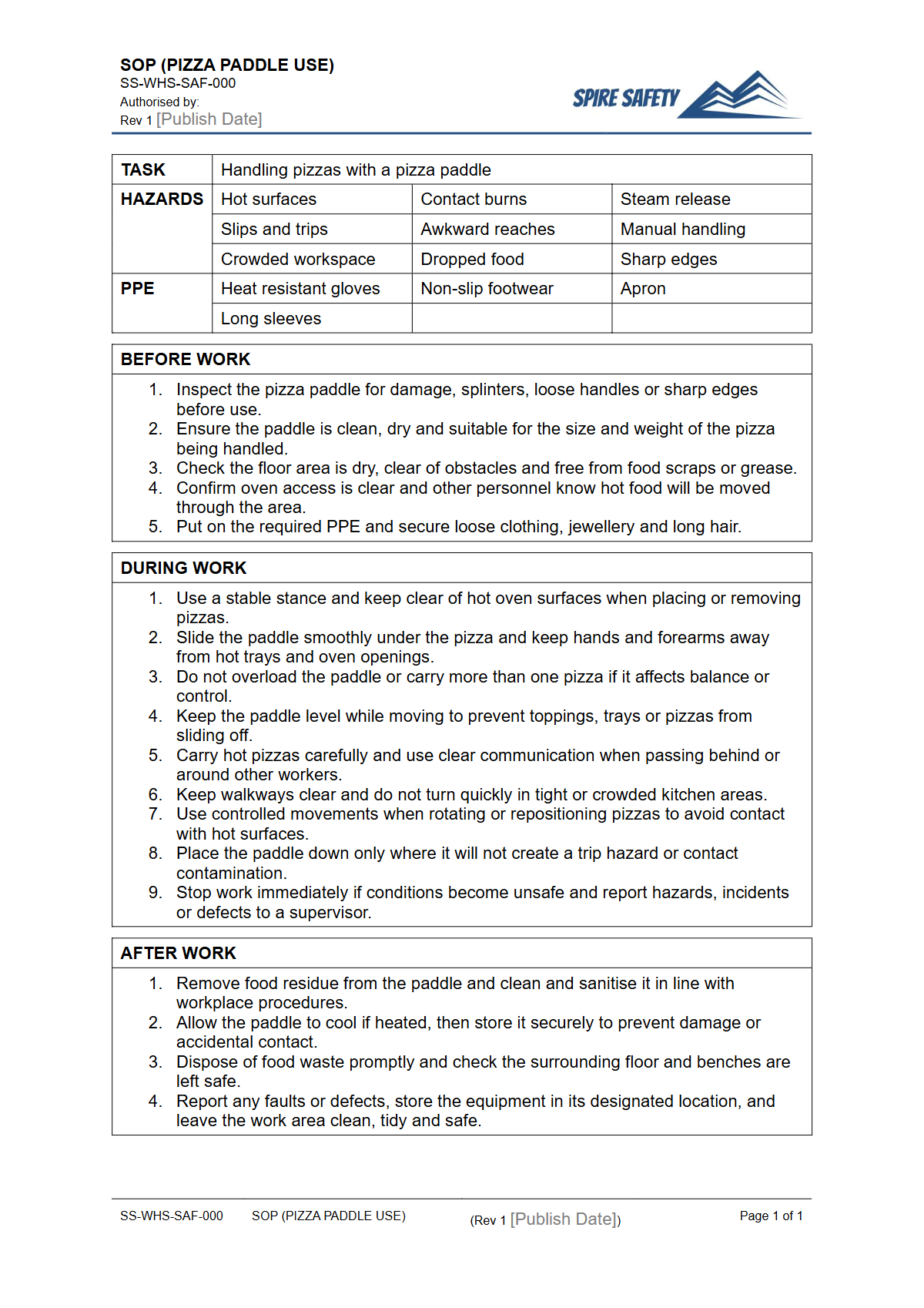
Download our free Safe Operating Procedure (Pizza Paddle Use) template. A structured starting point for hospitality WHS, available in DOCX and PDF.
Free Safe Operating Procedure (Pizza Paddle Use) Template
DOCX • 126 KB + PDF
Updated Oct 2026
No signup required
Purpose of the Free Safe Operating Procedure (Pizza Paddle Use) Template
Even simple tools can pose significant risks in a busy commercial kitchen. This free Safe Operating Procedure (Pizza Paddle Use) template provides a structured framework for outlining the health and safety requirements for handling pizzas in and out of high-temperature ovens.
Using a pizza paddle, or 'peel', involves direct exposure to extreme heat, presenting a primary hazard of serious burns. This document helps your organisation detail the specific steps workers must follow to minimise contact with hot surfaces and manage the risks associated with live heat sources.
While it might seem straightforward, the repetitive motion of sliding pizzas can also lead to musculoskeletal strain if not performed with correct ergonomic technique. An effective SOP formalises best practices for posture and movement, helping to prevent long-term injuries.
Unlike complex machinery that might require a detailed FREE Telehandler SOP (Safe Operating Procedure) Template, the risks of a pizza paddle are often underestimated. This SOP ensures these fundamental risks are formally identified, assessed, and controlled, forming a key part of your workplace's commitment to safety.
Key Hazards and Controls
A thorough SOP should address several key areas:
- Thermal Burns: Contact with the pizza oven, hot trays, or the paddle itself after use. Controls include wearing appropriate personal protective equipment (PPE) like heat-resistant gloves.
- Musculoskeletal Injuries: Strain on the back, shoulders, and wrists from repetitive launching and retrieving motions. Controls involve training on proper body mechanics and posture.
- Slips, Trips, and Falls: Spilled flour, semolina, or ingredients on the floor can create a slippery surface. Controls include maintaining clear and clean floor surfaces and mandating non-slip footwear.
- Hygiene: Improper cleaning and storage can lead to cross-contamination. Controls involve outlining specific cleaning procedures and designated storage locations. For guidance on managing a wider range of workplace hazards, our WHS consulting services can provide expert support.
Video walkthrough
How to Use the Free Safe Operating Procedure (Pizza Paddle Use) Template
Our Safe Operating Procedure (Pizza Paddle Use) template is designed to be a user-friendly starting point. Available in both DOCX and PDF formats, it allows you to quickly establish a baseline for your kitchen's safety protocols.
The DOCX file is fully editable, enabling you to add or remove sections to perfectly align with your specific ovens, paddles, kitchen layout, and existing procedures. Integrating this SOP into your broader safety framework is crucial for its effectiveness.
Important: This document is a template only. To be effective, you must customise it with specific details relevant to your workplace, equipment, and processes.
We recommend a consultation process involving the workers who actually perform the task. This ensures the final SOP is practical, relevant, and reflects the on-the-ground realities of their work.
A well-developed SOP is a critical component of comprehensive WHS management systems, demonstrating a proactive approach to risk management.
When to Use This Safe Operating Procedure
A pizza paddle SOP should be a core training document for any worker tasked with operating a pizza oven. It is essential during the induction and training of new kitchen staff to establish safe behaviour from day one.
It should also be readily accessible in the work area as a constant reference for all workers. The SOP serves as a checklist for supervisors to monitor safe work practices and as a guide for refresher training sessions.
It's also a valuable tool during incident investigations, helping to identify any deviations from established safe procedures. Regular reviews of your SOPs, as part of a broader WHS compliance auditing program, ensure they remain current and effective.
Who Should Use This Safe Operating Procedure
This SOP is intended for a range of personnel within a hospitality or food service environment:
- Pizza Chefs and Kitchen Hands: The primary users who perform the task daily. The SOP provides them with clear, step-by-step instructions to ensure their safety.
- Supervisors and Kitchen Managers: Responsible for training staff and enforcing safety standards. They use the SOP as a benchmark for performance and compliance.
- Business Owners (PCBUs): As Persons Conducting a Business or Undertaking, owners can use this document to help fulfil their duty of care to provide a safe system of work.
By implementing SOPs for all relevant tasks, including those that seem simple like using a step ladder to access high storage, you create a more robust safety culture. You can find other useful templates, like our FREE Step Ladder SOP Template, in our extensive library. This document is just one of many resources designed to help build a safer workplace, which you can explore in our free WHS resources library.
Common mistakes
Common mistakes to avoid
- Forgetting to dust the paddle with flour or semolina, causing the pizza base to stick and tear.
- Using an awkward posture or over-reaching, leading to back and shoulder strain.
- Leaving the paddle inside the hot oven for too long, which can damage wooden paddles or create a burn hazard.
- Storing the paddle on the floor or in an unhygienic area, leading to contamination risks.
Legal references
Legal considerations
The following legal requirements may be relevant to this type of work.
- Work Health and Safety Act (Harmonised) — Provides the primary duties for protecting workers and other people from work health and safety risks.
- Work Health and Safety Regulations (Harmonised) — Sets out requirements supporting the management of workplace hazards and risks.
The following codes may be relevant to this type of work.
- Managing WHS Risks Code of Practice — Provides practical guidance on identifying hazards, assessing risks and applying effective controls.
- Work Health and Safety Consultation, Cooperation and Coordination Code of Practice — Provides practical guidance on consulting workers and coordinating with other duty holders.
- Managing the Work Environment and Facilities Code of Practice — Provides practical guidance on safe work environments, workplace facilities and related controls.
Did you know
Material Matters
Traditional wooden pizza paddles are porous and help absorb moisture, preventing fresh dough from sticking. Metal paddles are often preferred for their durability and for turning and retrieving cooked pizzas.
The Longest Peel
The world's longest pizza peel (paddle) measured over 13 metres. It was created in Italy to manoeuvre a record-breaking pizza that was nearly 2 kilometres long.
FAQ
Frequently asked questions
01What are the main hazards of using a pizza paddle?
02Is a Safe Operating Procedure legally required for a pizza paddle in Australia?
03How often should I review my pizza paddle SOP?
04Can I use this template for other kitchen equipment like a dough mixer?
Share this resource
Free Safe Operating Procedure (Pizza Paddle Use) Template
Browse Categories
How To Use It
- 1Download and open in Word or PDF.
- 2Replace the placeholders with your business details.
- 3Get it reviewed by a WHS specialist before rollout.
Need it customised?
Our WHS consultants can adapt this template to your site, run a gap analysis, or audit what you already have in place.
Book a Free Consultation WHS consulting servicesor call 1300 156 382
Related templates
- Free Safe Operating Procedure (Plant Division) Template
- Free Safe Operating Procedure (Plant Hardening) Template
- Free Safe Operating Procedure (Plant Labelling) Template
- Free Safe Operating Procedure (Plant Propagation) Template
- Free Safe Operating Procedure (Plant Repotting) Template
- Free Safe Operating Procedure (Plant Room Cleaning) Template