
Free Safe Operating Procedure (Playing Surface Check) Template
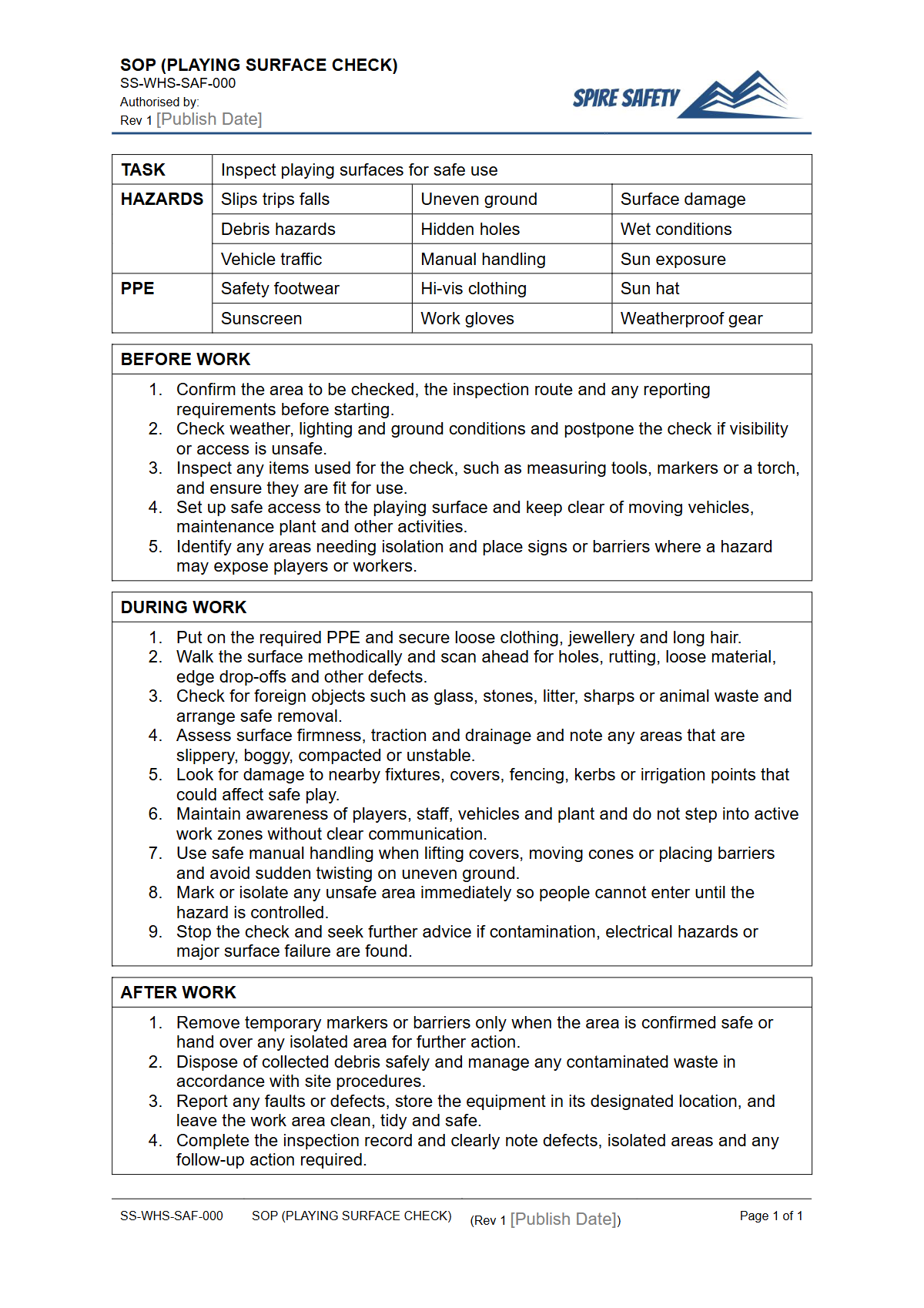
Download our free Safe Operating Procedure (Playing Surface Check) Template to formalise your pre-use inspections. Get your customisable DOCX and PDF now.
Free Safe Operating Procedure (Playing Surface Check) Template
DOCX • 126 KB + PDF
Updated Oct 2026
No signup required
Purpose of the Free Safe Operating Procedure (Playing Surface Check) Template
This free Safe Operating Procedure (Playing Surface Check) Template provides a structured framework for organisations managing sports grounds, school ovals, or any recreational area. It helps formalise the process of inspecting playing surfaces for hazards before use, ensuring a safer environment for athletes, students, and the public.
Implementing a documented SOP demonstrates a proactive approach to safety, helping to prevent common injuries like sprains, fractures, and abrasions caused by unsafe ground conditions.
A documented procedure is a key component of an effective safety framework, demonstrating due diligence in hazard identification and risk control. Integrating this SOP is a practical step toward building a robust WHS management system that protects both users and the organisation.
What is a Safe Operating Procedure for a playing surface check?
A Safe Operating Procedure (SOP) for a playing surface check is a formal document that outlines the step-by-step process for inspecting a field, court, or track before it is used for sport or recreation. It details the potential hazards to look for, the sequence of the inspection, the equipment needed, and the actions to take if a hazard is identified.
The goal is to ensure the surface is fit for purpose and to minimise the risk of injury to participants.
Video walkthrough
How to use the Free Safe Operating Procedure (Playing Surface Check) Template
This template is designed as a comprehensive starting point. To make it effective, you must adapt it to your specific operational context.
Download the DOCX file and add details relevant to your facility, including the types of surfaces (e.g., natural turf, synthetic grass, acrylic hard court), common hazards (e.g., sprinkler heads, uneven patches, debris), and emergency procedures. We strongly recommend consulting with groundskeepers, coaches, and other workers who will be using the procedure during this customisation process.
Important: This is a template and not a complete safety solution. We have created it as a starting point, and you must customise this document to reflect the specific surfaces, equipment, and hazards unique to your workplace.
This ensures the final SOP is relevant, practical, and effective in managing risks on-site.
For larger grounds maintenance tasks that may be part of your overall surface management plan, you may also need specific procedures for heavy equipment. These can include processes for tasks like levelling ground, for which our FREE Grader SOP Template provides a detailed guide.
When to use it
A playing surface check should be conducted before any scheduled activity, such as a competitive match, a training session, a school sports carnival, or physical education class. The inspection should be performed close to the start time of the activity to ensure that no new hazards have appeared.
For public-access facilities like parks and ovals, a regular inspection schedule (e.g., daily or weekly) should be established as part of the routine maintenance program.
Regularly reviewing the effectiveness of your SOPs and overall safety compliance is also a critical step. This process can be formalised through periodic WHS compliance auditing to identify any gaps or areas for improvement in your procedures.
Who should use it
This SOP should be used by any person responsible for preparing or authorising the use of a playing surface. This typically includes roles such as:
- Groundskeepers and maintenance staff
- Facility Managers
- Sports Coaches and Team Managers
- Referees and Umpires
- School Teachers (for PE and sport)
- Event Organisers
The individuals assigned to conduct the check must be deemed competent, meaning they have received adequate training on the procedure, understand the potential hazards, and are authorised to make decisions about the surface's safety, including restricting access if it is found to be unsafe.
When undertaking more significant groundworks like installing irrigation or drainage systems, it is vital to ensure you have clear procedures for any specialised equipment used. You can define a safe work method for this using our FREE Trencher SOP Template.
Similarly, routine surface maintenance often involves treating the area with fertilisers or other agents. To ensure this is done safely, a FREE Spreader SOP Template can outline the correct operational steps and required personal protective equipment.
If you require further guidance on embedding these procedures into your safety system, our WHS consulting services can provide expert support tailored to your organisation's needs.
For more procedural documents and safety tools, you can browse our complete free WHS resources library, which offers a wide range of templates to support your organisation.
Common mistakes
Common mistakes to avoid
- Failing to customise the template for the specific site and surface type.
- Conducting the check too far in advance, allowing new hazards to appear before the activity begins.
- Not properly training the person responsible for conducting the inspection on hazard identification.
- Forgetting to document inspection findings and any corrective actions taken.
Legal references
Legal considerations
The following legal requirements may be relevant to this type of work.
- Work Health and Safety Act (Harmonised) — Provides the primary duties for protecting workers and other people from work health and safety risks.
- Work Health and Safety Regulations (Harmonised) — Sets out requirements supporting the management of workplace hazards and risks.
The following codes may be relevant to this type of work.
- Managing WHS Risks Code of Practice — Provides practical guidance on identifying hazards, assessing risks and applying effective controls.
- Work Health and Safety Consultation, Cooperation and Coordination Code of Practice — Provides practical guidance on consulting workers and coordinating with other duty holders.
- Managing the Work Environment and Facilities Code of Practice — Provides practical guidance on safe work environments, workplace facilities and related controls.
Did you know
Slips, Trips, and Falls
Slips, trips, and falls are a leading cause of non-fatal injuries in Australia. Poorly maintained ground surfaces are a significant contributing factor in community, recreational, and sporting environments.
Duty of Care
Under WHS law, organisations that manage spaces like sports clubs and schools have a primary duty of care to ensure, so far as is reasonably practicable, the health and safety of users.
FAQ
Frequently asked questions
01What hazards should a playing surface check look for?
02How often should a playing surface inspection be conducted?
03Is this template suitable for all types of playing surfaces?
04Who is responsible for ensuring the playing surface check is completed?
Share this resource
Free Safe Operating Procedure (Playing Surface Check) Template
Browse Categories
How To Use It
- 1Download and open in Word or PDF.
- 2Replace the placeholders with your business details.
- 3Get it reviewed by a WHS specialist before rollout.
Need it customised?
Our WHS consultants can adapt this template to your site, run a gap analysis, or audit what you already have in place.
Book a Free Consultation WHS consulting servicesor call 1300 156 382
Related templates
- Free Safe Operating Procedure (Pneumatic Isolation) Template
- Free Safe Operating Procedure (Pole Climbing) Template
- Free Safe Operating Procedure (Pole Saw) Template
- Free Safe Operating Procedure (Pond Debris Removal) Template
- Free Safe Operating Procedure (Pond Edge Maintenance) Template
- Free Safe Operating Procedure (Pontoon Access) Template