
Free Safe Operating Procedure (Pool Vacuuming) Template
Streamline your pool maintenance safety with our free Safe Operating Procedure (Pool Vacuuming) Template. Download the customisable DOCX to get started today.
Free Safe Operating Procedure (Pool Vacuuming) Template
DOCX • 126 KB + PDF
Updated Oct 2026
No signup required
Purpose of the Free Safe Operating Procedure (Pool Vacuuming) Template
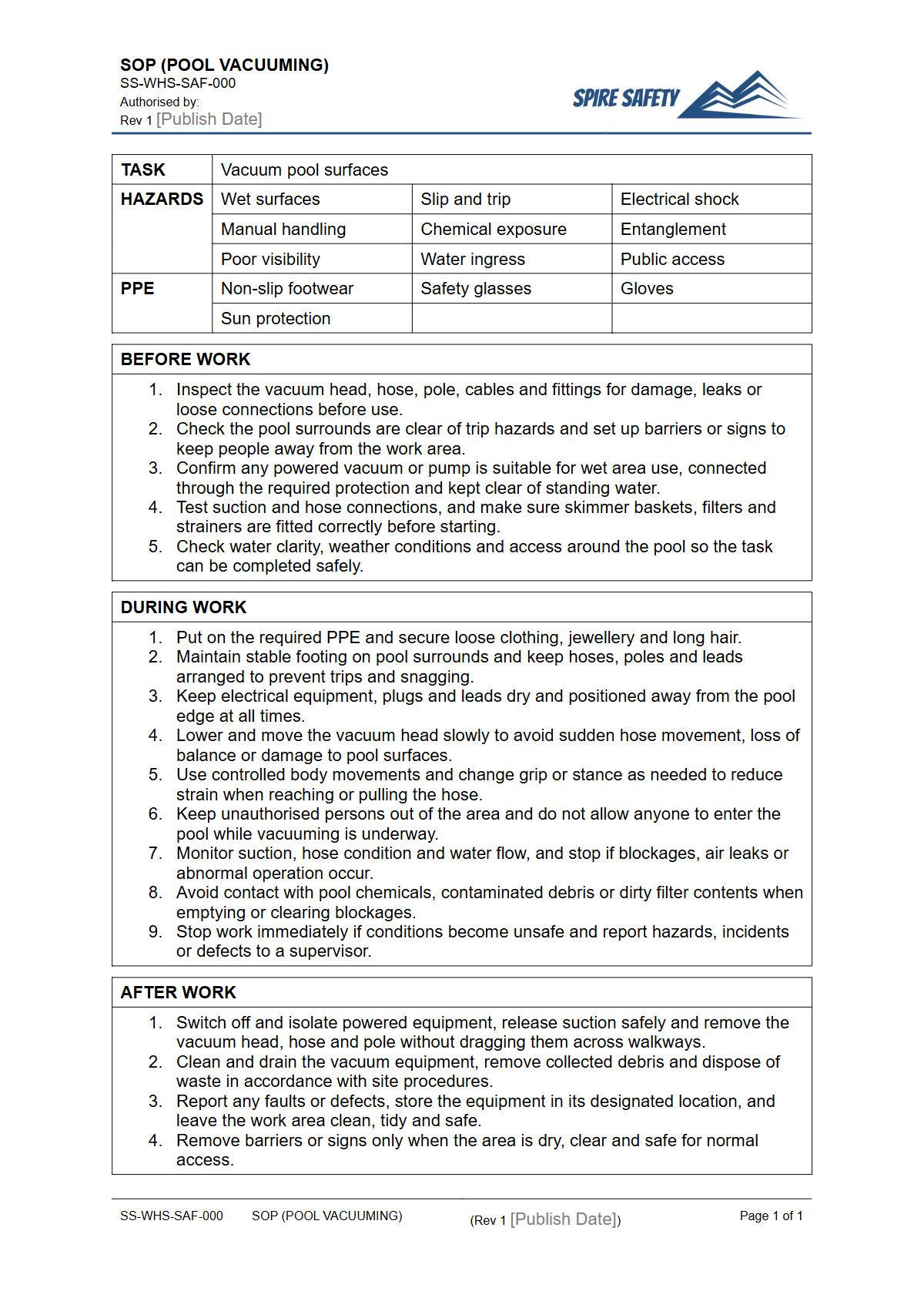
This Free Safe Operating Procedure (Pool Vacuuming) Template is designed to help you document a clear, step-by-step process for using manual and robotic pool vacuums safely. Pool maintenance, while routine, involves several significant hazards, including electrical risks, slips and trips on wet surfaces, manual handling strains, and potential exposure to pool chemicals.
A well-defined SOP is a critical tool for any organisation to control these risks and ensure workers are protected.
By implementing a formal procedure, you establish a consistent and safe method for completing the task, which is fundamental to training, supervision, and incident prevention. This template acts as a structured starting point, forming a key component of more comprehensive WHS management systems and demonstrating a commitment to proactive safety management.
Video walkthrough
How to use the Free Safe Operating Procedure (Pool Vacuuming) Template
To get started, simply download the template in your preferred format (DOCX for easy editing or PDF). The document is structured to guide you through the essential elements of a robust SOP, but it requires careful customisation to be effective and relevant to your specific operational context.
Important Note: This template provides a structured foundation based on Australian WHS principles. To be effective, you MUST customise it to reflect the specific vacuum models (manual or robotic), chemicals, poolside environment, and unique procedures in your workplace.
We are not responsible for the outcomes of any documentation you produce from this template.
The template includes sections for:
- Required Personal Protective Equipment (PPE)
- Pre-operational safety checks (e.g., inspecting cords, checking for damage)
- A step-by-step guide for the vacuuming process
- Post-operational tasks (e.g., filter cleaning, equipment storage)
- Emergency procedures
By filling out each section, you create a practical tool that helps standardise safety practices. For guidance on structuring procedures for other common workplace equipment, our free Air Compressor SOP template offers another valuable example.
When to use it
A Safe Operating Procedure for pool vacuuming should be a readily accessible document used in multiple scenarios. It is essential for inducting and training new pool technicians, groundskeepers, or maintenance staff, ensuring they understand the approved method from day one.
It also serves as a critical refresher for experienced personnel and a benchmark for competency assessments.
The SOP should be referenced before commencing the task, especially if it is performed infrequently. Furthermore, it is a vital piece of documentation during regular WHS compliance audits and should be reviewed and updated following any incident or near-miss to incorporate learnings and prevent recurrence.
Who should use it
This SOP is intended for all personnel tasked with cleaning and maintaining swimming pools. This includes dedicated Pool Technicians, general Maintenance Staff, Groundskeepers at schools or resorts, and any other workers responsible for pool upkeep.
Supervisors and managers should also use the SOP to oversee work, conduct safety observations, and ensure procedures are being followed correctly.
From a governance perspective, Persons Conducting a Business or Undertaking (PCBUs) and their WHS managers can use this documented procedure as evidence of fulfilling their duty of care. It helps demonstrate that risks have been assessed and control measures have been formally implemented. For guidance on meeting these broader obligations, businesses can benefit from specialist WHS consulting.
Key Hazards in Pool Vacuuming
Understanding the specific risks is the first step to controlling them. Your customised SOP should directly address how to manage hazards such as:
- Electrical Hazards: Risk of severe electric shock from damaged cords, faulty connections, or improper use of mains-powered equipment near water.
- Slips, Trips, and Falls: Wet, slippery pool decks are a primary hazard, while hoses and power cords create significant trip risks.
- Manual Handling: Lifting heavy robotic cleaners, carrying equipment, and managing long, heavy hoses can lead to musculoskeletal injuries like sprains and strains.
- Chemical Exposure: Contact with residual pool chemicals during the vacuuming process or when cleaning filters can cause skin or eye irritation.
Each of these hazards must be managed with specific controls, similar to how a circular saw safe operating procedure would detail controls for kickback or blade contact.
Integrating SOPs into Your Safety System
A Safe Operating Procedure works best when it is part of an integrated safety management system, not just a document filed away. It should be directly linked to your risk assessments, training records, and equipment maintenance logs.
For certain complex pool maintenance tasks that might be deemed higher risk, the SOP can serve as a reference for developing a Safe Work Method Statement (SWMS).
By ensuring your safety documents are connected and consistently applied, you create a stronger, more resilient safety culture. For more templates and tools to build out your safety system, explore our complete free WHS resources library.
Common mistakes
Common mistakes to avoid
- Failing to inspect electrical cords and connections for damage before every use.
- Leaving hoses and equipment lying around the pool deck, creating serious trip hazards.
- Not wearing appropriate PPE, such as non-slip footwear and gloves, when handling equipment or cleaning filters.
- Using a downloaded template without customising it to the specific vacuum model and workplace conditions.
Legal references
Legal considerations
The following legal requirements may be relevant to this type of work.
- Work Health and Safety Act (Harmonised) — Provides the primary duties for protecting workers and other people from work health and safety risks.
- Work Health and Safety Regulations (Harmonised) — Sets out requirements supporting the management of workplace hazards and risks.
The following codes may be relevant to this type of work.
- Managing WHS Risks Code of Practice — Provides practical guidance on identifying hazards, assessing risks and applying effective controls.
- Work Health and Safety Consultation, Cooperation and Coordination Code of Practice — Provides practical guidance on consulting workers and coordinating with other duty holders.
- Managing the Work Environment and Facilities Code of Practice — Provides practical guidance on safe work environments, workplace facilities and related controls.
Did you know
Electrical Risk
Electricity and water are a lethal combination. Even low-voltage systems used by some robotic cleaners can pose a risk if not properly maintained, as faults can potentially allow higher voltages to reach the unit.
Slips, Trips and Falls
Slips, trips, and falls are one of the most common causes of workplace injury in Australia, accounting for thousands of serious workers' compensation claims each year. Wet pool surrounds significantly increase this risk.
FAQ
Frequently asked questions
01What's the difference between a SOP and a SWMS for pool vacuuming?
02How often should a pool vacuuming SOP be reviewed?
03Do I need a separate SOP for robotic vs. manual pool vacuums?
04Is this pool vacuuming SOP template suitable for commercial pools?
Share this resource
Free Safe Operating Procedure (Pool Vacuuming) Template
Browse Categories
How To Use It
- 1Download and open in Word or PDF.
- 2Replace the placeholders with your business details.
- 3Get it reviewed by a WHS specialist before rollout.
Need it customised?
Our WHS consultants can adapt this template to your site, run a gap analysis, or audit what you already have in place.
Book a Free Consultation WHS consulting servicesor call 1300 156 382
Related templates
- Free Safe Operating Procedure (Pool Water Log Check) Template
- Free Safe Operating Procedure (Poolside Furniture Move) Template
- Free Safe Operating Procedure (Port Gate Check) Template
- Free Safe Operating Procedure (Port Litter Cleanup) Template
- Free Safe Operating Procedure (Port Shed Cleaning) Template
- Free Safe Operating Procedure (Port Waste Handling) Template