
Free Safe Operating Procedure (Pressure Transmitter) Template
Manage risks associated with pressure transmitters using our structured SOP template. Download the customisable DOCX and PDF to outline your procedures.
Free Safe Operating Procedure (Pressure Transmitter) Template
DOCX • 126 KB + PDF
Updated Oct 2026
No signup required
Purpose of the Free Safe Operating Procedure (Pressure Transmitter) Template
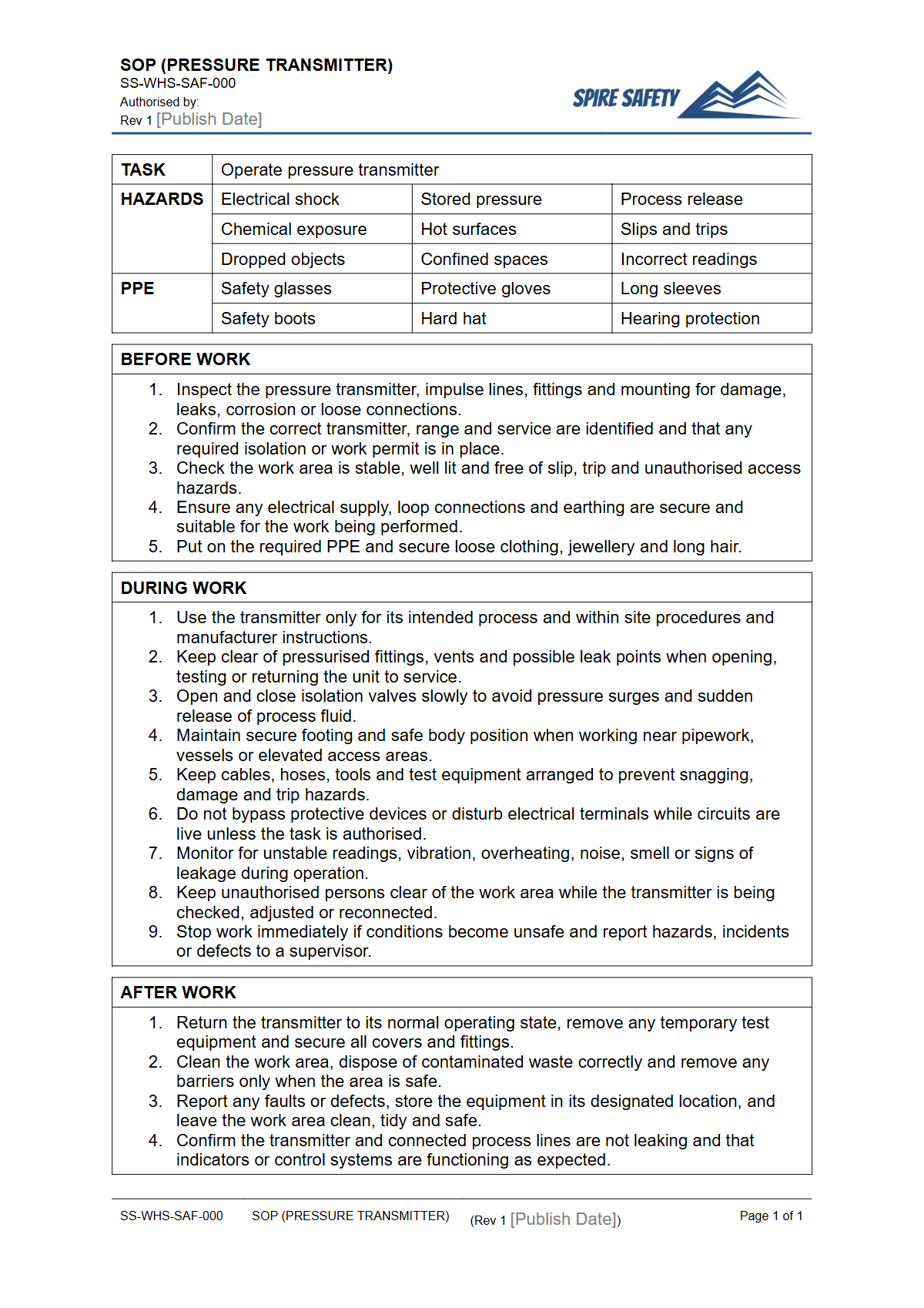
This Free Safe Operating Procedure (Pressure Transmitter) Template provides a structured framework for documenting the safe methods of installing, calibrating, maintaining, and removing pressure transmitters. The primary purpose is to control significant workplace hazards, including the uncontrolled release of stored energy (pressure), electric shock, exposure to hazardous process fluids or gases, and ergonomic injuries.
By establishing a clear, step-by-step process, this SOP helps ensure that tasks are performed consistently and safely every time, reducing the risk of incidents and injuries.
A well-defined SOP is a critical component of a company's overall safety program. It serves as a key reference for worker training, competency assessments, and incident investigations. Integrating this procedure into your existing framework supports the continuous improvement of your organisation's safety performance and forms a vital part of broader WHS management systems.
Video walkthrough
How to use the Free Safe Operating Procedure (Pressure Transmitter) Template
Begin by downloading the template in your preferred format. The DOCX file is fully editable, allowing you to tailor the content to your specific operational context.
The PDF version is available for easy printing and distribution. The document is structured with sections covering required personal protective equipment (PPE), pre-task safety checks, operational steps, and emergency response actions.
You must adapt this template to your unique workplace conditions. Go through each section and add, remove, or modify content to reflect the specific models of pressure transmitters you use, the chemicals or pressures involved, and your site's specific hazards and control measures.
A generic document is not sufficient for ensuring safety.
Please note: this is a template document. We have drafted it as a starting point, but you must customise it to reflect the specific equipment, processes, and risks in your workplace.
This SOP is often used alongside procedures for related equipment. For instance, if the transmitter is part of a compressed air network, you will also require a procedure like our free Air Compressor SOP template to manage the entire system safely.
When to use it
A Safe Operating Procedure for pressure transmitters should be developed, implemented, and used before any worker undertakes tasks on the equipment. It is a critical reference tool during several key phases of the equipment's lifecycle, including:
- Installation and Commissioning: To ensure the device is installed correctly according to manufacturer specifications and safely connected to the process line and control system.
- Routine Inspection: For scheduled checks to verify the physical integrity of the transmitter, its wiring, and its mounting.
- Calibration and Testing: During periodic calibration activities to ensure the transmitter provides accurate readings, which is vital for both process safety and quality control.
- Maintenance and Repair: For any task involving troubleshooting, component replacement, or repair work. This includes following correct isolation and depressurisation steps.
- Decommissioning: To safely remove the transmitter from service, ensuring it is properly isolated, purged of any hazardous materials, and disconnected.
Using the SOP consistently across these activities helps standardise safe work practices, especially where equipment is part of larger integrated machinery, such as that detailed in our FREE Conveyer System SOP (Safe Operating Procedure) Template.
Who should use it
This Safe Operating Procedure should be used by personnel who are directly involved in working with pressure transmitters. This typically includes:
- Instrumentation and Control Technicians
- Electricians
- Maintenance Fitters
- Process Engineers
- Supervisors managing relevant work crews
It is essential that anyone using this SOP is trained, competent, and authorised to perform the work. The document is a guide to reinforce safe practices; it is not a substitute for formal training and practical experience.
Supervisors must ensure that workers have read and understood the relevant SOP before commencing work and that the outlined procedures are followed correctly. Periodic reviews of work practices against the SOP are a key part of effective supervision and can be integrated into regular safety observations or formal WHS compliance auditing.
Training and Competency
Workers must receive specific training on the hazards associated with pressure systems and the particular equipment they will be working on. Competency should be verified through a combination of theoretical assessment and direct observation of practical skills.
If you need assistance developing robust training and competency verification programs, engaging external support can provide valuable expertise and ensure your systems are effective. Specialist WHS consulting can help you build and implement these critical safety elements.
This template is one of many documents available to help you build out your safety management system. You can explore our complete free WHS resources library for more templates, checklists, and guides.
Common mistakes
Common mistakes to avoid
- Failing to fully isolate, depressurise, and verify the system is at zero energy before starting work.
- Using incorrect tools or fittings for connections, leading to leaks or equipment damage.
- Neglecting to perform function tests and leak checks after installation or maintenance.
- Not customising the generic SOP template to address site-specific equipment and hazards.
Legal references
Legal considerations
The following legal requirements may be relevant to this type of work.
- Work Health and Safety Act (Harmonised) — Provides the primary duties for protecting workers and other people from work health and safety risks.
- Work Health and Safety Regulations (Harmonised) — Sets out requirements supporting the management of workplace hazards and risks.
The following codes may be relevant to this type of work.
- Managing WHS Risks Code of Practice — Provides practical guidance on identifying hazards, assessing risks and applying effective controls.
- Work Health and Safety Consultation, Cooperation and Coordination Code of Practice — Provides practical guidance on consulting workers and coordinating with other duty holders.
- Managing the Work Environment and Facilities Code of Practice — Provides practical guidance on safe work environments, workplace facilities and related controls.
Did you know
Calibration Drift
Pressure transmitters can experience 'calibration drift' over time, leading to inaccurate readings. Regular calibration, as outlined in an SOP, is crucial for both process safety and quality control.
Stored Energy
Even after a system is depressurised, a pressure transmitter and its connected lines can retain hazardous stored energy. Lockout, Tagout, and verification procedures are essential to prevent accidental release during maintenance.
FAQ
Frequently asked questions
01What is a Safe Operating Procedure (SOP) for a pressure transmitter?
02Is this pressure transmitter SOP template ready to use immediately?
03Who is responsible for writing and approving the SOP?
04How often should an SOP for a pressure transmitter be reviewed?
Share this resource
Free Safe Operating Procedure (Pressure Transmitter) Template
Browse Categories
How To Use It
- 1Download and open in Word or PDF.
- 2Replace the placeholders with your business details.
- 3Get it reviewed by a WHS specialist before rollout.
Need it customised?
Our WHS consultants can adapt this template to your site, run a gap analysis, or audit what you already have in place.
Book a Free Consultation WHS consulting servicesor call 1300 156 382
Related templates
- Free Safe Operating Procedure (Price Gun Use) Template
- Free Safe Operating Procedure (Printing Press) Template
- Free Safe Operating Procedure (Privacy Curtain Change) Template
- Free Safe Operating Procedure (Produce Bin Cleaning) Template
- Free Safe Operating Procedure (Produce Crate Handling) Template
- Free Safe Operating Procedure (Produce Display Clean) Template