
Free Safe Operating Procedure (Steam Cleaner) Template
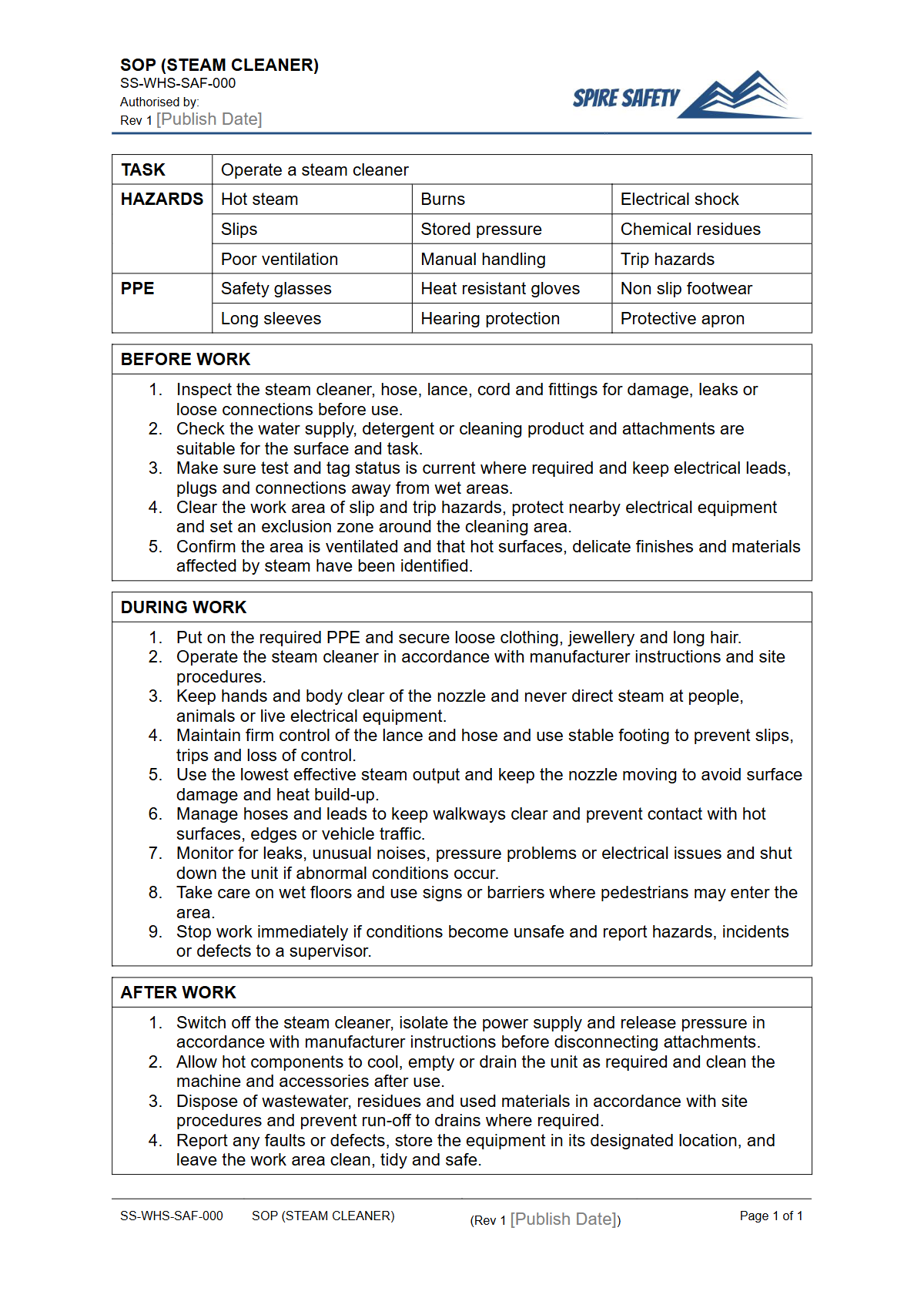
Download our free Safe Operating Procedure (Steam Cleaner) Template. This customisable DOCX helps document processes to manage steam-related hazards safely.
Free Safe Operating Procedure (Steam Cleaner) Template
DOCX • 126 KB + PDF
Updated Oct 2026
No signup required
Purpose of the Free Safe Operating Procedure (Steam Cleaner) Template
Operating high-pressure steam cleaning equipment introduces significant workplace hazards, including severe thermal burns, pressure injection injuries, electrical shock, and slips from wet surfaces. This Free Safe Operating Procedure (Steam Cleaner) Template provides a structured framework for documenting the required steps to use this equipment safely.
Formalising your process helps your business meet its duty of care obligations under Australian WHS legislation by establishing a clear, repeatable, and safe system of work. Using an SOP ensures all operators are aware of the risks and control measures, from pre-start checks through to shutdown and maintenance.
This template is designed as a comprehensive starting point, aligned with the model WHS framework. It prompts you to detail specific operational steps, identify potential hazards at each stage, and outline the necessary personal protective equipment (PPE) and emergency procedures.
Properly implemented, it becomes a vital tool for training, supervision, and incident prevention. It also forms a key part of your broader WHS management systems, demonstrating a proactive approach to risk management.
Video walkthrough
How to use the Free Safe Operating Procedure (Steam Cleaner) Template
This Safe Operating Procedure is available as a fully editable DOCX file, allowing for complete customisation, and a PDF for easy distribution. The core of using this template effectively is to adapt it meticulously to your specific operational context.
Generic procedures are insufficient; your SOP must reflect your actual workplace conditions and equipment.
Important: We provide this template as a starting point to guide the development of your own site-specific procedure. You must customise it with your unique details, including the make and model of your steam cleaner, the specific tasks it is used for, your workplace environment, required PPE, and emergency protocols to ensure it is relevant and effective.
An SOP is a critical component of a safe work system, but it must be supported by adequate training, supervision, and review.
Key Sections in the Template
- Hazard Identification: A section to list all potential risks associated with steam cleaner operation, such as burns, high-pressure fluid injection, electrical hazards, noise, and slip-and-fall risks.
- Pre-Operational Checks: A checklist to ensure the equipment is safe before use. This includes inspecting hoses for cracks, checking electrical cords and plugs for damage, and verifying safety features are functional. Similar checks are vital for other pressurised equipment, as detailed in our Free Air Compressor SOP.
- Step-by-Step Operating Instructions: A logical sequence of tasks for safe operation, from startup and use to controlled shutdown and depressurisation. This is the core of the SOP and must be clear and unambiguous for all operators.
- Post-Operational Tasks: Instructions for cleaning, storing the equipment correctly, and reporting any faults or damage.
- Emergency Procedures: Clear instructions on how to respond to incidents like burns, electrical shock, or equipment failure.
When to use it
A Safe Operating Procedure for a steam cleaner should be a living document integrated into your daily operations. It is not a document to be filed away and forgotten.
Use it as a primary reference tool during worker induction and training for any new employee or contractor tasked with operating the equipment. It should also be readily available in the work area for quick reference.
Furthermore, the SOP serves as a checklist for supervisors conducting routine observations and as a foundational document for incident investigations. Regularly reviewing and updating the SOP, especially after an equipment change or a near-miss, ensures its continued relevance and effectiveness.
Who should use it
This template is designed for anyone responsible for workplace safety and the management of plant and equipment. WHS managers and Safety Officers will use it to standardise procedures and ensure a baseline for safety compliance.
Supervisors and Team Leaders should use it to train their staff and enforce safe work practices on the floor. Most importantly, the operators of the steam cleaning equipment are the primary end-users; the SOP must be written in a way that is clear and understandable to them.
Engaging operators in the development and review of the SOP is a best practice that improves buy-in and overall safety outcomes. A well-drafted procedure, like one for a high-risk kitchen appliance, can significantly reduce incidents, as seen in our Safe Operating Procedure for a Deep Fryer.
Ultimately, this document helps a Person Conducting a Business or Undertaking (PCBU) fulfil their legal responsibilities. It's a practical tool that supports training, supervision, and risk control.
For organisations seeking to formalise their entire safety framework, Spire Safety offers expert WHS consulting to develop robust and practical safety systems. You can also explore hundreds of other document templates in our free WHS resources library to support your safety management efforts.
Common mistakes
Common mistakes to avoid
- Using domestic-grade steam cleaners for heavy-duty industrial tasks.
- Neglecting to inspect hoses, fittings, and electrical cords for wear before each use.
- Failing to wear appropriate heat-resistant and waterproof PPE, especially gloves and eye protection.
- Operating equipment in poorly ventilated areas, leading to moisture buildup and increased slip hazards.
Legal references
Legal considerations
The following legal requirements may be relevant to this type of work.
- Work Health and Safety Act (Harmonised) — Provides the primary duties for protecting workers and other people from work health and safety risks.
- Work Health and Safety Regulations (Harmonised) — Sets out requirements supporting the management of workplace hazards and risks.
The following codes may be relevant to this type of work.
- Managing WHS Risks Code of Practice — Provides practical guidance on identifying hazards, assessing risks and applying effective controls.
- Work Health and Safety Consultation, Cooperation and Coordination Code of Practice — Provides practical guidance on consulting workers and coordinating with other duty holders.
- Managing the Work Environment and Facilities Code of Practice — Provides practical guidance on safe work environments, workplace facilities and related controls.
Did you know
Pressure Injection Risk
The high-pressure jet from an industrial steam cleaner can pierce the skin and inject hot water, steam, and contaminants deep into tissues, causing severe injuries that require immediate medical attention.
Energy of Steam
Steam at 100°C contains significantly more thermal energy than boiling water at the same temperature due to the latent heat of vaporisation. This means a steam burn is often more severe and damaging to tissue than a scald from hot water.
FAQ
Frequently asked questions
01What are the main hazards of using a steam cleaner?
02Is a Safe Operating Procedure legally required for a steam cleaner in Australia?
03How often should a steam cleaner SOP be reviewed?
04What PPE is needed for operating a steam cleaner?
Share this resource
Free Safe Operating Procedure (Steam Cleaner) Template
Browse Categories
How To Use It
- 1Download and open in Word or PDF.
- 2Replace the placeholders with your business details.
- 3Get it reviewed by a WHS specialist before rollout.
Need it customised?
Our WHS consultants can adapt this template to your site, run a gap analysis, or audit what you already have in place.
Book a Free Consultation WHS consulting servicesor call 1300 156 382
Related templates
- Free Safe Operating Procedure (Steam Iron) Template
- Free Safe Operating Procedure (Steam Room Cleaning) Template
- Free Safe Operating Procedure (Steam Wand Cleaning) Template
- Free Safe Operating Procedure (Stick Blender) Template
- Free Safe Operating Procedure (Stillages) Template
- Free Safe Operating Procedure (Stock Picking Trolley) Template