
Free Safe Operating Procedure (Store Closing Check) Template
Ensure a consistent and safe shutdown of your retail space with our comprehensive template.
Free Safe Operating Procedure (Store Closing Check) Template
DOCX • 126 KB + PDF
Updated Oct 2026
No signup required
Purpose of the Free Safe Operating Procedure (Store Closing Check) Template
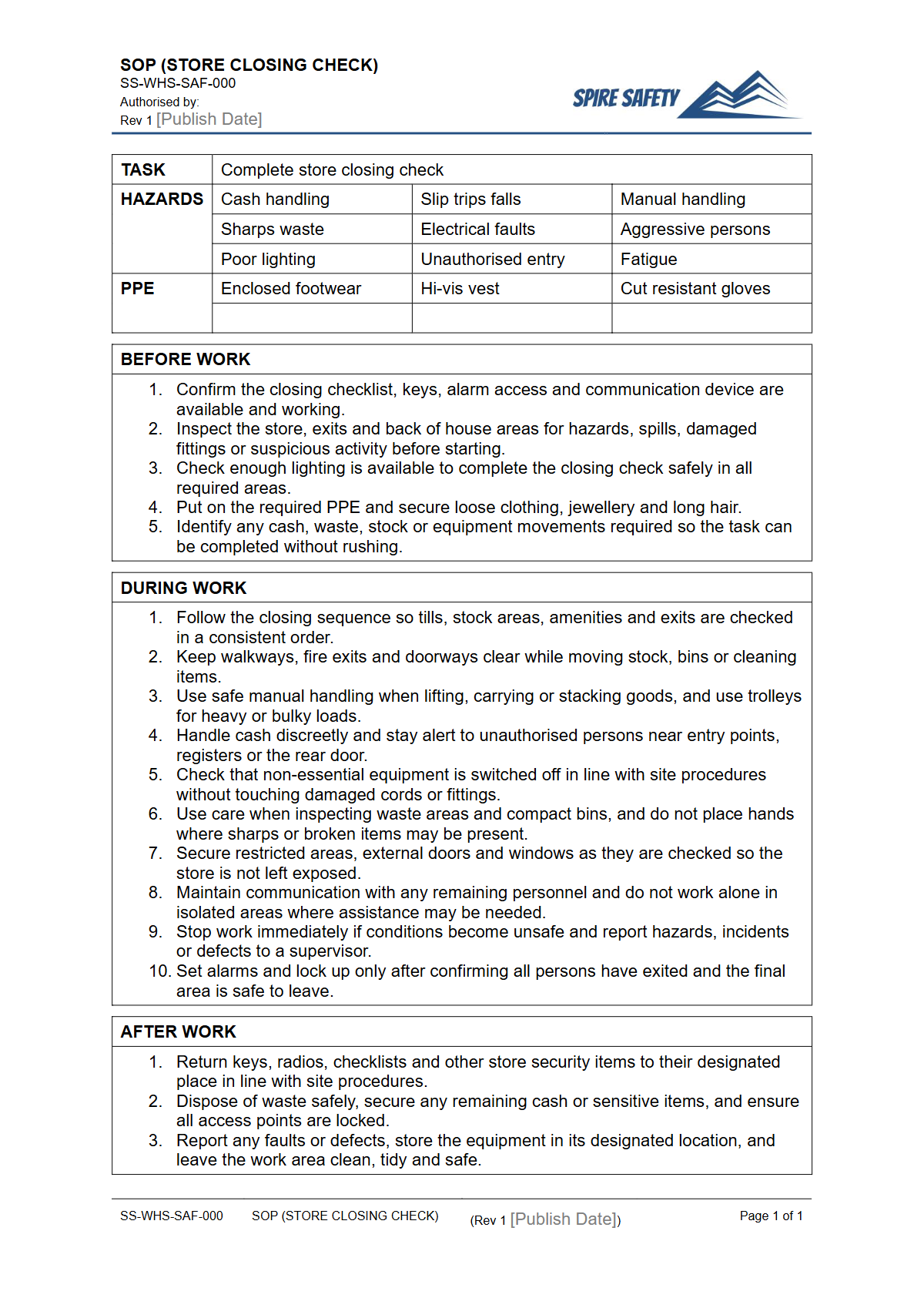
A structured end-of-day process is critical for any retail or commercial operation. This free Safe Operating Procedure (Store Closing Check) Template provides a clear, step-by-step framework to ensure tasks are completed consistently and safely every time.
Implementing a formal closing procedure helps manage risks, prevent incidents, and secure the premises. It formalises tasks that might otherwise be forgotten, such as cleaning spills to prevent overnight slip hazards, shutting down equipment to reduce fire risk, and ensuring all entry points are secure.
By standardising this process, you create a safer work environment, protect company assets, and provide clear guidance for all staff members involved in closing duties.
Video walkthrough
How to use the Free Safe Operating Procedure (Store Closing Check) Template
This template is provided as a fully editable DOCX file and a print-ready PDF. After downloading, you can immediately begin adapting it to your business.
The document outlines a logical sequence of tasks typical for closing a store, from customer-facing areas to back-of-house operations. It is designed to be a comprehensive starting point, covering general safety, cleaning, equipment shutdown, and security measures.
For specialised environments, like those in hospitality, you may need to integrate procedures from a more specific deep fryer operation SOP to cover all unique equipment.
Important: This template provides a solid foundation, but it's crucial to adapt it to your specific workplace. We've designed it to be a starting point; you must review and modify the content to reflect the unique hazards, equipment, and processes of your store.
Conduct a walkthrough of your own premises and add or remove steps to create a procedure that is truly representative of your operational needs.
When to use a Store Closing SOP
The Safe Operating Procedure for store closing should be used at the end of every business day or shift by the designated closing staff. Its primary function is as a live checklist to guide actions in a sequential and logical manner.
Beyond its daily use, the document is an essential tool for staff training and induction, ensuring new team members understand their responsibilities and the safety standards expected of them. Furthermore, having a documented and consistently used procedure is a key piece of evidence during safety assessments and can be a vital part of regular WHS compliance auditing.
Who should use this procedure
This SOP should be used by any person responsible for closing the workplace. This typically includes store managers, shift supervisors, and senior team members.
However, all staff who may be involved in closing tasks, even partially, should be trained on the procedure to ensure they understand their role and the importance of each step. The responsibility for ensuring the SOP is followed rests with management, who must provide adequate training and resources.
Integrating this procedure is a fundamental part of building robust WHS management systems that promote a culture of safety and accountability throughout the organisation.
Key elements of a closing check
A thorough store closing procedure addresses multiple risk categories. Our template prompts you to consider the following areas, which you should customise for your specific site.
Work Area Clearance and Cleaning
This involves tidying public and staff-only areas, removing rubbish, and cleaning floors and surfaces. This isn't just about presentation; it's a critical safety task that removes potential trip hazards, reduces fire load, and addresses hygiene concerns that could lead to pest infestations.
Equipment Shutdown
All non-essential electrical equipment should be correctly powered down and unplugged where practical. This conserves energy and significantly reduces the risk of electrical faults or fires.
For workplaces with specific machinery, such as workshops using compressed air, it's vital to include steps outlined in documents like a Free Air Compressor SOP to ensure systems are safely depressurised and isolated.
Waste Management
Properly managing and removing waste, especially flammable materials like cardboard or oily rags, is a key fire prevention strategy. The SOP should detail where and how waste is to be stored securely, typically in external bins away from the building.
Security and Access Control
This final stage involves a physical check of all doors, windows, and other access points to ensure they are locked and secure. It also includes setting the security alarm, securing cash and valuables according to company policy, and conducting a final walk-through to confirm no one has been left behind.
Establishing and following these procedures are core functions of your broader WHS duties, and our WHS consulting services can help you integrate them effectively.
By systematically addressing each of these areas, this SOP helps turn a potentially rushed and inconsistent process into a structured safety ritual. You can find more templates and guides to support your safety management efforts in our free WHS resources library.
Common mistakes
Common mistakes to avoid
- Using the template without customising it for the specific store layout, equipment, and risks.
- Failing to train all closing staff on the finalised procedure and its importance.
- Ticking boxes on the checklist without physically verifying that each task has been completed.
- Not reviewing and updating the SOP after an incident, near-miss, or a change in workplace processes.
Legal references
Legal considerations
The following legal requirements may be relevant to this type of work.
- Work Health and Safety Act (Harmonised) — Provides the primary duties for protecting workers and other people from work health and safety risks.
- Work Health and Safety Regulations (Harmonised) — Sets out requirements supporting the management of workplace hazards and risks.
The following codes may be relevant to this type of work.
- Managing WHS Risks Code of Practice — Provides practical guidance on identifying hazards, assessing risks and applying effective controls.
- Work Health and Safety Consultation, Cooperation and Coordination Code of Practice — Provides practical guidance on consulting workers and coordinating with other duty holders.
- Managing the Work Environment and Facilities Code of Practice — Provides practical guidance on safe work environments, workplace facilities and related controls.
Did you know
Slips, Trips, and Falls
According to Safe Work Australia, slips, trips, and falls are a leading cause of workplace injuries in the retail sector. A thorough end-of-day clean-up procedure is a simple and effective control measure.
Fire Risk Reduction
Faulty or non-essential electrical equipment left running overnight is a significant and preventable fire hazard. A systematic shutdown procedure is a critical fire prevention strategy for any business.
FAQ
Frequently asked questions
01Why is a documented store closing procedure important for WHS?
02What key hazards does a store closing checklist help control?
03Can I use this template for my cafe or restaurant?
04How often should I review my store closing SOP?
Share this resource
Free Safe Operating Procedure (Store Closing Check) Template
Browse Categories
How To Use It
- 1Download and open in Word or PDF.
- 2Replace the placeholders with your business details.
- 3Get it reviewed by a WHS specialist before rollout.
Need it customised?
Our WHS consultants can adapt this template to your site, run a gap analysis, or audit what you already have in place.
Book a Free Consultation WHS consulting servicesor call 1300 156 382
Related templates
- Free Safe Operating Procedure (Store Opening Check) Template
- Free Safe Operating Procedure (Stored Energy Release) Template
- Free Safe Operating Procedure (Storeroom Deep Cleaning) Template
- Free Safe Operating Procedure (Storm Drain Cleaning) Template
- Free Safe Operating Procedure (Storm Drain Inspection) Template
- Free Safe Operating Procedure (Stormwater Debris Clear) Template