
Free Safe Operating Procedure (Store Opening Check) Template
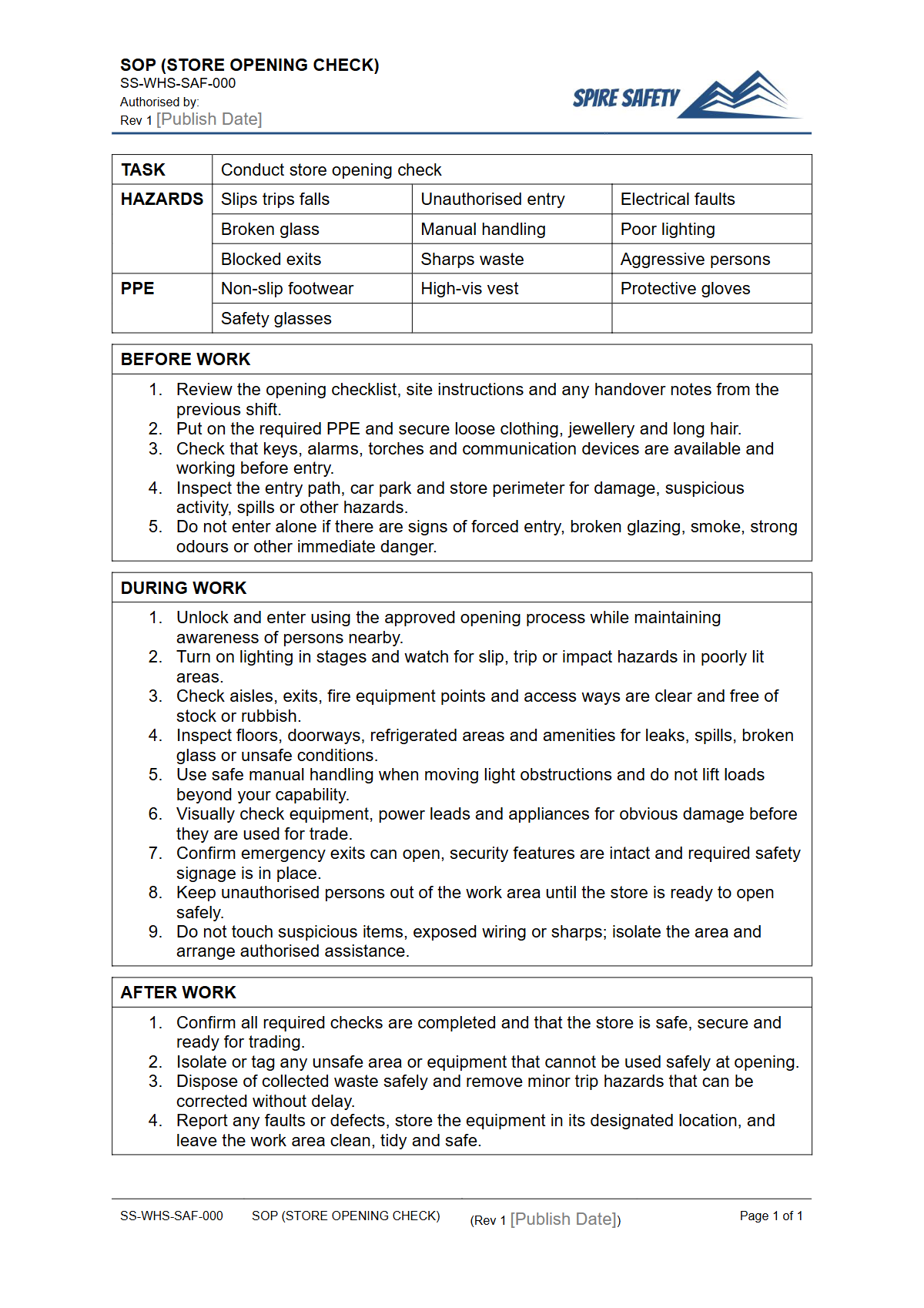
Start your day safely with our free Safe Operating Procedure (Store Opening Check) template. Download the customisable DOCX and PDF to formalise your checks.
Free Safe Operating Procedure (Store Opening Check) Template
DOCX • 126 KB + PDF
Updated Oct 2026
No signup required
Purpose of the Free Safe Operating Procedure (Store Opening Check) Template
A structured start to the business day is critical for both safety and operational efficiency. Our Free Safe Operating Procedure (Store Opening Check) Template provides a formal framework for your team to methodically inspect the workplace before commencing operations.
Using this SOP helps ensure that any hazards that may have developed overnight—such as spills, electrical faults, trip hazards, or security breaches—are identified and controlled before staff and customers are put at risk.
Implementing a formal opening check demonstrates a commitment to proactive risk management. It standardises the process across all shifts and locations, ensuring that nothing is missed.
This document helps you formalise checks for general housekeeping, security measures, emergency equipment readiness, and operational functionality. Systematising these tasks is a foundational element of effective WHS management systems, creating a safer environment from the moment the doors open.
What's included in the template?
This downloadable template provides a structured checklist covering key areas for a store opening procedure, including:
- Pre-entry checks (e.g., external area inspection)
- Post-entry security checks (e.g., alarm deactivation, premises scan)
- Safety and emergency equipment checks (e.g., fire extinguishers, exit paths)
- General housekeeping and hazard identification (e.g., floors, lighting, shelving)
- Operational checks (e.g., point-of-sale systems, temperature controls)
- A section for recording actions taken and sign-off
Video walkthrough
How to Use the Free Safe Operating Procedure (Store Opening Check) Template
Using this template effectively involves more than just downloading and printing. The first step is to download the DOCX or PDF file.
The DOCX version is fully editable, allowing you to tailor the content to the unique layout, equipment, and risks of your specific workplace. For example, a café's opening checklist will differ significantly from a clothing boutique's or a small workshop's.
Important: This document is a template, not a finished product. It is essential that you customise it to reflect the specific hazards and operational needs of your workplace.
We strongly advise that you consult with your workers and a WHS professional to ensure all relevant risks are covered. A generic checklist cannot account for every unique scenario.
Once customised, your procedure for specific equipment, like our Safe Operating Procedure for a Deep Fryer, should be integrated into your daily checks.
After customisation, you must train all relevant employees on how to follow the procedure correctly. This includes explaining the 'why' behind each check, what to do if a hazard is found, and who to report issues to.
The completed checklists should be filed as a record of due diligence.
When to Use It
This Safe Operating Procedure should be completed at the beginning of every business day or at the start of the first shift. Consistency is key.
Performing the checks at the same time and in the same sequence every day builds a strong safety routine and makes it easier to spot anomalies. This documented routine provides evidence that safety checks are being consistently performed, which is a critical point verified during WHS compliance auditing.
Who Should Use It
This procedure is designed for use by the person or people responsible for opening the store. This could be a Store Manager, a Shift Supervisor, or a designated 'Opening Keyholder'.
It is the responsibility of the business owner or Person Conducting a Business or Undertaking (PCBU) to ensure that a safe system of work, like this opening procedure, is implemented and that staff are adequately trained to use it.
For complex retail environments, such as large format stores or distribution centres, you may need to integrate more specific procedures. For example, if your opening checks include preparing a stock receiving area, a Conveyer System SOP may also be required.
If you need assistance adapting this template or developing more complex procedures, our WHS consulting services can provide expert guidance.
By involving the team in the customisation and review process, you foster a stronger safety culture and increase the likelihood of the procedure being followed correctly. For more downloadable templates, you can browse our complete free WHS resources library.
Common mistakes
Common mistakes to avoid
- Staff 'pencil-whipping' the checklist without physically performing the checks.
- Failing to update the procedure after store layout changes or new equipment is added.
- Not training new employees on the procedure or the reasons behind each check.
- Omitting crucial security steps like checking for signs of forced entry or verifying alarm status.
Legal references
Legal considerations
The following legal requirements may be relevant to this type of work.
- Work Health and Safety Act (Harmonised) — Provides the primary duties for protecting workers and other people from work health and safety risks.
- Work Health and Safety Regulations (Harmonised) — Sets out requirements supporting the management of workplace hazards and risks.
The following codes may be relevant to this type of work.
- Managing WHS Risks Code of Practice — Provides practical guidance on identifying hazards, assessing risks and applying effective controls.
- Work Health and Safety Consultation, Cooperation and Coordination Code of Practice — Provides practical guidance on consulting workers and coordinating with other duty holders.
- Managing the Work Environment and Facilities Code of Practice — Provides practical guidance on safe work environments, workplace facilities and related controls.
Did you know
Slips, Trips, and Falls
Slips, trips, and falls are a leading cause of injury in the retail industry. A thorough opening check to identify hazards like spills, debris, or damaged flooring is a simple and effective control measure.
Proactive Maintenance
Routine checks on equipment during store opening can identify early signs of wear or malfunction, preventing costly breakdowns and potential safety incidents during operating hours.
FAQ
Frequently asked questions
01What key items should be included in a store opening checklist?
02Why is a documented SOP better than just telling staff what to do?
03How often should our store opening procedure be reviewed?
04Can this template be adapted for closing procedures as well?
Share this resource
Free Safe Operating Procedure (Store Opening Check) Template
Browse Categories
How To Use It
- 1Download and open in Word or PDF.
- 2Replace the placeholders with your business details.
- 3Get it reviewed by a WHS specialist before rollout.
Need it customised?
Our WHS consultants can adapt this template to your site, run a gap analysis, or audit what you already have in place.
Book a Free Consultation WHS consulting servicesor call 1300 156 382
Related templates
- Free Safe Operating Procedure (Stored Energy Release) Template
- Free Safe Operating Procedure (Storeroom Deep Cleaning) Template
- Free Safe Operating Procedure (Storm Drain Cleaning) Template
- Free Safe Operating Procedure (Storm Drain Inspection) Template
- Free Safe Operating Procedure (Stormwater Debris Clear) Template
- Free Safe Operating Procedure (Stormwater Inlet Clean) Template