
Free Safe Operating Procedure (Swing Stage) Template
Download our free Safe Operating Procedure (Swing Stage) template to manage high-risk work safely.
Free Safe Operating Procedure (Swing Stage) Template
DOCX • 126 KB + PDF
Updated Oct 2026
No signup required
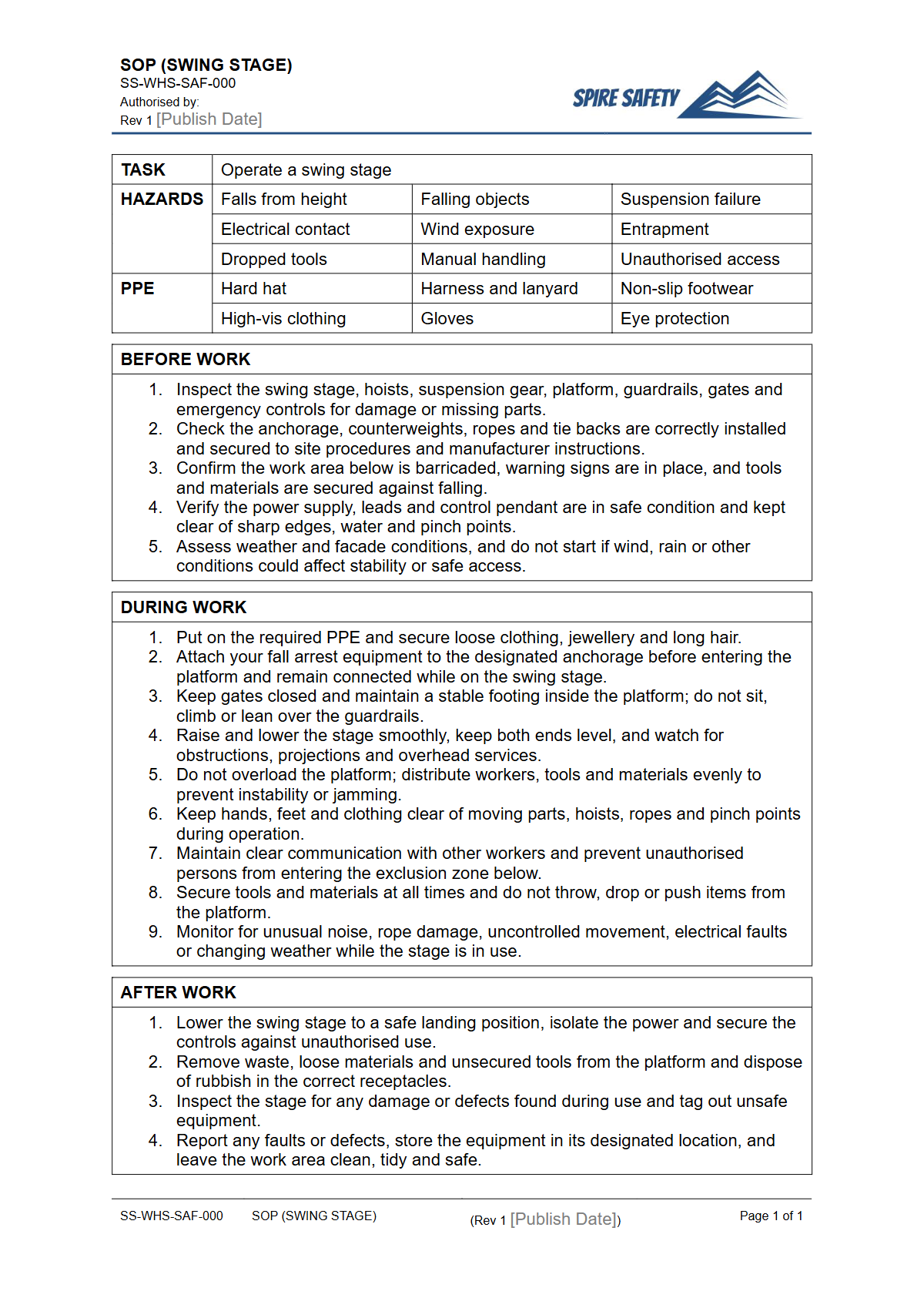
Purpose of the Free Safe Operating Procedure (Swing Stage) Template
Working on a swing stage, also known as a suspended scaffold, presents significant safety risks. This free Safe Operating Procedure (Swing Stage) template provides a structured starting point for documenting the essential steps to ensure this high-risk work is performed safely.
It helps you outline control measures for hazards such as falls from height, structural failure of the platform or suspension system, falling objects, and electrical risks from nearby power lines.
A documented SOP is a critical component of any safety framework, demonstrating that a systematic approach has been taken to identify hazards and manage risks. It translates risk assessment findings into practical, repeatable actions for workers to follow.
Integrating clear SOPs is a fundamental part of developing effective WHS management systems that protect workers and ensure operational consistency.
Video walkthrough
How to use the Free Safe Operating Procedure (Swing Stage) Template
This Safe Operating Procedure is provided as a fully editable DOCX file and a ready-to-use PDF. To begin, download the template and open the DOCX version.
Systematically work through each section, adding details specific to your equipment and operational context. You must adapt the content to address the unique conditions of your site, the specific model of swing stage in use, and the tasks being performed.
Important: This is a template that provides a foundation for your site-specific procedure. We are not responsible for the outcomes of any action taken based on this document.
It is crucial that you customise it in consultation with equipment operators, supervisors, and other relevant personnel to ensure it is comprehensive and accurately reflects the risks and controls in your workplace.
Your customised SOP should align with any Safe Work Method Statement (SWMS) developed for the high-risk construction work. While the SOP details the 'how-to' steps for the task, the SWMS addresses the broader context of high-risk work. This level of procedural detail is just as important for ancillary site equipment, as outlined in our Free Air Compressor SOP (Safe Operating Procedure) Template.
Ensure your completed document clearly defines the required Personal Protective Equipment (PPE), pre-start inspection criteria, weight limits (Safe Working Load), emergency rescue plans, and shutdown procedures. This methodical approach is essential for all high-risk plant, including mobile equipment detailed in resources like our FREE Telehandler SOP Template.
When to use a Safe Operating Procedure
A Safe Operating Procedure for a swing stage must be developed, approved, and communicated before any work commences. It should be used as a primary training document for new operators and as a refresher for experienced workers.
It serves as a practical, on-the-job reference for supervisors and teams to ensure procedures are followed correctly every time.
The SOP is also a key piece of evidence during safety reviews and incident investigations. Regular reviews of your SOPs are essential to maintain their relevance and effectiveness, a process often included as part of formal WHS compliance auditing to verify that documented procedures match work practices.
Who should use this document
This template is designed for use by Persons Conducting a Business or Undertaking (PCBUs), site managers, project managers, and WHS advisors. These roles are responsible for ensuring that safe systems of work are established, documented, and implemented on site.
They must ensure the final, customised SOP is understood by and made readily available to all relevant workers.
Operators of the swing stage are primary users of the finalised SOP. The procedure should be developed in direct consultation with them, as their practical experience is invaluable for creating a document that is both safe and workable.
For organisations that need expert assistance in developing and implementing robust safety procedures across complex operations, engaging professional WHS consulting services can provide clarity and assurance.
Developing clear SOPs is a fundamental safety requirement for a wide range of hazardous activities, not just the operation of plant. For instance, tasks involving thermal processes also demand strict procedural controls, as shown in our FREE Oxy Acetylene SOP (Safe Operating Procedure) Template.
A well-drafted SOP is more than just a document; it's a vital tool for proactive risk management. For more tools to support your safety management efforts, browse our complete free WHS resources library for a wide range of templates, checklists, and guides.
Common mistakes
Common mistakes to avoid
- Failing to conduct thorough pre-operational checks of all components, including ropes, motors, and safety devices.
- Overloading the platform beyond its specified safe working load (SWL).
- Neglecting to secure the swing stage to the building structure, leading to instability in windy conditions.
- Using the SOP as a generic document without customising it for the specific site, building, and model of swing stage.
Legal references
Legal considerations
The following legal requirements may be relevant to this type of work.
- Work Health and Safety Act (Harmonised) — Provides the primary duties for protecting workers and other people from work health and safety risks.
- Work Health and Safety Regulations (Harmonised) — Sets out requirements supporting the management of workplace hazards and risks.
The following codes may be relevant to this type of work.
- Managing WHS Risks Code of Practice — Provides practical guidance on identifying hazards, assessing risks and applying effective controls.
- Work Health and Safety Consultation, Cooperation and Coordination Code of Practice — Provides practical guidance on consulting workers and coordinating with other duty holders.
- Managing the Work Environment and Facilities Code of Practice — Provides practical guidance on safe work environments, workplace facilities and related controls.
Did you know
Structural Integrity is Key
A swing stage's suspension ropes must have a safety factor of at least 10, based on the maximum potential load. This design requirement is critical for preventing catastrophic failure.
High-Risk Licensing
In Australia, operating certain types of swing stages may require a High Risk Work Licence (Class SB for Scaffolding Basic or SI for Scaffolding Intermediate), depending on the complexity and design.
FAQ
Frequently asked questions
01What must be included in a Swing Stage SOP?
02Is a Safe Work Method Statement (SWMS) required for swing stage use?
03How often should a Swing Stage SOP be reviewed?
04Who is responsible for developing the Swing Stage SOP?
Share this resource
Free Safe Operating Procedure (Swing Stage) Template
Browse Categories
How To Use It
- 1Download and open in Word or PDF.
- 2Replace the placeholders with your business details.
- 3Get it reviewed by a WHS specialist before rollout.
Need it customised?
Our WHS consultants can adapt this template to your site, run a gap analysis, or audit what you already have in place.
Book a Free Consultation WHS consulting servicesor call 1300 156 382
Related templates
- Free Safe Operating Procedure (Switchboard Testing) Template
- Free Safe Operating Procedure (Synthetic Sling Use) Template
- Free Safe Operating Procedure (Table Clearing) Template
- Free Safe Operating Procedure (Tag Line Use) Template
- Free Safe Operating Procedure (Tagging Gun Use) Template
- Free Safe Operating Procedure (Tailgate Delivery) Template