
Free Safe Operating Procedure (Switchboard Testing) Template
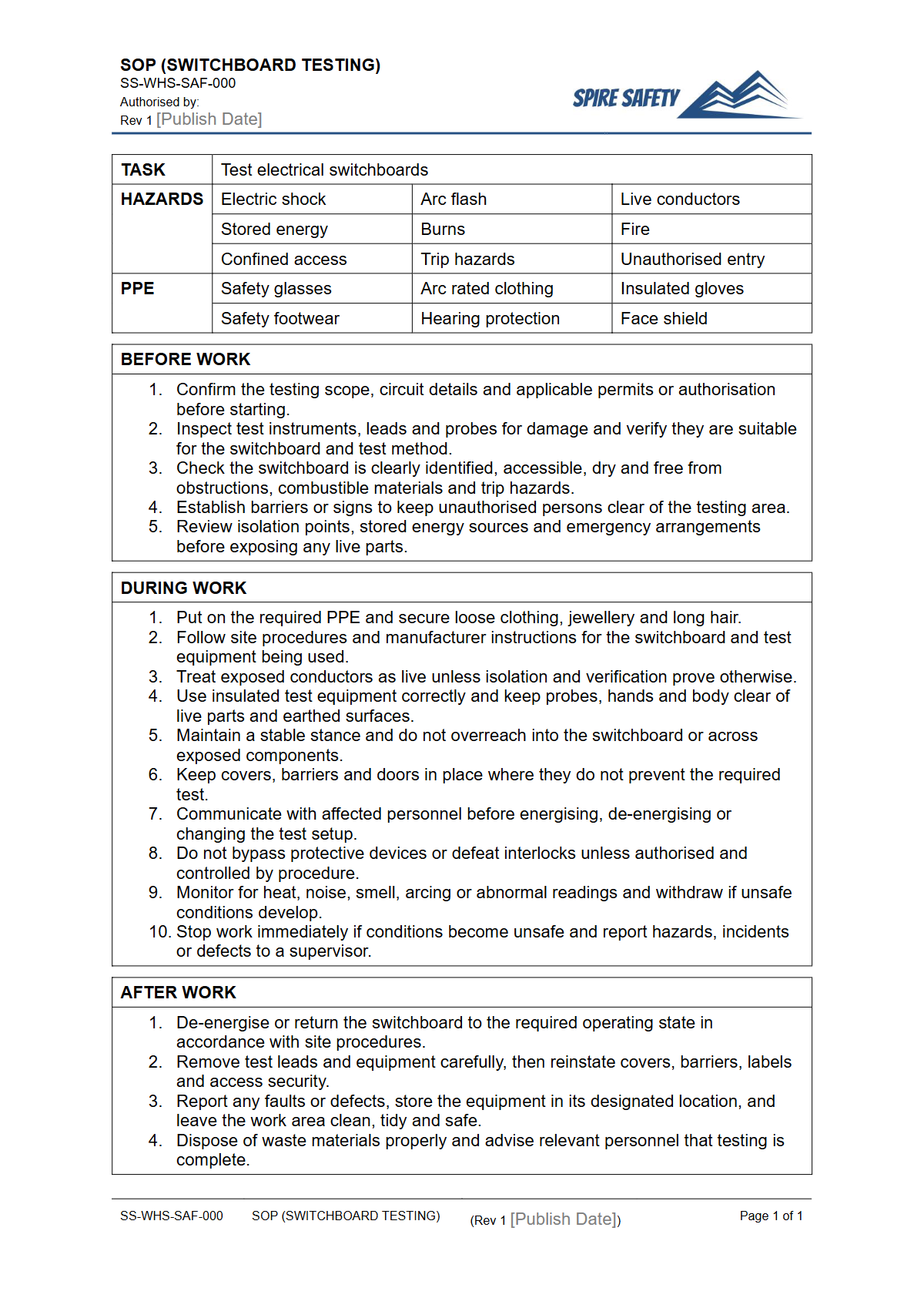
Download our free Safe Operating Procedure for switchboard testing. This template provides a solid foundation for documenting your electrical safety processes.
Free Safe Operating Procedure (Switchboard Testing) Template
DOCX • 126 KB + PDF
Updated Oct 2026
No signup required
Purpose of the Free Safe Operating Procedure (Switchboard Testing) Template
Working with electrical switchboards presents significant risks, including electric shock, arc flash, and fire. This Free Safe Operating Procedure (Switchboard Testing) Template provides a structured framework for organisations to document the required steps for safely testing electrical switchboards.
By establishing and following a formal procedure, you can minimise the risk of injury to personnel and damage to equipment. This document is designed as a starting point, aligned with Australian WHS principles, to help you define pre-operational checks, the step-by-step testing process, and post-operational tasks.
Implementing a clear SOP is a fundamental part of managing electrical hazards in any workplace.
A comprehensive SOP is a key component of effective WHS management systems, providing clear, step-by-step instructions that reduce ambiguity and promote consistent, safe work practices. This is particularly vital for high-risk activities like electrical work, where a single error can have catastrophic consequences.
Video walkthrough
How to use the Free Safe Operating Procedure (Switchboard Testing) Template
This Safe Operating Procedure template is provided in both DOCX and PDF formats for your convenience. To use it effectively, download the DOCX file and adapt it to the specific context of your workplace, including the types of switchboards used, the testing equipment available, and your site-specific emergency procedures.
It is critical that this document is customised by a competent person with relevant expertise in electrical work.
Important: This is a template only. We are not providing a completed Safe Operating Procedure.
You must consult with your workers, electrical professionals, and management to ensure the final document accurately reflects your operational risks and control measures. The finished SOP should be read and understood by all relevant personnel before any work commences.
When to use this Safe Operating Procedure
This SOP should be used whenever routine inspection, testing, and maintenance of electrical switchboards are performed. This includes activities such as thermal imaging, insulation resistance testing, circuit breaker trip testing, and visual inspections for damage or defects.
It should be a mandatory reference document for both scheduled preventative maintenance and diagnostic activities. For larger facilities, integrating this SOP with procedures for interconnected machinery, such as those covered in our FREE Conveyer System SOP, is crucial for holistic site safety.
Who should use this Safe Operating Procedure
This procedure is intended for use by competent and appropriately licensed or qualified electricians and electrical workers who are authorised to perform testing on switchboards. Personnel must have proven competency in identifying electrical hazards, risk assessment, isolation procedures (lockout-tagout), and the correct use of testing equipment and personal protective equipment (PPE).
Supervisors and managers should also use this document to oversee work and ensure procedures are followed correctly. Regular verification of these procedures can be achieved through WHS compliance auditing to ensure ongoing safety.
Integrating with other safety documents
A Safe Operating Procedure does not exist in isolation. It should be used in conjunction with other critical safety documents, such as a Safe Work Method Statement (SWMS) for high-risk construction work, electrical isolation procedures, and risk assessments. For tasks involving specific hazards like hot work, it's crucial to have dedicated controls, similar to those outlined in our FREE Oxy Acetylene SOP Template. This integrated approach ensures all facets of workplace safety are addressed. Just as you would detail blade guards and kickback prevention in a FREE Circular Saw SOP Template, every potential hazard in switchboard testing needs to be identified and controlled. While this SOP focuses on electrical switchboards, you might also need procedures for other high-risk equipment, such as those detailed in our Free Air Compressor SOP. You can explore our full collection of templates and checklists in our free WHS resources library to support your safety framework.
Common mistakes
Common mistakes to avoid
- Failing to correctly de-energise and follow lockout-tagout (LOTO) procedures.
- Using multimeters and other testing equipment that is not properly calibrated or rated for the voltage.
- Neglecting to wear appropriate and properly rated electrical PPE, such as insulated gloves and arc-flash suits.
- Becoming complacent and taking shortcuts during routine or repetitive testing tasks.
Legal references
Legal considerations
The following legal requirements may be relevant to this type of work.
- Work Health and Safety Act (Harmonised) — Provides the primary duties for protecting workers and other people from work health and safety risks.
- Work Health and Safety Regulations (Harmonised) — Sets out requirements supporting the management of workplace hazards and risks.
The following codes may be relevant to this type of work.
- Managing WHS Risks Code of Practice — Provides practical guidance on identifying hazards, assessing risks and applying effective controls.
- Work Health and Safety Consultation, Cooperation and Coordination Code of Practice — Provides practical guidance on consulting workers and coordinating with other duty holders.
- Managing the Work Environment and Facilities Code of Practice — Provides practical guidance on safe work environments, workplace facilities and related controls.
Did you know
Thermal Imaging
Infrared thermal imaging is a common non-invasive method used in switchboard testing. It can detect loose connections, overloaded circuits, and failing components by identifying abnormal heat signatures before they lead to a major failure.
Arc Flash Dangers
An arc flash is a dangerous electrical explosion that can occur during switchboard testing, reaching temperatures up to 20,000°C. Wearing appropriate arc-rated PPE is critical to prevent severe or fatal burns.
FAQ
Frequently asked questions
01What is a Safe Operating Procedure for switchboard testing?
02Is this switchboard testing SOP template compliant with Australian WHS laws?
03Who is qualified to perform switchboard testing?
04How often should electrical switchboards be tested in Australia?
Share this resource
Free Safe Operating Procedure (Switchboard Testing) Template
Browse Categories
How To Use It
- 1Download and open in Word or PDF.
- 2Replace the placeholders with your business details.
- 3Get it reviewed by a WHS specialist before rollout.
Need it customised?
Our WHS consultants can adapt this template to your site, run a gap analysis, or audit what you already have in place.
Book a Free Consultation WHS consulting servicesor call 1300 156 382
Related templates
- Free Safe Operating Procedure (Synthetic Sling Use) Template
- Free Safe Operating Procedure (Table Clearing) Template
- Free Safe Operating Procedure (Tag Line Use) Template
- Free Safe Operating Procedure (Tagging Gun Use) Template
- Free Safe Operating Procedure (Tailgate Delivery) Template
- Free Safe Operating Procedure (Tanning Bed Cleaning) Template