
Free Safe Operating Procedure (Turf Moisture Check) Template
Download our free Safe Operating Procedure for turf moisture checks. This template helps you outline systematic steps for safe equipment use and hazard control.
Free Safe Operating Procedure (Turf Moisture Check) Template
DOCX • 126 KB + PDF
Updated Oct 2026
No signup required
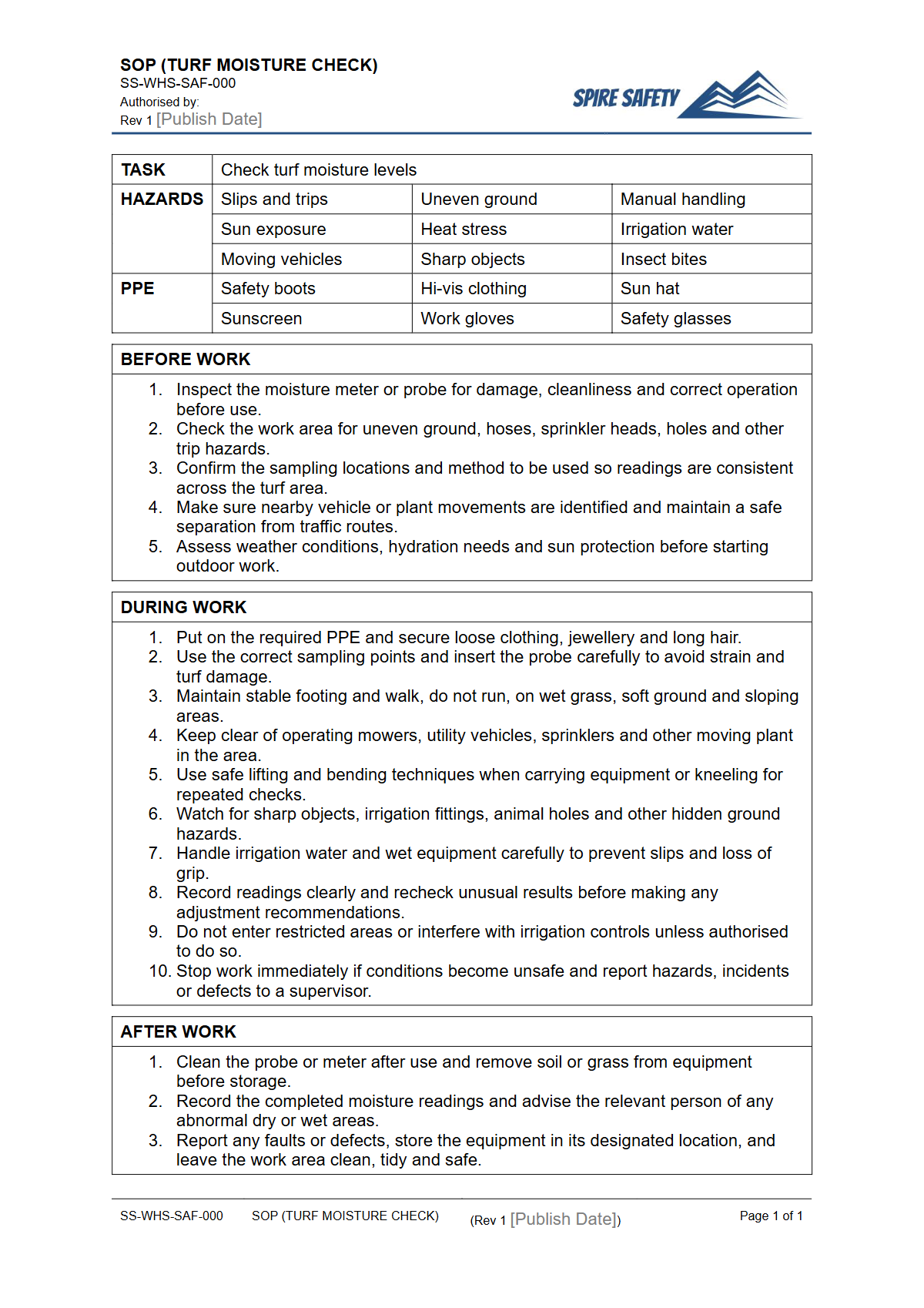
Purpose of the Free Safe Operating Procedure (Turf Moisture Check) Template
Developing a systematic approach to routine tasks is fundamental to workplace safety. Our free Safe Operating Procedure (Turf Moisture Check) Template provides a structured document for groundskeepers, turf managers, and maintenance teams.
This resource helps you formally outline the steps and safety controls required for accurately and safely measuring soil moisture in turf environments like golf courses, sporting ovals, and parks. The template is available in both DOCX for easy customisation and PDF for straightforward distribution.
A Safe Operating Procedure (SOP) serves as a critical training and operational tool. Its primary purpose is to minimise risk by ensuring a task is performed consistently and safely every time.
For turf moisture checking, this involves addressing hazards ranging from ergonomic strain to slips on wet ground. By documenting the agreed-upon method, you reduce the likelihood of incidents and create a clear standard for all workers.
This SOP forms a vital part of your overall safety framework, demonstrating due diligence in managing workplace risks. Implementing documented procedures is a core component of effective WHS management systems.
Video walkthrough
How to use the Free Safe Operating Procedure (Turf Moisture Check) Template
This template is designed as a comprehensive starting point. Simply download the DOCX file and open it in your preferred word processor to begin customisation.
It includes sections for outlining required Personal Protective Equipment (PPE), pre-operational checks for the moisture meter, a step-by-step guide to performing the check, and post-task clean-up procedures. Similar to our FREE Spreader SOP Template, it is structured to be logical and easy for workers to follow.
Important: This is a template that we have developed to be a starting point. You MUST customise it to reflect the specific equipment (e.g., TDR probes, portable meters), environment, personnel, and risks in your workplace.
Generic procedures are insufficient; they must be tailored to your site-specific conditions to be effective.
Key Hazards in Turf Moisture Checking
While it seems like a low-risk task, checking turf moisture can present several hazards that an SOP helps control. These include:
- Ergonomic Hazards: Repeated bending, kneeling, or awkward postures while inserting probes can lead to musculoskeletal injuries over time.
- Slips, Trips, and Falls: The work is often performed on wet, dewy, or uneven turf, increasing the risk of falls.
- Manual Handling: Carrying equipment across large areas can cause strain if not managed correctly.
- Environmental Exposure: Workers may be exposed to UV radiation, heat, or adverse weather conditions.
- Biological and Chemical Hazards: Direct contact with soil can expose workers to bacteria, fungi, or residual pesticides and fertilisers.
A thorough risk assessment should inform the controls you document in this SOP. If your work involves more significant ground disturbance, you might also find resources like our FREE Trencher SOP Template useful for managing associated machinery risks.
When to Use This SOP
This procedure should be applied whenever a worker is tasked with measuring turf moisture levels. It is particularly important in several key scenarios.
Use it as the basis for routine data collection that informs irrigation schedules on golf greens, sports fields, and high-value turf areas. It should also be followed before and after major weather events like heavy rainfall or during periods of drought to assess field conditions.
The SOP provides a standardised method for collecting data used in agronomic decisions, ensuring that readings are comparable and reliable over time. Regular review of safe work methods is a key part of maintaining safety standards, often validated through a WHS compliance audit.
Who Should Use This Safe Operating Procedure
This SOP is intended for any personnel involved in turf management and maintenance. This includes greenkeepers, groundskeepers, sports turf managers, apprentices, and seasonal workers.
Supervisors and managers should use it to induct new staff and verify the competency of existing employees, ensuring everyone understands the established safe work method. It also serves as a valuable reference tool in the field and a key document for safety meetings and toolbox talks.
For broader safety strategy development, engaging specialist advice can be beneficial; Spire Safety offers expert WHS consulting to help businesses refine their safety systems.
Beyond this specific task, building a library of clear, accessible procedures is best practice. You can explore our complete free WHS resources library for a wide range of templates covering different equipment and tasks.
Developing procedures for other common groundskeeping equipment, such as by using our FREE Scraper SOP Template, helps build a comprehensive safety system.
Common mistakes
Common mistakes to avoid
- Failing to calibrate the moisture meter according to manufacturer specifications.
- Taking readings from the same spot every time, leading to non-representative data.
- Ignoring ergonomic risks like bending or repetitive motions during the process.
- Not updating the SOP after purchasing new equipment or changing testing locations.
Legal references
Legal considerations
The following legal requirements may be relevant to this type of work.
- Work Health and Safety Act (Harmonised) — Provides the primary duties for protecting workers and other people from work health and safety risks.
- Work Health and Safety Regulations (Harmonised) — Sets out requirements supporting the management of workplace hazards and risks.
The following codes may be relevant to this type of work.
- Managing WHS Risks Code of Practice — Provides practical guidance on identifying hazards, assessing risks and applying effective controls.
- Work Health and Safety Consultation, Cooperation and Coordination Code of Practice — Provides practical guidance on consulting workers and coordinating with other duty holders.
- Managing the Work Environment and Facilities Code of Practice — Provides practical guidance on safe work environments, workplace facilities and related controls.
Did you know
Soil Compaction
Consistently checking turf moisture isn't just for plant health. It also helps groundskeepers identify and manage soil compaction, which affects water infiltration, root growth, and surface stability.
Data Is Key
Modern turf management relies heavily on data. Moisture readings, tracked over time, allow for precise irrigation schedules, which can significantly reduce water usage and optimise playing surface conditions.
FAQ
Frequently asked questions
01Why is a specific SOP for turf moisture checking necessary?
02What hazards does a turf moisture check SOP address?
03Can I use this template for any type of moisture meter?
04How often should this Safe Operating Procedure be reviewed?
Share this resource
Free Safe Operating Procedure (Turf Moisture Check) Template
Browse Categories
How To Use It
- 1Download and open in Word or PDF.
- 2Replace the placeholders with your business details.
- 3Get it reviewed by a WHS specialist before rollout.
Need it customised?
Our WHS consultants can adapt this template to your site, run a gap analysis, or audit what you already have in place.
Book a Free Consultation WHS consulting servicesor call 1300 156 382
Related templates
- Free Safe Operating Procedure (Turf Roll Handling) Template
- Free Safe Operating Procedure (Turnstile Cleaning) Template
- Free Safe Operating Procedure (Turnstile Operation) Template
- Free Safe Operating Procedure (Turret Punch) Template
- Free Safe Operating Procedure (Tyre Changer) Template
- Free Safe Operating Procedure (Tyre Inflation) Template