
Free Safe Operating Procedure (Turret Punch) Template
Manage turret punch hazards with our free Safe Operating Procedure template. This customisable document helps you outline step-by-step safety controls.
Free Safe Operating Procedure (Turret Punch) Template
DOCX • 126 KB + PDF
Updated Oct 2026
No signup required
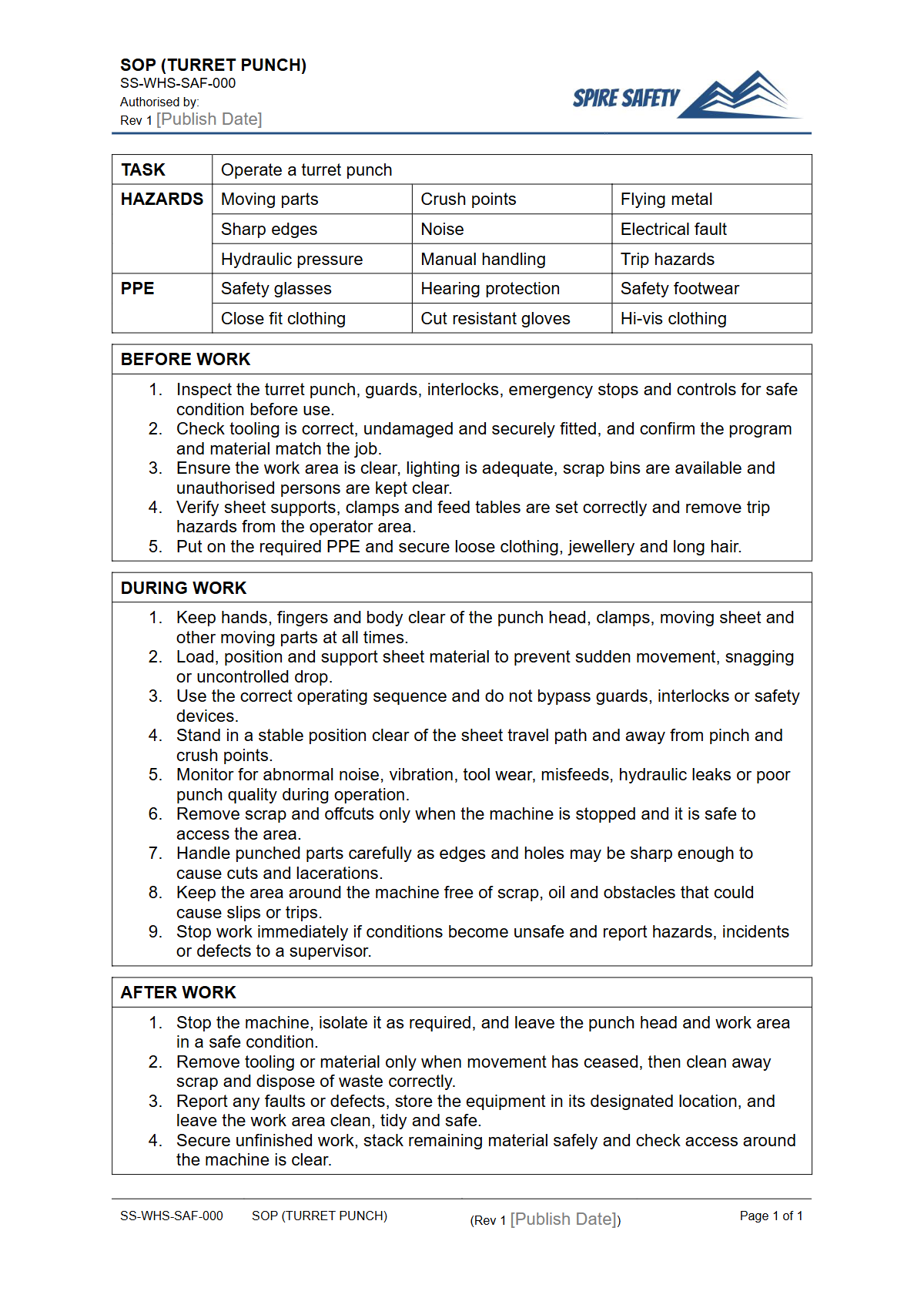
Purpose of the Free Safe Operating Procedure (Turret Punch) Template
Operating a turret punch press involves significant risks, including crushing, amputation from moving parts, noise exposure, and injuries from ejected material. This Free Safe Operating Procedure (Turret Punch) Template provides a structured framework for documenting the required steps to operate this machinery safely.
It helps organisations meet their duty of care by identifying hazards, assessing risks, and implementing control measures. A well-developed SOP is a cornerstone of effective WHS management systems, ensuring tasks are performed consistently and safely by all operators.
This document is designed to guide supervisors, operators, and safety personnel in establishing a formal, written process that mitigates the specific dangers associated with turret punch operation. It prompts you to consider every phase of the task, from pre-start checks to shutdown procedures, standardising your approach to high-risk work.
Video walkthrough
How to use the Free Safe Operating Procedure (Turret Punch) Template
To use this template effectively, download the DOCX file and adapt it to the specific make and model of the turret punch at your workplace. It's crucial to integrate your site-specific risk assessment findings, machine guarding details, and emergency procedures.
The document is a starting point, not a finished product.
Important: This is a template that you must customise. We are not familiar with your unique operational environment, the specific model of your equipment, or the competency of your people.
You must consult with your workers and conduct a risk assessment to ensure the final SOP is comprehensive and suitable for your workplace. Similar to how a Conveyer System SOP needs specifics about belt speed and guarding, your turret punch SOP needs details about its tooling and safety features.
Key Elements of a Turret Punch SOP
A robust SOP for a turret punch should cover several critical areas to be effective. Ensure your customised document includes:
- Required PPE: Specify mandatory personal protective equipment, such as safety glasses, hearing protection (earplugs or earmuffs), and steel-capped boots. Gloves may or may not be suitable depending on the risk of entanglement.
- Pre-Operational Checks: Create a checklist of safety functions to verify before starting work. This includes checking that machine guards are in place and functional, emergency stops are working, and the work area is clear of obstructions.
- Step-by-Step Operating Instructions: Detail the safe sequence for loading material, setting up the program, initiating the punching cycle, and unloading the finished part. This section should be clear, concise, and easy for operators to follow. It should also reference auxiliary equipment, much like a workshop's Air Compressor SOP outlines safe use of pneumatic tools.
- Post-Operational and Shutdown Procedures: Outline the correct process for powering down the machine, cleaning the work area, and reporting any faults or issues.
- Emergency Procedures: Clearly state the steps to take in an emergency, including the location and use of emergency stops, first aid contacts, and incident reporting protocols.
When to use a Safe Operating Procedure
A Safe Operating Procedure for a turret punch is a dynamic document used throughout the WHS lifecycle. It is essential for inducting new employees and training them on the specific hazards and controls of the machine.
It should be readily available at the point of use as a quick reference guide for operators. Furthermore, the SOP is a critical tool during incident investigations to determine if procedures were followed and if they need improvement.
Regular reviews, typically annually or after any changes to the equipment or process, ensure it remains relevant and effective. The currency and application of SOPs are often scrutinised during formal WHS compliance audits.
Who should use it
This SOP template is intended for a range of personnel within an organisation:
- WHS Managers and Advisors: To standardise safety documentation and provide a baseline for risk management across different types of plant and equipment.
- Supervisors and Team Leaders: To train their teams, supervise work, and enforce safe work practices consistently.
- Machine Operators: As a primary reference for performing their tasks safely and correctly. Their involvement in its development is crucial for practicality and buy-in.
- Maintenance Personnel: To understand the safe shutdown and isolation procedures required before conducting maintenance or repairs, complementing other documents like an Oxy Acetylene SOP used in repair work.
Consultation is Key
Developing an SOP should never be a top-down exercise. The model WHS laws require consultation with workers who will be using the procedure.
Engaging operators in the drafting and review process ensures the SOP is practical, reflects the reality of the task, and incorporates their valuable experience. This collaborative approach improves safety outcomes and fosters a positive safety culture. For more tools to support your safety processes, explore our complete free WHS resources library.
Common mistakes
Common mistakes to avoid
- Using a generic machinery SOP that fails to address specific turret punch hazards like tool changes and auto-indexing.
- Forgetting to include procedures for handling different material types and thicknesses, which can affect machine guarding and operation.
- Neglecting to detail safe methods for clearing material jams or performing minor tool maintenance.
- Failing to train all operators on the finalised SOP and verify their understanding before authorising them to use the machine.
Legal references
Legal considerations
The following legal requirements may be relevant to this type of work.
- Work Health and Safety Act (Harmonised) — Provides the primary duties for protecting workers and other people from work health and safety risks.
- Work Health and Safety Regulations (Harmonised) — Sets out requirements supporting the management of workplace hazards and risks.
The following codes may be relevant to this type of work.
- Managing WHS Risks Code of Practice — Provides practical guidance on identifying hazards, assessing risks and applying effective controls.
- Work Health and Safety Consultation, Cooperation and Coordination Code of Practice — Provides practical guidance on consulting workers and coordinating with other duty holders.
- Managing the Work Environment and Facilities Code of Practice — Provides practical guidance on safe work environments, workplace facilities and related controls.
Did you know
Tooling Capacity
Modern CNC turret punches can hold over 50 different tools in their turret, allowing them to perform complex punching, forming, and tapping operations on a single sheet of metal without manual tool changes.
Noise Hazard
The impact noise from a turret punch can easily exceed 100 dB(A), well above the 85 dB(A) exposure standard for an 8-hour shift, making hearing protection an essential and non-negotiable control measure.
FAQ
Frequently asked questions
01What are the primary hazards associated with a turret punch?
02How often should a Turret Punch SOP be reviewed?
03Is this template alone enough for WHS compliance?
04Who is responsible for writing a Safe Operating Procedure?
Share this resource
Free Safe Operating Procedure (Turret Punch) Template
Browse Categories
How To Use It
- 1Download and open in Word or PDF.
- 2Replace the placeholders with your business details.
- 3Get it reviewed by a WHS specialist before rollout.
Need it customised?
Our WHS consultants can adapt this template to your site, run a gap analysis, or audit what you already have in place.
Book a Free Consultation WHS consulting servicesor call 1300 156 382
Related templates
- Free Safe Operating Procedure (Tyre Changer) Template
- Free Safe Operating Procedure (Tyre Inflation) Template
- Free Safe Operating Procedure (Tyre Recycling Intake) Template
- Free Safe Operating Procedure (ULD Handling) Template
- Free Safe Operating Procedure (Ultrasonic Cleaner) Template
- Free Safe Operating Procedure (Ultrasonic Weld Test) Template