
Free Safe Operating Procedure (Waste Load Rejection) Template
Manage non-conforming waste safely with our free Safe Operating Procedure (Waste Load Rejection) Template. Download the customisable DOCX and PDF now.
Free Safe Operating Procedure (Waste Load Rejection) Template
DOCX • 126 KB + PDF
Updated Oct 2026
No signup required
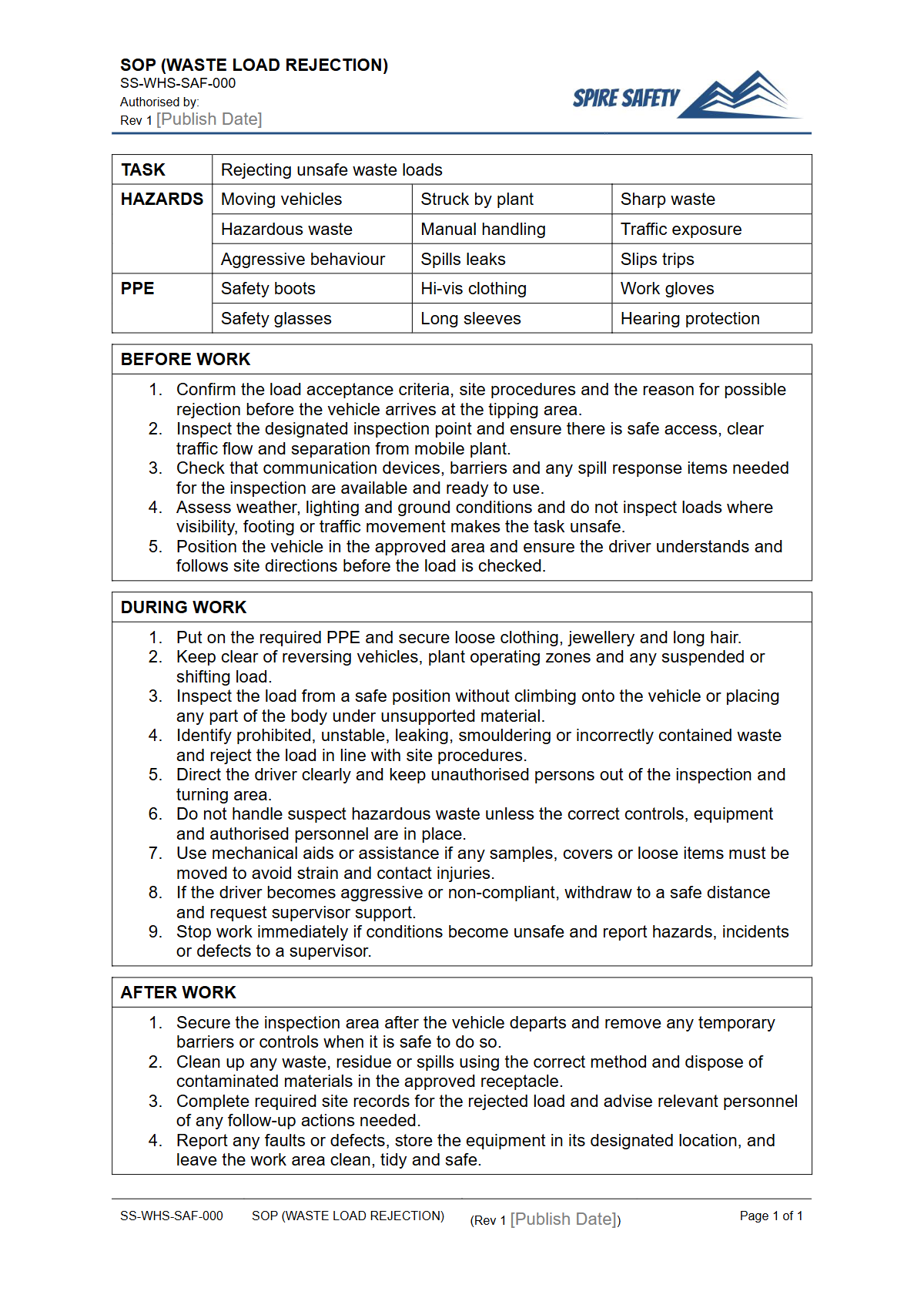
Purpose of the Free Safe Operating Procedure (Waste Load Rejection) Template
Managing incoming waste streams is a critical function for any landfill, transfer station, or recycling facility. This free Safe Operating Procedure (Waste Load Rejection) Template provides a structured starting point for documenting the process of identifying, managing, and rejecting non-conforming or prohibited waste loads.
The primary purpose is to ensure the safety of workers, protect the environment, and maintain compliance with environmental and WHS regulations. A formal procedure minimises risks associated with handling unexpected hazardous materials, asbestos, liquids, or other unacceptable items that could cause harm, damage equipment, or lead to regulatory penalties.
Implementing this SOP is a key component of robust WHS management systems, demonstrating a commitment to proactive risk control.
Video walkthrough
How to use the Free Safe Operating Procedure (Waste Load Rejection) Template
This template is provided in both DOCX and PDF formats for your convenience. It is designed to be a comprehensive but generic framework that you must adapt to the specific context of your worksite.
To use it effectively, download the DOCX file and systematically work through each section, replacing placeholder text with site-specific details. This includes identifying key personnel and their responsibilities, defining the exact types of waste prohibited at your facility, detailing the location of quarantine areas, and outlining your internal and external communication protocols.
The effectiveness of this procedure relies on its customisation. Other procedural documents, like our Telehandler SOP, also require this level of site-specific detail to be effective.
Important: This is a template document. We are not WHS consultants, and this document must be customised to your specific workplace, equipment, and operational context by a competent person.
It does not automatically supports your compliance efforts.
When to use this Safe Operating Procedure
This Safe Operating Procedure should be initiated whenever a waste load is suspected or confirmed to contain non-conforming materials. Triggers for activating the procedure can occur at several points in the receiving process, including:
- During initial inspection by gatehouse or weighbridge operators.
- When a discrepancy is noted between the consignment documentation and the load's appearance.
- During the unloading or 'tipping' process, when prohibited items become visible.
- When an alarm is triggered by radiation detection systems.
- When materials are identified as non-conforming during processing, such as on a sorting line. For facilities using such equipment, a specific Conveyer System SOP should also be in place to manage hazards at this stage.
Who should use it
This procedure is intended for all personnel involved in the waste receiving, handling, and management process. Specific roles that must be trained and deemed competent in this SOP include:
- Weighbridge and Gatehouse Operators: As the first point of contact, they are crucial for initial screening and communication.
- Spotters and Tipping Floor Supervisors: Responsible for visually inspecting loads as they are discharged and directing immediate actions.
- Mobile Plant Operators: Operators of loaders, excavators, or dozers who may be required to isolate, move, or cover a rejected load.
- Site Supervisors and Managers: Responsible for overseeing the entire process, making key decisions, ensuring documentation is completed, and liaising with waste generators or regulatory bodies.
- Environmental and WHS Officers: Provide technical advice and ensure the procedure aligns with legal requirements.
Key Elements of a Robust Waste Load Rejection Procedure
A comprehensive procedure should address several critical stages to ensure incidents are managed safely and effectively. The template prompts you to detail your site's specific actions for each of the following:
Identification and Assessment: The initial steps for recognising and evaluating a non-conforming load. This includes visual indicators, odours, and documentation checks.
Immediate Actions: The sequence of actions once a suspect load is identified. This typically involves stopping all work in the immediate vicinity, preventing the vehicle from leaving, and isolating the area to prevent contamination or exposure.
Notification and Reporting: Outlines who must be informed, including the site supervisor, environmental manager, and the driver of the vehicle. It also covers the requirements for completing an incident report, which is vital for internal records and potential WHS compliance auditing.
Quarantine and Management: Specifies the procedures for safely moving the rejected material (or the entire vehicle) to a designated, secure quarantine bay. It should detail how the material will be stored pending a decision on its final disposal or return.
Communication with Generator/Carrier: Formalises the process for communicating the rejection to the waste transport company and the originating client, including the reasons for rejection and any associated costs or required actions.
By thoroughly customising this template, you create a clear, actionable plan that strengthens your operational controls. For more tools to enhance your safety systems, explore our complete free WHS resources library.
Common mistakes
Common mistakes to avoid
- Failing to adequately train all relevant staff, including casuals and contractors, on the rejection procedure.
- Not having a clearly marked, signed, and secure quarantine area ready for immediate use.
- Incomplete or inconsistent documentation of rejection incidents, hindering follow-up and trend analysis.
- Allowing the transport vehicle to leave the site before the issue is formally documented and communicated.
Legal references
Legal considerations
The following legal requirements may be relevant to this type of work.
- Work Health and Safety Act (Harmonised) — Provides the primary duties for protecting workers and other people from work health and safety risks.
- Work Health and Safety Regulations (Harmonised) — Sets out requirements supporting the management of workplace hazards and risks.
The following codes may be relevant to this type of work.
- Managing WHS Risks Code of Practice — Provides practical guidance on identifying hazards, assessing risks and applying effective controls.
- Work Health and Safety Consultation, Cooperation and Coordination Code of Practice — Provides practical guidance on consulting workers and coordinating with other duty holders.
- Managing the Work Environment and Facilities Code of Practice — Provides practical guidance on safe work environments, workplace facilities and related controls.
Did you know
The Cost of Contamination
In the recycling industry, contamination from non-recyclable materials in kerbside bins can be a significant issue. Some Australian councils have reported contamination rates as high as 15-25%, increasing processing costs and reducing the quality of recovered materials.
FAQ
Frequently asked questions
01What is 'waste load rejection' in the context of this Safe Operating Procedure?
02Why is a formal procedure for rejecting waste loads important?
03Who is ultimately responsible for rejecting a non-compliant waste load?
04Can I use this template for rejecting hazardous chemical waste?
Share this resource
Free Safe Operating Procedure (Waste Load Rejection) Template
Browse Categories
How To Use It
- 1Download and open in Word or PDF.
- 2Replace the placeholders with your business details.
- 3Get it reviewed by a WHS specialist before rollout.
Need it customised?
Our WHS consultants can adapt this template to your site, run a gap analysis, or audit what you already have in place.
Book a Free Consultation WHS consulting servicesor call 1300 156 382
Related templates
- Free Safe Operating Procedure (Waste Load Segregation) Template
- Free Safe Operating Procedure (Waste Oil Collection) Template
- Free Safe Operating Procedure (Waste Stream Sorting) Template
- Free Safe Operating Procedure (Waste Transfer Handover) Template
- Free Safe Operating Procedure (Wastewater Sampling) Template
- Free Safe Operating Procedure (Water Bath) Template