
Free Safe Operating Procedure (Water Stain Removal) Template
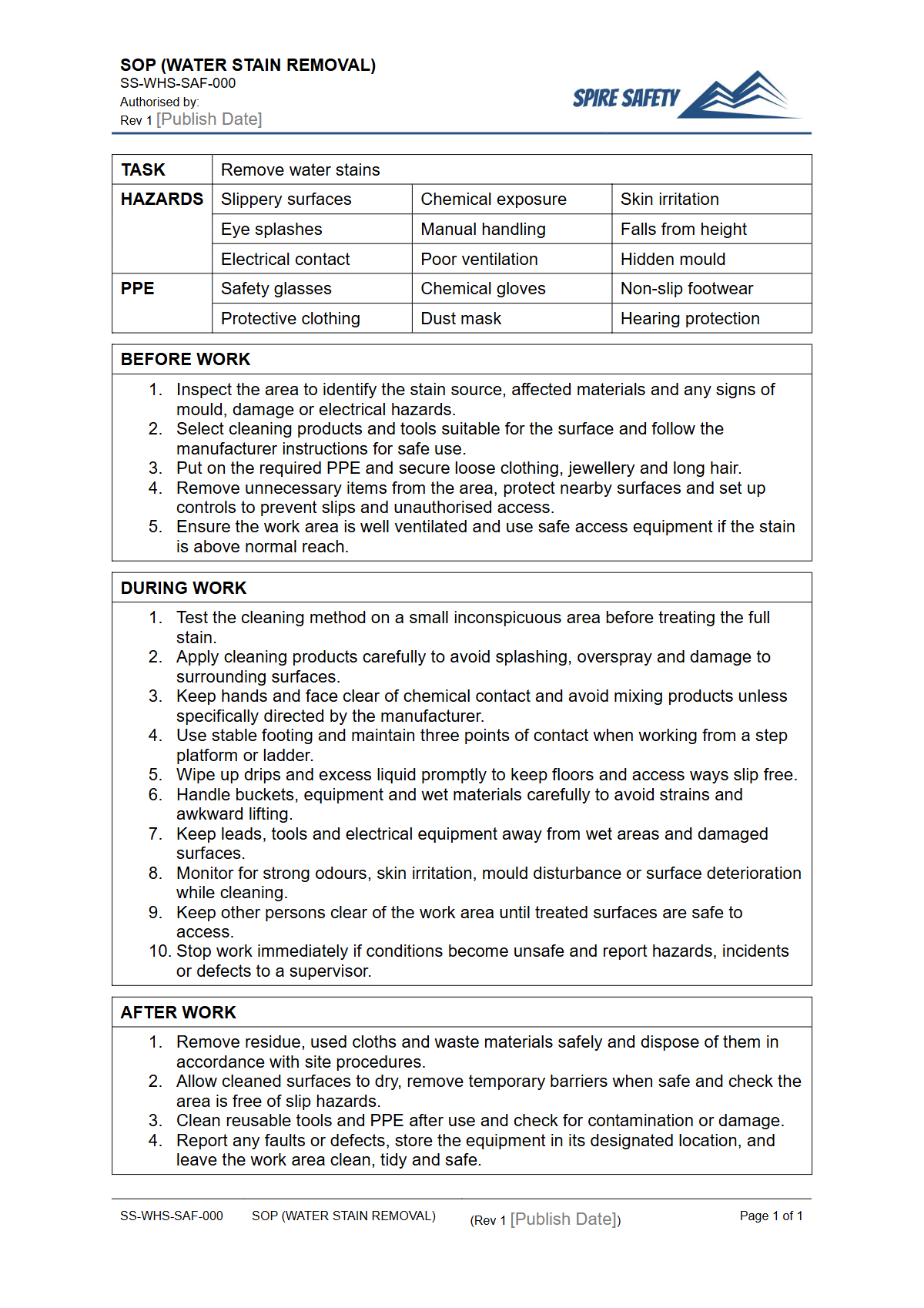
Download our free Safe Operating Procedure (Water Stain Removal) Template to formalise your WHS processes. This customisable DOCX helps manage risks.
Free Safe Operating Procedure (Water Stain Removal) Template
DOCX • 126 KB + PDF
Updated Oct 2026
No signup required
Purpose of the Free Safe Operating Procedure (Water Stain Removal) Template
Effectively managing workplace risks starts with clear, documented processes. Our Free Safe Operating Procedure (Water Stain Removal) Template provides a structured starting point for any business needing to formalise its cleaning and restoration tasks.
Water stain removal, while seemingly simple, involves hazards such as chemical exposure, slips and falls, and ergonomic strains. This SOP is designed to help you systematically identify these risks and outline the necessary control measures to protect your workers.
By documenting the step-by-step process, required Personal Protective Equipment (PPE), and emergency procedures, you create a vital training and reference tool. It ensures tasks are performed consistently and safely every time, forming a critical component of more comprehensive WHS management systems and demonstrating your commitment to a safe work environment.
Video walkthrough
How to use the Free Safe Operating Procedure (Water Stain Removal) Template
This template is available in both DOCX and PDF formats for your convenience. The DOCX file is fully editable, allowing you to tailor the content to your specific operational needs.
A Safe Operating Procedure is not a one-size-fits-all document. To be effective, it must accurately reflect the realities of your workplace.
Important: This document is a template, not a finished procedure. We stress that you must customise it to align with the specific chemicals, equipment, surfaces (e.g., plasterboard, carpet, wood), and unique environmental factors of your site. Review and adapt each section, including:
- Required PPE (e.g., gloves, safety glasses, respirators).
- Pre-operational checks (e.g., checking ventilation, ensuring the source of the water leak is fixed).
- The step-by-step procedure for applying cleaners and removing stains.
- Post-task clean-up and waste disposal.
Once customised, this SOP becomes a powerful tool for your organisation. For more templates and safety documents, you can browse our complete free WHS resources library.
When to Use a Safe Operating Procedure
An SOP for water stain removal should be developed and implemented before any worker undertakes the task. It is an essential control measure that should be identified during the risk assessment process.
Use it as the basis for training new employees, conducting refresher courses for existing staff, and for supervising work in progress. Regular reviews of the SOP are also crucial, especially when new chemicals are introduced, procedures change, or an incident occurs. Proactive use and review of SOPs are key indicators of a healthy safety culture, a factor often examined during WHS compliance audits.
Who Should Use This SOP
This Safe Operating Procedure is intended for multiple roles within an organisation:
- Workers: To follow as a clear guide for performing the task safely and efficiently.
- Supervisors and Team Leaders: To use as a tool for training, competency assessment, and ensuring procedural compliance on the floor.
- WHS Managers and Officers: To integrate into the overall safety management system as evidence of risk control and to standardise procedures across different sites or teams.
In a commercial setting like a hotel or restaurant, having clear procedures for various tasks is critical. This SOP for water stains complements other specific guides, such as an SOP for deep fryer cleaning, by ensuring all maintenance and cleaning activities are covered by documented safety protocols.
Key Hazards in Water Stain Removal
When customising this SOP, pay close attention to the primary hazards associated with the task. These often include:
- Chemical Exposure: Many stain removers contain acids or bleaches that can cause skin burns, eye damage, or respiratory irritation. Always have the Safety Data Sheet (SDS) for each chemical readily available.
- Slips, Trips, and Falls: Wet floors are an obvious slip hazard. Cords from cleaning equipment can create trip hazards. If working on ceiling stains, the risks associated with ladders or platforms must be managed.
- Biological Hazards: Persistent dampness can lead to mould and mildew growth, which can release spores that are hazardous when inhaled. The SOP should include steps for identifying and safely managing potential mould.
- Equipment Hazards: If using machinery for cleaning or drying, such as industrial fans or wet vacuums, their specific risks must be included. For larger jobs, this might even involve equipment like that detailed in an SOP for the safe operation of an air compressor used for drying purposes.
In cases where water damage is severe, structural repairs may be necessary. This requires a separate risk assessment and procedures for tasks like cutting away damaged materials, which would be covered by a Safe Operating Procedure for a circular saw or other relevant tools.
Common mistakes
Common mistakes to avoid
- Using the wrong cleaning chemical for the surface material, causing further damage.
- Failing to ensure adequate ventilation when using chemical cleaners, leading to hazardous fume build-up.
- Neglecting to wear appropriate PPE, especially safety glasses and chemical-resistant gloves.
- Cleaning the stain without identifying and repairing the root cause of the water leak.
Legal references
Legal considerations
The following legal requirements may be relevant to this type of work.
- Work Health and Safety Act (Harmonised) — Provides the primary duties for protecting workers and other people from work health and safety risks.
- Work Health and Safety Regulations (Harmonised) — Sets out requirements supporting the management of workplace hazards and risks.
The following codes may be relevant to this type of work.
- Managing WHS Risks Code of Practice — Provides practical guidance on identifying hazards, assessing risks and applying effective controls.
- Work Health and Safety Consultation, Cooperation and Coordination Code of Practice — Provides practical guidance on consulting workers and coordinating with other duty holders.
- Managing the Work Environment and Facilities Code of Practice — Provides practical guidance on safe work environments, workplace facilities and related controls.
Did you know
The Source of the Stain
Water stains on ceilings and walls are often not from the water itself but from the minerals (like iron and manganese) it collects while passing through building materials like wood or insulation.
Hidden Danger
The visible water stain is often just the tip of the iceberg. The moisture trapped behind the wall or in the ceiling can create a breeding ground for mould, which can become a significant respiratory hazard if not properly remediated.
FAQ
Frequently asked questions
01What chemicals are used for water stain removal and what are the risks?
02Does this SOP cover working at heights to remove stains on ceilings?
03How often should a Safe Operating Procedure for water stain removal be reviewed?
04Is a Safe Operating Procedure a legal requirement in Australia?
Share this resource
Free Safe Operating Procedure (Water Stain Removal) Template
Browse Categories
How To Use It
- 1Download and open in Word or PDF.
- 2Replace the placeholders with your business details.
- 3Get it reviewed by a WHS specialist before rollout.
Need it customised?
Our WHS consultants can adapt this template to your site, run a gap analysis, or audit what you already have in place.
Book a Free Consultation WHS consulting servicesor call 1300 156 382
Related templates
- Free Safe Operating Procedure (Water Tank Inspection) Template
- Free Safe Operating Procedure (Water Valve Inspection) Template
- Free Safe Operating Procedure (Waterway Debris Removal) Template
- Free Safe Operating Procedure (Waterway Litter Cleanup) Template
- Free Safe Operating Procedure (Wax Heater) Template
- Free Safe Operating Procedure (Wayfinding Sign Cleaning) Template