
Free Safe Operating Procedure (Wheelchair Tyre Check) Template
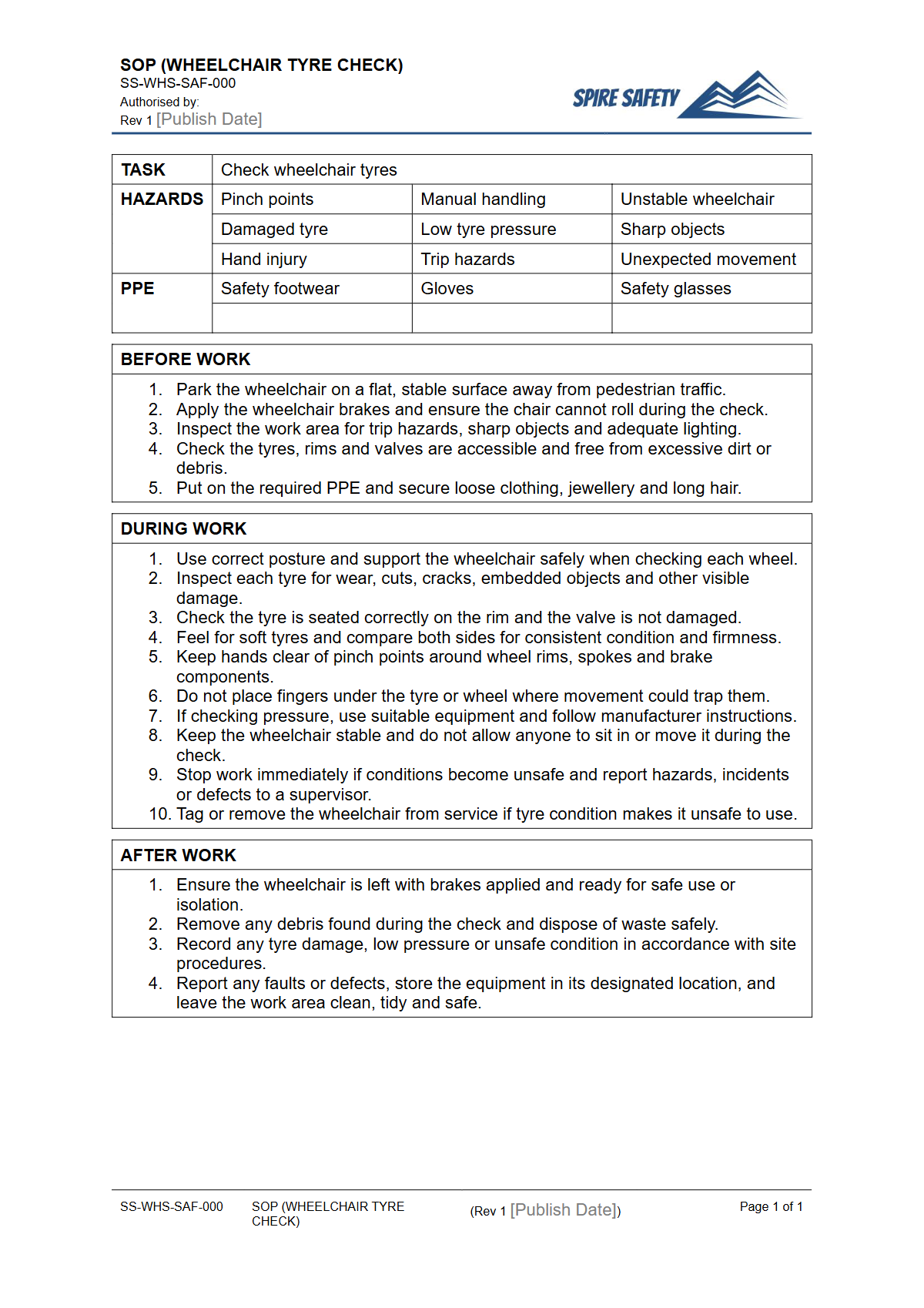
Download our free Safe Operating Procedure (Wheelchair Tyre Check) Template to formalise your maintenance process. Get this customisable DOCX and PDF today.
Free Safe Operating Procedure (Wheelchair Tyre Check) Template
DOCX • 126 KB + PDF
Updated Oct 2026
No signup required
Purpose of the Free Safe Operating Procedure (Wheelchair Tyre Check) Template
Maintaining workplace safety involves managing risks for all types of equipment, including mobility aids. Our Free Safe Operating Procedure (Wheelchair Tyre Check) Template provides a structured framework for ensuring this common but crucial task is performed safely and consistently.
This Safe Operating Procedure (SOP) outlines the necessary steps to minimise risks associated with wheelchair tyre inspection and inflation. Correct tyre pressure is critical not only for the safe and efficient operation of the wheelchair but also for the user's comfort and mobility.
Improperly inflated tyres can lead to increased physical strain for the user, instability, and a higher risk of tipping or accidents. Furthermore, this procedure addresses potential worker injuries, such as those from using compressed air equipment or manual handling. Implementing a formal SOP helps standardise the process, ensuring every check is thorough and documented, which is a key part of an effective WHS management system.
Video walkthrough
How to use the Free Safe Operating Procedure (Wheelchair Tyre Check) Template
Download the template in your preferred format (DOCX for easy editing or PDF) and adapt it to your specific operational needs. This document is a structured starting point, not a finished product.
Please note: To be effective, you must customise this template to reflect the specific equipment, environment, and personnel in your workplace. This includes adding details about the types of wheelchairs used (manual, powered), the specific inflation equipment available (e.g., hand pump, air compressor), required Personal Protective Equipment (PPE), and emergency shutdown procedures for any powered tools involved. If you are using compressed air, you may also find our free Air Compressor SOP template useful for outlining the safe use of that specific piece of plant.
When to use this Safe Operating Procedure
This SOP should be integrated into your regular maintenance and pre-use inspection schedule. The frequency of checks may vary depending on the wheelchair's usage level and the environment it operates in.
For high-use wheelchairs in facilities like hospitals or aged care homes, a daily or weekly check might be appropriate. For personal use, a weekly or bi-weekly check could suffice. The procedure should always be performed:
- Before a wheelchair is issued to a new user.
- As part of a scheduled preventative maintenance program.
- If a user or carer reports any issues with handling, stability, or comfort.
- After any repairs or tyre replacements have been carried out.
Regularly auditing these procedures is a critical verification step to ensure they are being followed correctly and remain effective. This process is a core component of professional WHS compliance auditing.
Who should use this Safe Operating Procedure
This procedure is designed for any person responsible for the maintenance and safety of wheelchairs. This includes:
- Disability support workers and carers.
- Maintenance staff in aged care facilities, hospitals, and community centres.
- Rehabilitation equipment technicians and suppliers.
- Family members who assist with equipment maintenance at home.
All personnel tasked with performing this check must be trained and deemed competent. Training should cover the specific steps in the SOP, the risks involved, the correct use of tools like pressure gauges and pumps, and the manufacturer's recommendations for tyre pressure.
This documentation forms part of the evidence for worker competency and training records. For broader safety guidance, our free WHS resources library offers a range of templates and checklists for various workplace needs.
A robust safety framework extends beyond a single procedure. It involves identifying all hazards, assessing risks, and implementing controls across all workplace activities.
Creating a suite of SOPs for various tasks is a fundamental part of this process. For example, in environments with other equipment, you might also need a FREE Conveyer System SOP to manage different types of risks.
If your organisation requires assistance in developing a comprehensive safety system, engaging external expertise through WHS consulting can provide valuable direction and support.
Common mistakes
Common mistakes to avoid
- Guessing the pressure instead of using an accurate gauge.
- Inflating to the maximum pressure listed on the tyre wall, not the manufacturer's recommended operating pressure.
- Forgetting to inspect the tyre for embedded objects, cracks, or excessive wear during the check.
- Failing to document that the check was completed as part of the maintenance log.
Legal references
Legal considerations
The following legal requirements may be relevant to this type of work.
- Work Health and Safety Act (Harmonised) — Provides the primary duties for protecting workers and other people from work health and safety risks.
- Work Health and Safety Regulations (Harmonised) — Sets out requirements supporting the management of workplace hazards and risks.
The following codes may be relevant to this type of work.
- Managing WHS Risks Code of Practice — Provides practical guidance on identifying hazards, assessing risks and applying effective controls.
- Work Health and Safety Consultation, Cooperation and Coordination Code of Practice — Provides practical guidance on consulting workers and coordinating with other duty holders.
- Managing the Work Environment and Facilities Code of Practice — Provides practical guidance on safe work environments, workplace facilities and related controls.
Did you know
Pushing Effort
Under-inflated pneumatic tyres can increase the energy a user needs to propel their manual wheelchair by up to 30%, leading to faster fatigue and potential shoulder strain.
Pneumatic vs. Solid
While pneumatic (air-filled) tyres offer a smoother ride and better shock absorption, they require regular pressure checks. Solid or foam-filled tyres are maintenance-free but provide a harder ride and less traction.
FAQ
Frequently asked questions
01What are the risks of incorrect wheelchair tyre pressure?
02How often should wheelchair tyres be checked?
03Is a Safe Operating Procedure legally required for checking wheelchair tyres?
04What PPE is needed for a wheelchair tyre check?
Share this resource
Free Safe Operating Procedure (Wheelchair Tyre Check) Template
Browse Categories
How To Use It
- 1Download and open in Word or PDF.
- 2Replace the placeholders with your business details.
- 3Get it reviewed by a WHS specialist before rollout.
Need it customised?
Our WHS consultants can adapt this template to your site, run a gap analysis, or audit what you already have in place.
Book a Free Consultation WHS consulting servicesor call 1300 156 382
Related templates
- Free Safe Operating Procedure (Wheelchair Van Loading) Template
- Free Safe Operating Procedure (Wheelchair Washdown) Template
- Free Safe Operating Procedure (Wildlife Nest Avoidance) Template
- Free Safe Operating Procedure (Windblown Debris Cleanup) Template
- Free Safe Operating Procedure (Windbreak Maintenance) Template
- Free Safe Operating Procedure (Window Cleaning) Template