
Free WHS Inspection (Building Supply) Template
Download our free WHS Inspection (Building Supply) Template. This structured DOCX & PDF helps formalise safety checks in building supply yards. Download today.
Free WHS Inspection (Building Supply) Template
DOCX • 128 KB + PDF
Updated Oct 2026
No signup required
Purpose of the Free WHS Inspection (Building Supply) Template
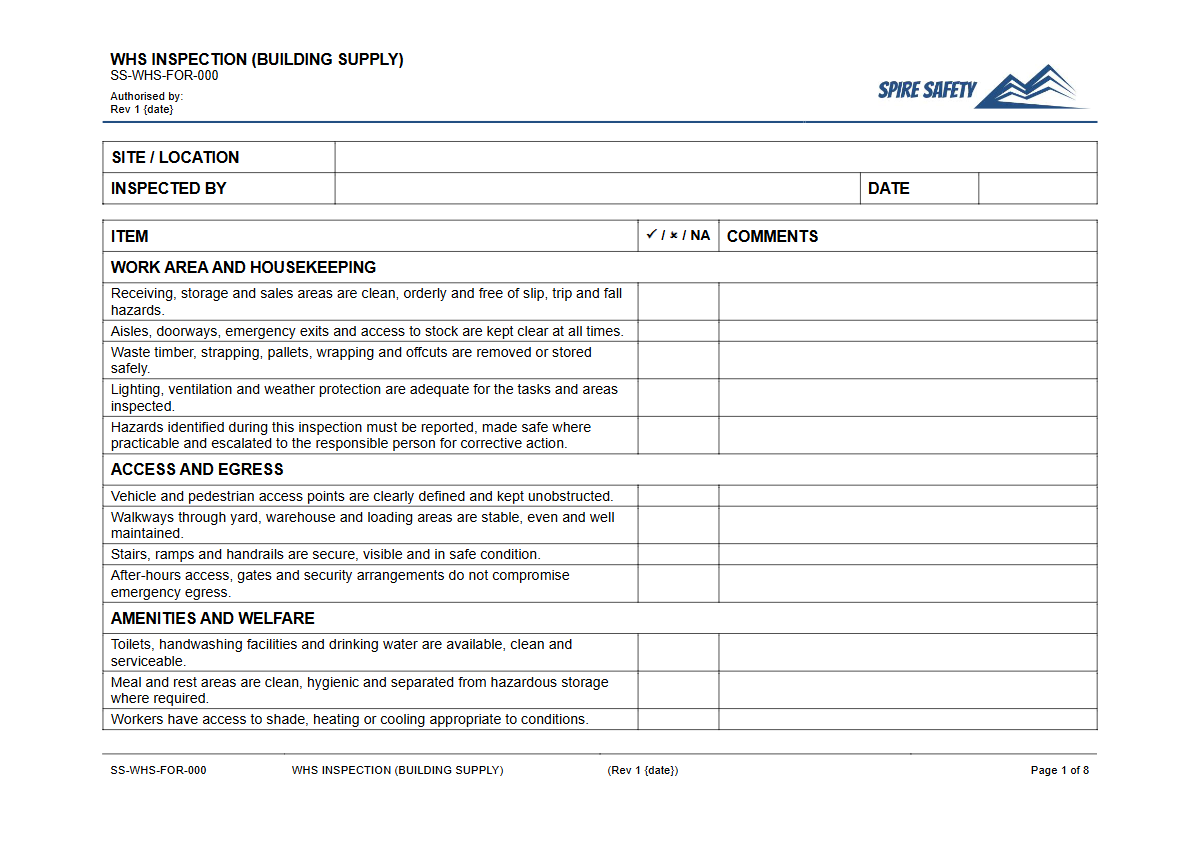
Building supply yards are dynamic environments with significant work health and safety risks, from moving vehicles and plant to falling objects and manual handling. This Free WHS Inspection (Building Supply) Template provides a structured starting point for systematically identifying and controlling these hazards.
Regular, documented inspections are a cornerstone of effective safety management, demonstrating proactive risk identification and helping to prevent incidents before they occur. Using this template helps formalise your inspection process, ensuring key areas are consistently checked and creating a clear record of your safety activities.
A well-implemented inspection program is a fundamental part of a holistic WHS management system, providing essential data for risk assessments and continuous improvement. It helps your organisation meet its duty of care by actively monitoring the workplace and addressing unsafe conditions in a timely manner.
This process not only protects your workers but also enhances operational efficiency by reducing downtime from incidents and equipment failure.
Video walkthrough
How to use the Free WHS Inspection (Building Supply) Template
This template is designed for ease of use and customisation. Follow these steps to integrate it into your safety processes:
- Download: Choose your preferred format (DOCX for easy editing or PDF for printing).
- Customise: Review every item and adapt the checklist to your specific site. Add, remove, or modify sections to reflect the unique equipment, materials, layout, and procedures of your building supply business.
- Train: Ensure the personnel who will conduct the inspections are competent to do so. They must understand the hazards they are looking for and know the procedure for reporting and escalating issues.
- Schedule & Conduct: Establish a schedule for inspections (e.g., weekly, fortnightly). Conduct the inspection by physically walking through the designated area and observing work practices, equipment condition, and environmental factors.
- Document & Action: Record all findings on the checklist. For any identified hazards or non-conformances, assign a corrective action, a responsible person, and a due date. Track these actions to ensure they are completed.
- Review: Periodically review completed inspection reports to identify recurring issues or trends. This data is invaluable for refining your safety procedures and focusing improvement efforts.
IMPORTANT: This document is a template only. You must customise it to reflect the specific hazards, equipment, and operational procedures of your building supply workplace.
Our organisation is not liable for any incidents that may occur from the use of this template.
Key Areas Covered in the Inspection
This template prompts checks across several critical areas common to building supply operations, including:
- Site Access & Traffic Management: Ensures pedestrian and vehicle routes are clearly marked, separated where possible, and free from obstruction. For automated access points, using a specific checklist like our Free Pre-Start Checklist (Boom Gate) Template can add another layer of verification.
- Material Storage & Racking: Covers the safe stacking of materials, the structural integrity of pallet racking, and ensuring load limits are displayed and observed.
- Loading/Unloading Zones: Focuses on practices for safely loading and unloading vehicles, including exclusion zones, communication protocols, and securing loads.
- Plant & Equipment: General checks for mobile plant like forklifts and loaders, ensuring they are in good condition and operated safely. For specific high-risk machinery, consider a more detailed daily check, such as the one found in our Free Pre-Start Checklist (Electric Hoist) Template.
- Housekeeping: Assesses general site tidiness, waste management, and the control of slip, trip, and fall hazards.
- Emergency Preparedness: Verifies that fire equipment, first aid kits, and emergency exits are accessible, signed, and in good working order.
When to use it
The frequency of workplace inspections should be determined by your risk assessment. High-traffic or high-risk areas, such as loading docks or timber milling sections, may require weekly or even daily checks.
Less hazardous areas, like administrative offices, might be inspected monthly or quarterly. This template should also be used after an incident or near miss, following a significant change to the workplace (like new equipment or layout), or as part of regular reviews by the Health and Safety Committee. The findings can provide crucial evidence during a formal WHS compliance audit.
Who should use it
Workplace inspections should be carried out by individuals with the knowledge and training to identify hazards relevant to a building supply environment. This typically includes site supervisors, team leaders, managers, and Health and Safety Representatives (HSRs).
Involving a variety of people in the inspection process can bring fresh eyes to familiar areas and help build a stronger safety culture across the organisation. A positive culture also recognises the importance of worker wellbeing, a topic further explored in our guide to Mental Health First Aid in the Workplace.
For more templates, checklists, and safety guides, explore our complete free WHS resources library. Spire Safety also provides expert WHS consulting to help businesses develop and implement robust safety systems tailored to their specific industry risks.
Common mistakes
Common mistakes to avoid
- Using the template 'as-is' without customising it for specific site hazards and equipment.
- Failing to assign, track, and close out corrective actions for identified issues.
- Treating the inspection as a 'tick-and-flick' exercise without genuine observation or engagement.
- Not providing adequate training on hazard identification to the person conducting the inspection.
Legal references
Legal considerations
The following legal requirements may be relevant to this type of work.
- Work Health and Safety Act (Harmonised) — Provides the primary duties for protecting workers and other people from work health and safety risks.
- Work Health and Safety Regulations (Harmonised) — Sets out requirements supporting the management of workplace hazards and risks.
The following codes may be relevant to this type of work.
- Managing WHS Risks Code of Practice — Provides practical guidance on identifying hazards, assessing risks and applying effective controls.
- Work Health and Safety Consultation, Cooperation and Coordination Code of Practice — Provides practical guidance on consulting workers and coordinating with other duty holders.
- Managing the Work Environment and Facilities Code of Practice — Provides practical guidance on safe work environments, workplace facilities and related controls.
Did you know
Racking Collapse
Incorrectly loaded or damaged pallet racking is a leading cause of major incidents in storage and supply yards. Regular inspection is a critical control to prevent catastrophic failure.
Traffic Management
A significant portion of forklift-related incidents involve pedestrians. A formal traffic management plan, regularly verified by inspections, is essential in busy building supply environments.
FAQ
Frequently asked questions
01What is the difference between a WHS inspection and an audit?
02How often should a building supply yard be inspected?
03Who is responsible for fixing issues found during an inspection?
04Can this inspection template be used for other industries?
Share this resource
Free WHS Inspection (Building Supply) Template
Browse Categories
How To Use It
- 1Download and open in Word or PDF.
- 2Replace the placeholders with your business details.
- 3Get it reviewed by a WHS specialist before rollout.
Need it customised?
Our WHS consultants can adapt this template to your site, run a gap analysis, or audit what you already have in place.
Book a Free Consultation WHS consulting servicesor call 1300 156 382