
Free WHS Inspection (Bus Depot) Template
Download our Free WHS Inspection (Bus Depot) Template to streamline your safety checks. A structured DOCX & PDF to help manage risks unique to bus depots.
Free WHS Inspection (Bus Depot) Template
DOCX • 129 KB + PDF
Updated Oct 2026
No signup required
Purpose of the Free WHS Inspection (Bus Depot) Template
Bus depots are complex, high-risk environments with a constant flow of large vehicles, pedestrians, and maintenance activities. Effectively managing work health and safety requires a systematic approach to identifying and controlling hazards.
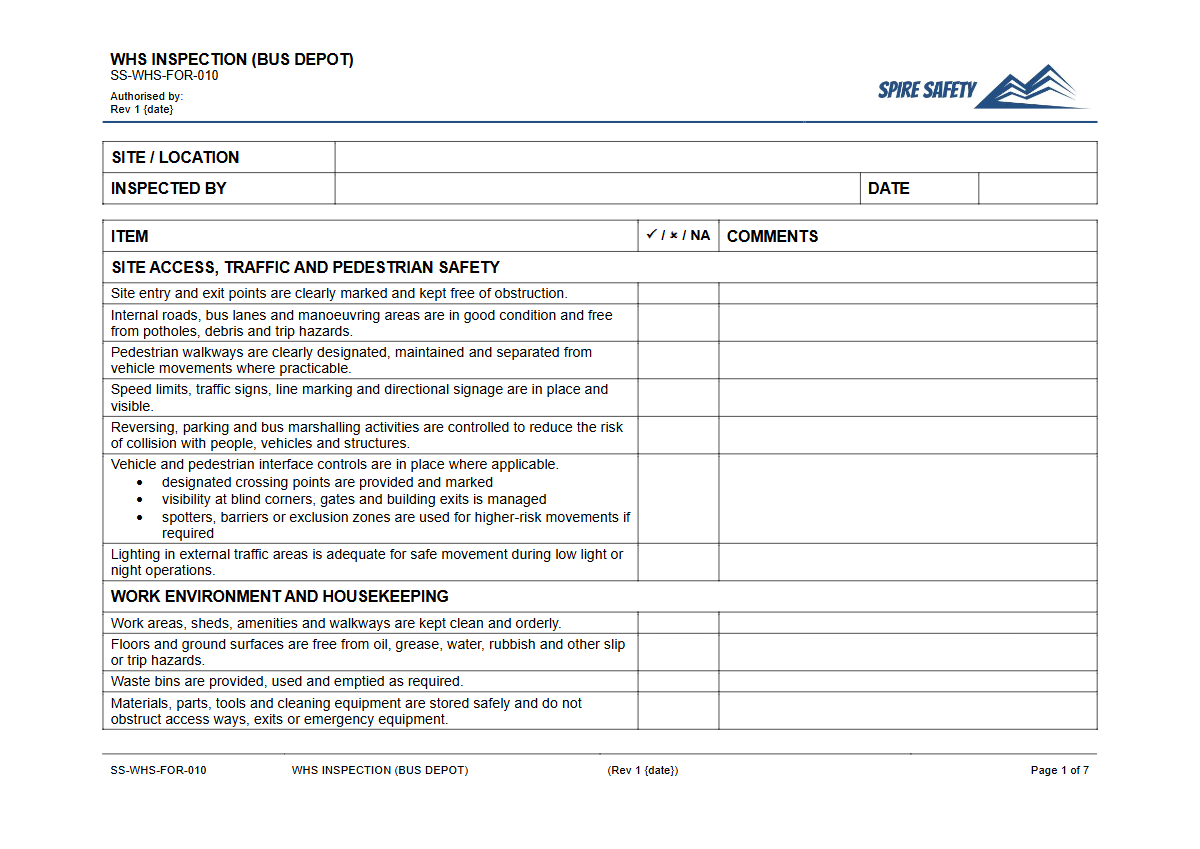
This Free WHS Inspection (Bus Depot) Template provides a structured starting point for conducting thorough workplace inspections, helping your organisation meet its duty of care. It covers key areas prone to risk, such as vehicle movement areas, maintenance bays, fuel and chemical storage, pedestrian walkways, and driver facilities.
Using a formal checklist helps ensure no critical safety aspect is overlooked.
A comprehensive depot inspection should cover all aspects of the site, from the front gate to the back fence. This includes fixed infrastructure like security gates, and implementing dedicated checks such as a pre-start checklist for boom gates can significantly enhance site access safety.
Similarly, maintenance areas often contain high-risk equipment. Formalising checks with an electric hoist pre-start checklist helps prevent incidents during vehicle repair and servicing.
The goal is to create a documented, repeatable process that proactively identifies risks before they lead to an incident.
Video walkthrough
How to Use the Free WHS Inspection (Bus Depot) Template
This template is designed to be a practical tool for your safety management system. To get started, download the template in your preferred format (DOCX or PDF).
The DOCX version is fully editable, allowing you to tailor it to the specific layout, equipment, and procedures of your depot. It is critical that you customise this document for your workplace; we are not liable for any incidents or outcomes that arise from its use.
An effective inspection checklist should reflect the unique hazards present at your site, from traffic flow specifics to the types of chemicals stored.
Once customised, the template should be integrated into your organisation’s safety procedures. Ensure all personnel responsible for conducting inspections are trained on how to use the checklist correctly and understand the hazards they are looking for.
Completed inspection forms create a valuable record for tracking corrective actions and demonstrating due diligence. This process of regular inspection and review forms a core component of effective holistic WHS management systems, turning safety from a reactive task into a proactive part of your operational culture.
When to Use the Inspection Template
The frequency of bus depot inspections depends on the level of risk and the nature of activities. A combination of scheduled and unscheduled inspections is recommended.
Regular inspections should be conducted at set intervals—for example, weekly or monthly—to ensure ongoing safety standards are maintained. These should be supplemented by daily checks of high-traffic or high-risk areas, such as pedestrian crossings and fuelling stations.
Inspections should also be triggered by specific events. This includes after any workplace incident or near-miss, after significant changes to the depot layout or work procedures, or when new vehicles or equipment are introduced.
These event-triggered inspections help verify that risk controls remain effective under new conditions. Periodically, these internal checks should be validated by more rigorous, independent reviews, such as formal WHS compliance audits, to ensure your systems are robust and aligned with legal requirements.
Who Should Use It
A range of personnel should be involved in using this Inspection Template to foster a strong safety culture. Primarily, Depot Managers and Site Supervisors are responsible for ensuring inspections are completed and any identified issues are addressed promptly.
WHS Officers or Safety Advisors will often lead the process, using the data collected to analyse trends and update risk assessments. Members of the Health and Safety Committee (HSC) can also use the template to conduct their own workplace inspections, providing a valuable worker perspective on site safety.
Involving workers directly in the inspection process can also be beneficial, as they have firsthand experience with daily tasks and potential hazards. This template is just one of many tools available to support your safety program.
You can explore our complete free WHS resources library for other templates and checklists that can help strengthen your safety management framework across all areas of your operation.
Common mistakes
Common mistakes to avoid
- Failing to adequately segregate pedestrian walkways from vehicle traffic routes.
- Storing flammable liquids or chemicals improperly, without proper ventilation or spill containment.
- Neglecting to document and follow up on corrective actions identified during an inspection.
- Not reviewing or updating risk assessments after a near miss or change in depot operations.
Legal references
Legal considerations
The following legal requirements may be relevant to this type of work.
- Work Health and Safety Act (Harmonised) — Provides the primary duties for protecting workers and other people from work health and safety risks.
- Work Health and Safety Regulations (Harmonised) — Sets out requirements supporting the management of workplace hazards and risks.
The following codes may be relevant to this type of work.
- Managing WHS Risks Code of Practice — Provides practical guidance on identifying hazards, assessing risks and applying effective controls.
- Work Health and Safety Consultation, Cooperation and Coordination Code of Practice — Provides practical guidance on consulting workers and coordinating with other duty holders.
- Managing the Work Environment and Facilities Code of Practice — Provides practical guidance on safe work environments, workplace facilities and related controls.
Did you know
Traffic Management is Critical
According to Safe Work Australia, traffic management is a leading cause of workplace fatalities and serious injuries, with around 34% of worker fatalities from 2018-2022 involving a vehicle.
The PCBU's Duty
The 'primary duty of care' under the model WHS Act is a broad, ongoing obligation for a PCBU to ensure, so far as is reasonably practicable, the health and safety of workers and others at the workplace.
FAQ
Frequently asked questions
01What are the most significant WHS hazards in a bus depot?
02How often should a WHS inspection of a bus depot be conducted?
03Can I use this template for a small, private bus depot?
04Who is legally responsible for health and safety in a bus depot?
Share this resource
Free WHS Inspection (Bus Depot) Template
Browse Categories
How To Use It
- 1Download and open in Word or PDF.
- 2Replace the placeholders with your business details.
- 3Get it reviewed by a WHS specialist before rollout.
Need it customised?
Our WHS consultants can adapt this template to your site, run a gap analysis, or audit what you already have in place.
Book a Free Consultation WHS consulting servicesor call 1300 156 382