
Free WHS Inspection (Butcher Shop) Template
Download our Free WHS Inspection (Butcher Shop) Template to formalise your safety checks. A structured DOCX & PDF to manage key risks in your butchery.
Free WHS Inspection (Butcher Shop) Template
DOCX • 127 KB + PDF
Updated Oct 2026
No signup required
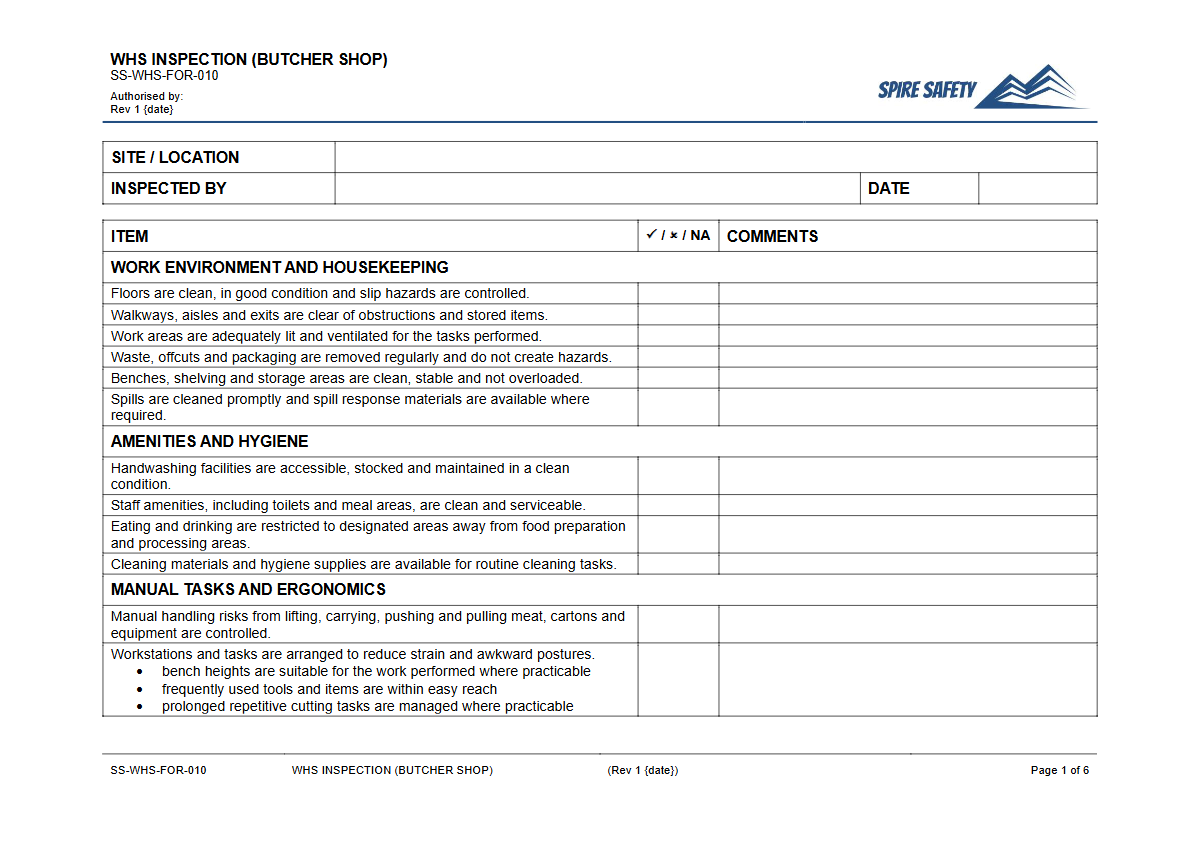
Purpose of the Free WHS Inspection (Butcher Shop) Template
A butcher shop presents a unique combination of workplace hazards, including sharp tools, powerful machinery, wet floors, and demanding manual tasks. This Free WHS Inspection (Butcher Shop) Template provides a structured starting point for systematically identifying and controlling these risks.
Regular inspections are a fundamental part of proactive safety management, helping your business prevent injuries, comply with WHS duties, and foster a strong safety culture. By formalising your checks for hazards like unguarded machinery, poor housekeeping, or inadequate temperature controls, you create a documented record of your safety efforts.
Using this template helps integrate safety checks into your daily operations, forming a critical component of a broader WHS management system. It guides you to look beyond the obvious hazards, prompting consideration of ergonomics, chemical safety, electrical risks, and emergency preparedness. Consistently performing and documenting these inspections demonstrates due diligence and a commitment to protecting your workers, customers, and business.
Video walkthrough
How to use the Free WHS Inspection (Butcher Shop) Template
This document is a comprehensive starting point designed for easy implementation. First, download the template in your preferred format (DOCX for easy editing or PDF for straightforward printing).
The next step is crucial: you must review and customise the checklist to reflect the specific equipment, layout, and work processes of your butchery. No two shops are identical, so tailoring the content is essential for it to be effective.
We recommend you walk through your premises with the template, adding or removing items to ensure it's a perfect fit for your environment. For example, you can add specific checks for your bandsaw, mincer, or sausage filler.
Once customised, train your staff on how to use the checklist correctly, what to look for, and how to report any hazards they find. You may also find our Free Pre-Start Checklist (Freezer) Template useful for daily checks of your cold storage units.
Key Areas Covered in the Inspection
Our template prompts a thorough review of the key operational areas and hazards in a typical butchery, including:
- Work Environment: Assesses flooring conditions (slip/trip hazards), lighting levels, ventilation, and general housekeeping.
- Equipment and Machinery: Checks for safety guards on bandsaws and slicers, emergency stops, electrical safety (test and tag), and cleanliness of equipment like mincers and mixers. Our free Pre-Start Checklist (Blender) Template can supplement this for smaller appliances.
- Cold Storage: Inspects temperature controls, door seals, internal lighting, and emergency release mechanisms in cool rooms and freezers.
- Manual Tasks: Considers risks associated with lifting heavy carcasses, repetitive cutting motions, and awkward postures.
- Chemical Safety: Reviews the storage and handling of cleaning chemicals, ensuring Safety Data Sheets (SDS) are available.
- Emergency and First Aid: Checks accessibility and stocking of first aid kits, functionality of fire extinguishers, and clear emergency exit paths.
When to use it
The frequency of inspections should be determined by your risk assessment. Some checks are best performed daily before work commences, such as a quick inspection of cutting equipment.
A more comprehensive workplace inspection using this template is typically conducted weekly or monthly. It is also wise to conduct an unscheduled inspection after an incident or near miss, when new equipment is introduced, or if work processes change.
Regular checks help identify gradual deterioration of equipment or standards, allowing for correction before an incident occurs. For a more in-depth review of your overall safety processes, you might consider engaging professionals for an independent WHS compliance auditing service.
Who should use it
This inspection template is designed for use by anyone with responsibility for safety in a butcher shop. This typically includes the business owner (PCBU), shop manager, or a designated WHS representative.
To be effective, the process should also involve the workers who use the equipment and work in the environment every day. Their direct input is invaluable for identifying hazards that may not be apparent during a formal walkthrough.
Empowering experienced butchers to conduct daily checks fosters a sense of ownership and responsibility for safety. If you need assistance defining roles and responsibilities, guidance from WHS consultants can help clarify your obligations and establish effective procedures.
This resource is just one of many tools available. We encourage you to explore our complete free WHS resources library for other templates and checklists that can help you manage safety in your workplace.
Common mistakes
Common mistakes to avoid
- Using the template as-is without customising it for the specific equipment and layout of your shop.
- Performing the inspection but failing to document and follow up on corrective actions for identified hazards.
- Neglecting to train workers on how to conduct inspections and report safety issues.
- Focusing only on machinery and knives, while overlooking risks from flooring, manual handling, or chemical storage.
Legal references
Legal considerations
The following legal requirements may be relevant to this type of work.
- Work Health and Safety Act (Harmonised) — Provides the primary duties for protecting workers and other people from work health and safety risks.
- Work Health and Safety Regulations (Harmonised) — Sets out requirements supporting the management of workplace hazards and risks.
The following codes may be relevant to this type of work.
- Managing WHS Risks Code of Practice — Provides practical guidance on identifying hazards, assessing risks and applying effective controls.
- Work Health and Safety Consultation, Cooperation and Coordination Code of Practice — Provides practical guidance on consulting workers and coordinating with other duty holders.
- Managing the Work Environment and Facilities Code of Practice — Provides practical guidance on safe work environments, workplace facilities and related controls.
Did you know
A Common Injury
Lacerations are a well-known hazard in the meat industry, but slips, trips and falls are consistently one of the leading causes of serious injury claims across all Australian workplaces, often resulting from wet or greasy floors.
FAQ
Frequently asked questions
01How often should I inspect my butcher shop for WHS risks?
02What is the biggest safety risk in a butchery?
03Is using this template enough to be WHS-aligned?
04Are cut-resistant gloves mandatory in a butcher shop?
Share this resource
Free WHS Inspection (Butcher Shop) Template
Browse Categories
How To Use It
- 1Download and open in Word or PDF.
- 2Replace the placeholders with your business details.
- 3Get it reviewed by a WHS specialist before rollout.
Need it customised?
Our WHS consultants can adapt this template to your site, run a gap analysis, or audit what you already have in place.
Book a Free Consultation WHS consulting servicesor call 1300 156 382