
Free Pre-Start Checklist (Generator) Template
Formalise your equipment inspections with our Free Pre-Start Checklist (Generator) Template. A structured starting point for Australian WHS. Download now.
Free Pre-Start Checklist (Generator) Template
DOCX • 125 KB + PDF
Updated Oct 2026
No signup required
Purpose of the Free Pre-Start Checklist (Generator) Template
Using a portable or stationary generator introduces significant workplace hazards, including electrocution, fire, and carbon monoxide poisoning. Implementing a routine inspection process is a fundamental control measure to manage these risks.
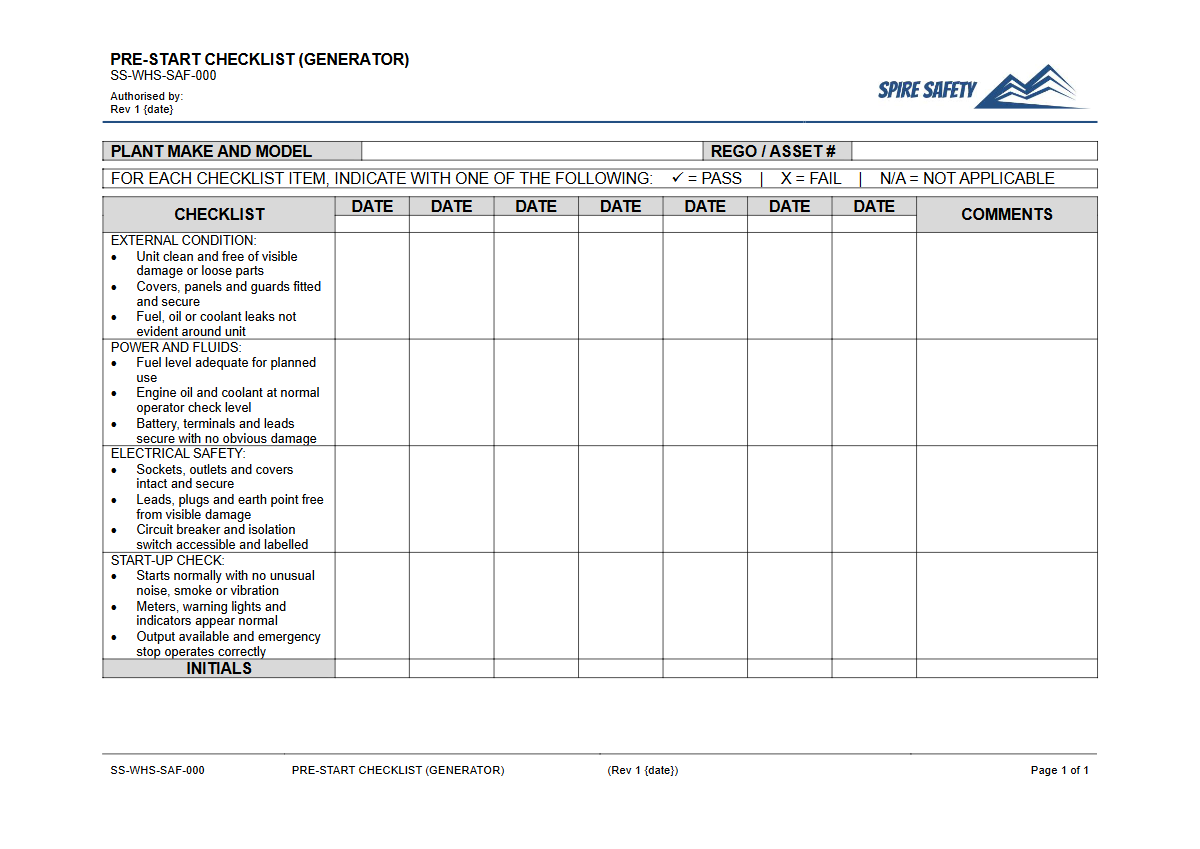
This Free Pre-Start Checklist (Generator) Template provides a structured format for operators to verify that equipment is safe to use before each shift. It helps formalise safety procedures, document inspections, and identify potential faults before they lead to an incident.
Consistent use of this checklist promotes a proactive safety culture and demonstrates a commitment to managing the risks associated with plant and equipment.
This document is designed as a strong starting point, aligned with Australian WHS principles for managing plant. It guides users through critical checks covering fuel systems, electrical components, structural integrity, and safety guards.
For a more specialised application, you may also benefit from our Pre-Start Checklist for Emergency Generators, which addresses standby power systems.
Video walkthrough
How to use the Free Pre-Start Checklist (Generator) Template
Download the template in your preferred format (DOCX for easy editing or PDF for straightforward printing) and integrate it into your daily operations. The checklist is divided into logical sections: equipment and operator details, a series of inspection points, a section for comments on defects, and a final sign-off.
Operators should work through each item methodically, ticking off checks and noting any identified issues. Any defects that pose an immediate safety risk must be reported immediately, and the generator should be tagged out of service until it is repaired by a competent person.
Important: This template provides a general framework. Before implementation, you must customise it to reflect the specific make and model of your generator(s), the environment they are used in, and your organisation's unique safe work procedures.
We have created a comprehensive starting point, but the final responsibility for ensuring the checklist is suitable for your workplace rests with you. Properly customised pre-start checks are a critical component of effective WHS management systems.
When to use it
A generator pre-start checklist should be completed before the equipment is used for the first time on any given day or at the beginning of each work shift. This frequency ensures that the generator's condition has not changed unexpectedly between uses.
It is particularly critical on sites where equipment is shared between multiple operators or moved frequently, such as on construction and demolition sites. Regular checks prevent unsafe operation and can also identify minor maintenance issues before they cause a costly breakdown. This disciplined approach is just as important for generators as it is for other high-risk equipment, like that covered in our Pre-Start Checklist for Floor Saws.
Who should use it
The pre-start inspection should be carried out by the person who will be operating the generator. This individual must be deemed competent, meaning they have the necessary knowledge, training, and experience to operate the equipment safely and identify potential hazards.
While the operator completes the checklist, supervisors and WHS managers hold the responsibility for ensuring the process is implemented correctly, records are maintained, and any reported faults are addressed in a timely manner. These records are often reviewed during WHS compliance auditing to verify that safety procedures are being followed.
For other common workshop tools, our Pre-Start Checklist (Bench Grinder) Template provides a similar framework for operator-led inspections.
By embedding this checklist into your daily routine, you create a verifiable record of due diligence and empower operators to take direct ownership of their safety. Explore our complete free WHS resources library for more tools to support your safety management system.
Common mistakes
Common mistakes to avoid
- Operating the generator indoors or in any enclosed or poorly ventilated space.
- Connecting the generator directly to a building's wiring ('backfeeding'), which can electrocute utility workers.
- Using frayed, damaged, or underrated extension cords, leading to overheating and fire risk.
- Forgetting to check oil levels, causing engine seizure and failure.
Legal references
Legal considerations
The following legal requirements may be relevant to this type of work.
- Work Health and Safety Act (Harmonised) — Provides the primary duties for protecting workers and other people from work health and safety risks.
- Work Health and Safety Regulations (Harmonised) — Sets out requirements supporting the management of workplace hazards and risks.
The following codes may be relevant to this type of work.
- Managing WHS Risks Code of Practice — Provides practical guidance on identifying hazards, assessing risks and applying effective controls.
- Work Health and Safety Consultation, Cooperation and Coordination Code of Practice — Provides practical guidance on consulting workers and coordinating with other duty holders.
- Managing the Work Environment and Facilities Code of Practice — Provides practical guidance on safe work environments, workplace facilities and related controls.
Did you know
Silent Killer
A small, portable petrol generator can produce the same amount of deadly carbon monoxide (CO) gas as more than a dozen cars. Never operate a generator indoors, including in garages or sheds, even with doors or windows open.
Hot Refuelling
A significant number of generator-related fires occur when refuelling a hot engine. The heat from the muffler or engine block can easily ignite petrol vapours, leading to a flash fire.
FAQ
Frequently asked questions
01What are the main hazards associated with portable generators?
02Is a pre-start checklist a legal requirement for generators in Australia?
03How often should a generator be serviced?
04Can I use this template for both petrol and diesel generators?
Share this resource
Free Pre-Start Checklist (Generator) Template
Browse Categories
How To Use It
- 1Download and open in Word or PDF.
- 2Replace the placeholders with your business details.
- 3Get it reviewed by a WHS specialist before rollout.
Need it customised?
Our WHS consultants can adapt this template to your site, run a gap analysis, or audit what you already have in place.
Book a Free Consultation WHS consulting servicesor call 1300 156 382