
Free Pre-Start Checklist (Pan Mixer) Template
Download our Free Pre-Start Checklist (Pan Mixer) Template for Australian construction and manufacturing sites.
Free Pre-Start Checklist (Pan Mixer) Template
DOCX • 125 KB + PDF
Updated Oct 2026
No signup required
Purpose of the Free Pre-Start Checklist (Pan Mixer) Template
Pan mixers are powerful machines used in construction, manufacturing, and agriculture to mix materials like concrete, mortar, soil, and plaster. Their rotating components, heavy materials, and powerful motors present significant WHS risks, including entanglement, crushing, electrical hazards, and exposure to hazardous dust.
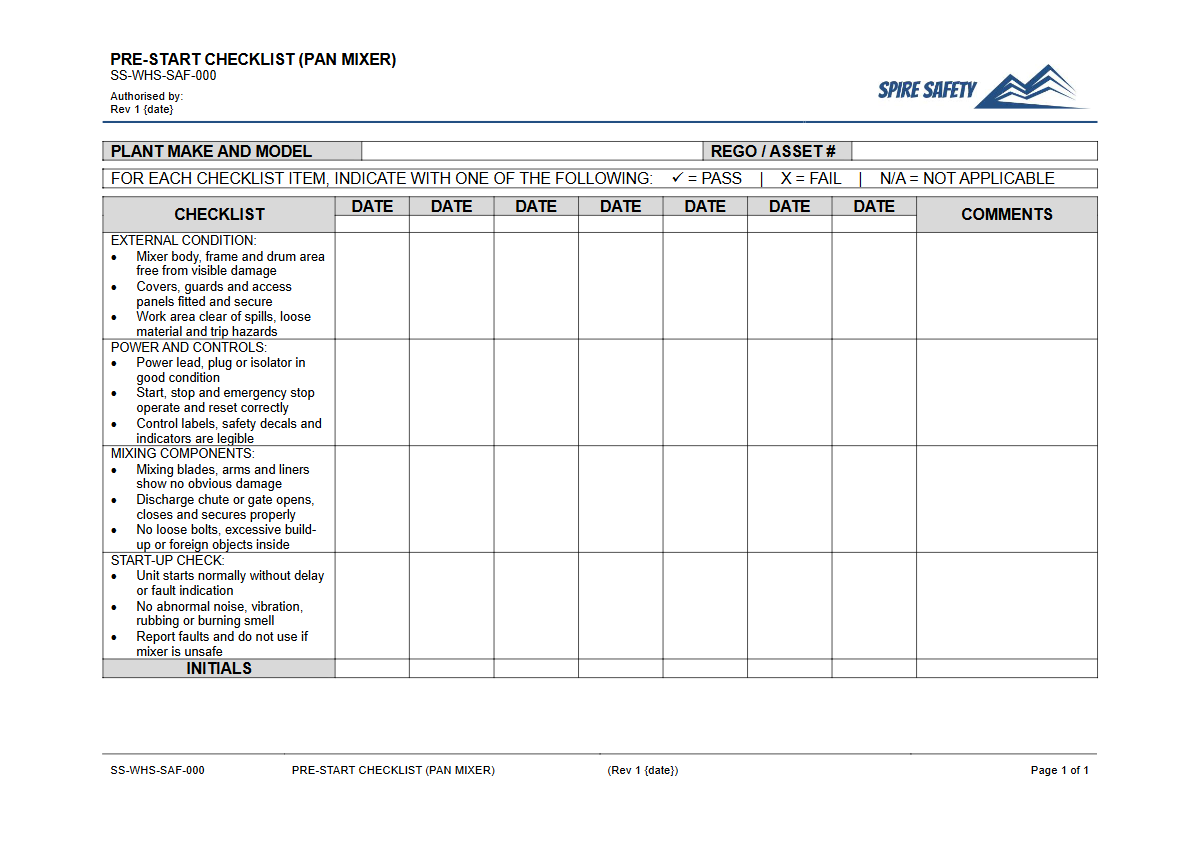
This Free Pre-Start Checklist (Pan Mixer) Template provides a structured framework for operators to conduct thorough, documented inspections before each use. Implementing these checks helps identify and control hazards before they lead to an incident, demonstrating a proactive approach to safety management.
A consistent pre-start inspection process is a fundamental component of effective WHS management systems. It helps ensure plant is maintained in a safe condition, provides a record of due diligence, and fosters a stronger safety culture where operators take ownership of their equipment's condition. While pan mixers have unique risks, the principle of pre-use inspection applies to all industrial mixers.
For comparison, you can review our Free Pre-Start Checklist (Feed Mixer) Template to see how checks differ based on machine function and design.
Video walkthrough
How to use the Free Pre-Start Checklist (Pan Mixer) Template
This resource is available as a DOCX file for easy customisation and a PDF for straightforward printing. The checklist is designed as a starting point, aligned with Australian WHS principles, but it must be adapted to your specific operational context.
Different makes and models of pan mixers will have unique features and safety controls.
Important: You must customise this template. Review the manufacturer’s operating manual and conduct a site-specific risk assessment to add, remove, or modify checklist items.
We are safety professionals providing a helpful template; we are not providing legal advice. You are responsible for ensuring your final document is suitable for your workplace and meets all your legal obligations. The risks associated with an industrial clay mixer, for example, may require different checks than those found in our clay mixer pre-start checklist.
Key Inspection Areas
Your customised checklist should cover critical safety components, including:
- Guarding: Ensure all guards, particularly the lid or grate over the mixing pan, are in place, secure, and free from damage. Check that any interlock switches are functional.
- Emergency Stops: Verify that all E-Stops are accessible, clearly marked, and function correctly.
- Mixing Components: Visually inspect mixing paddles, arms, and scrapers for wear, damage, or buildup of hardened material that could affect balance or performance.
- Structural Integrity: Check the frame, drum, and support legs for cracks, corrosion, or other signs of structural fatigue.
- Power and Electrical: Inspect electrical cords for damage, ensure plugs are secure, and check that control switches operate as intended. Ensure the machine is properly earthed.
- Work Area: The surrounding area should be clear of obstructions, slip hazards, and unnecessary personnel.
This process of detailed, machine-specific inspection is vital for all high-risk equipment on site. The same rigour applied here should also be used for other plant, such as concrete cutters, which are covered in our pre-start checklist for floor saws.
When to use it
A pan mixer pre-start checklist should be completed by the operator before the first use of the machine on any given day or shift. It should become a routine, non-negotiable step in the safe work procedure for operating the mixer.
Consistency is key to identifying gradual wear and tear before it results in a catastrophic failure. Completed checklists should be reviewed by a supervisor and retained as part of your safety records, which can be verified during a WHS compliance auditing process.
Who should use it
This checklist is primarily for use by trained and competent operators of the pan mixer. They are in the best position to notice subtle changes in the machine's condition or performance. Supervisors and safety managers should also use the completed checklists to monitor the equipment's overall health, identify recurring faults, and schedule preventative maintenance. The data gathered provides valuable insights for safety reporting and risk management. This document is one of many tools available in our free WHS resources library to help support your safety program.
Common mistakes
Common mistakes to avoid
- "Pencil-whipping" the list by ticking boxes without physically inspecting the items.
- Failing to immediately tag out and report faulty or damaged equipment.
- Using a generic checklist that doesn't cover the specific safety features of the mixer's make and model.
- Neglecting to check the surrounding work area for slip, trip, and electrical hazards before starting operation.
Legal references
Legal considerations
The following legal requirements may be relevant to this type of work.
- Work Health and Safety Act (Harmonised) — Provides the primary duties for protecting workers and other people from work health and safety risks.
- Work Health and Safety Regulations (Harmonised) — Sets out requirements supporting the management of workplace hazards and risks.
The following codes may be relevant to this type of work.
- Managing WHS Risks Code of Practice — Provides practical guidance on identifying hazards, assessing risks and applying effective controls.
- Work Health and Safety Consultation, Cooperation and Coordination Code of Practice — Provides practical guidance on consulting workers and coordinating with other duty holders.
- Managing the Work Environment and Facilities Code of Practice — Provides practical guidance on safe work environments, workplace facilities and related controls.
Did you know
Entanglement Hazard
The powerful rotating paddles inside a pan mixer are a primary hazard. Loose clothing, gloves, hair, or tools can be drawn in within seconds, causing horrific and often fatal injuries.
Silica Dust
Mixing concrete, mortar, or render can release respirable crystalline silica (RCS). This hazardous dust can cause silicosis, a serious and incurable lung disease, making dust suppression and respiratory protection critical controls.
FAQ
Frequently asked questions
01What should an operator do if a fault is found during a pan mixer pre-start check?
02How often should a pan mixer be inspected?
03Is this pan mixer checklist a legal document?
04Can I use this template for a dough mixer in my bakery?
Share this resource
Free Pre-Start Checklist (Pan Mixer) Template
Browse Categories
How To Use It
- 1Download and open in Word or PDF.
- 2Replace the placeholders with your business details.
- 3Get it reviewed by a WHS specialist before rollout.
Need it customised?
Our WHS consultants can adapt this template to your site, run a gap analysis, or audit what you already have in place.
Book a Free Consultation WHS consulting servicesor call 1300 156 382