
Free Pre-Start Checklist (Rammer) Template
Download our free Pre-Start Checklist for Rammers. This DOCX & PDF template helps formalise daily equipment checks and manage WHS risks. Get your template.
Free Pre-Start Checklist (Rammer) Template
DOCX • 125 KB + PDF
Updated Oct 2026
No signup required
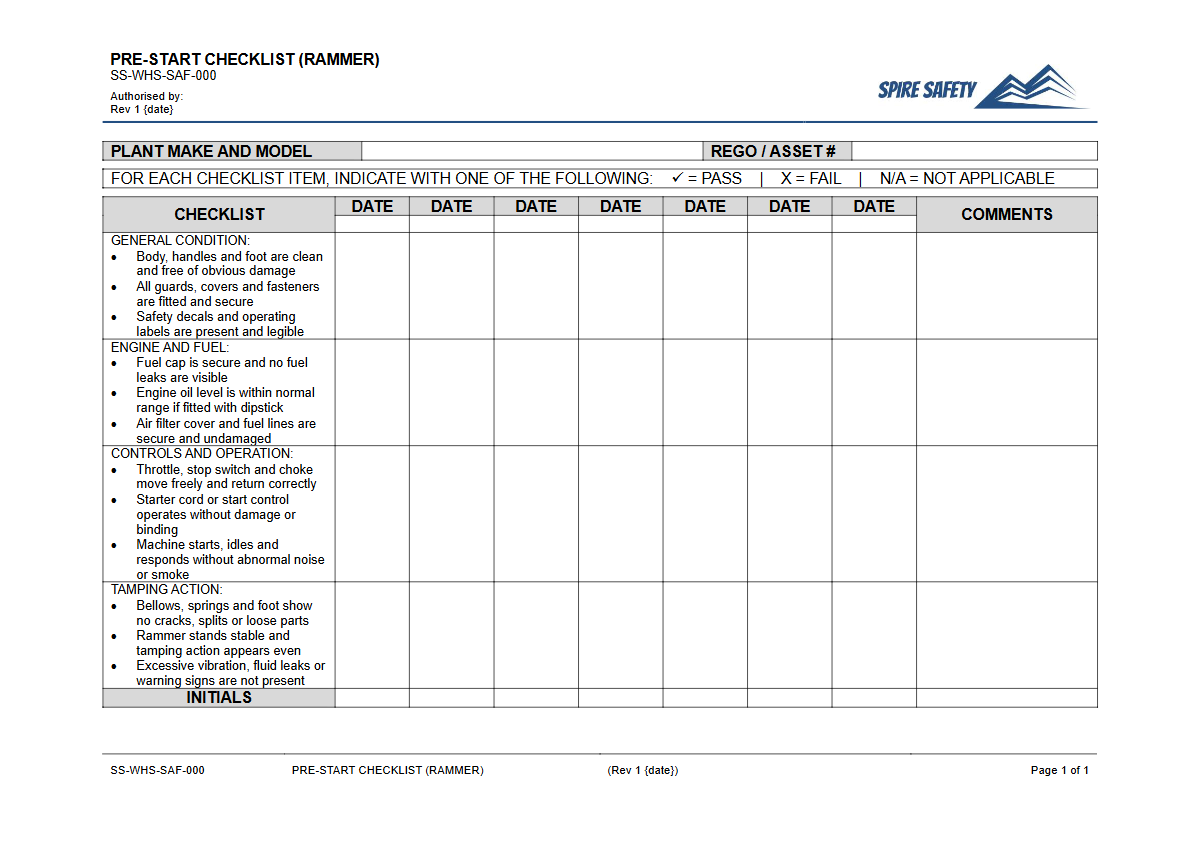
Operating a rammer, also known as a trench rammer or vibratory compactor, involves significant WHS risks, including vibration, noise, and mechanical hazards. Implementing a routine inspection process is crucial for managing these risks.
This free Pre-Start Checklist (Rammer) Template provides a structured starting point for your organisation to formalise daily equipment checks, helping to ensure that machinery is safe to use before any work begins.
This document is designed to be a practical tool for operators and supervisors in construction, civil works, and landscaping industries. It helps create a consistent record of equipment condition, supporting your overall safety management system and demonstrating due diligence in maintaining safe plant.
Video walkthrough
Purpose of the Pre-Start Checklist for Rammers
The primary purpose of this checklist is to systematically identify and address potential faults or hazards before a rammer is operated. Regular pre-start inspections help to prevent accidents, reduce equipment downtime, and protect workers from harm.
By using a formal checklist, you can ensure that critical safety components are inspected consistently every time.
Key risks associated with rammer operation include Hand-Arm Vibration Syndrome (HAVS), hearing loss from excessive noise, and injuries from component failure. A thorough pre-start check verifies that vibration dampeners are effective, safety guards are in place, and the engine or motor is functioning correctly, mitigating these risks at the source.
It also forms a vital part of your WHS management systems by creating auditable records of safety practices.
How to use the Free Pre-Start Checklist (Rammer) Template
Integrating this checklist into your daily operations is straightforward. The template is provided as a fully editable DOCX file, allowing for easy customisation to suit your specific needs, as well as a print-ready PDF.
Follow these steps for effective implementation:
- Download and Customise: Add your company branding and modify the checklist items to match the specific make and model of the rammers used on your site. You may need different checks for a petrol rammer versus a diesel or electric one.
- Train Operators: Ensure all operators are trained on how to conduct the inspection thoroughly and understand the importance of each checkpoint. Competency is not just about operation, but also about safety verification.
- Implement and Supervise: Make the pre-start check a mandatory step before the first use of the day or at the start of each shift. Supervisors should periodically review completed checklists to ensure they are being filled out correctly.
- Establish a Process for Defects: Create a clear procedure for operators to follow if they identify a fault. This must include immediately stopping use, tagging the equipment as "Out of Service," and reporting the issue to a supervisor or maintenance team.
Please note: This template provides a solid foundation based on common safety practices. We strongly recommend you customise it to align with your specific rammer models, the unique hazards of your worksite, and your internal safe operating procedures. This process is similar for other compact construction equipment, as shown in our Pre-Start Checklist for Floor Saws.
Key Inspection Points for Rammers
While your customised checklist will be more detailed, it should cover these fundamental areas:
- Engine/Motor: Check fuel and oil levels. Look for any signs of leaks from fuel lines or hydraulic hoses.
- Controls: Ensure the throttle control is responsive and the engine kill switch or stop button functions immediately.
- Ramming Foot/Shoe: Inspect the foot for excessive wear, cracks, or damage. Check that it is securely fastened.
- Handles and Vibration Dampeners: Examine the handles for structural integrity and check that anti-vibration mounts are intact and not degraded.
- Guards and Covers: Verify that all protective guards (e.g., for the engine belt or exhaust) are in place and secure.
- General Condition: Look for loose bolts, cracked welds, or any other signs of structural damage on the frame and components.
When to use it
A rammer pre-start checklist should be completed before the equipment is used for the first time each day or at the beginning of an operator's shift. This frequency ensures that any damage that occurred overnight, during transport, or from the previous shift's use is identified before the machine is put into service.
This routine is a cornerstone of proactive risk management and is essential for maintaining a safe working environment.
Documenting these checks also provides valuable data for your maintenance program, helping to identify recurring issues or trends that may indicate a need for more comprehensive servicing or even equipment replacement. Effective risk management can be complex; professional WHS consulting services can assist in developing systems that are both practical and robust.
Who should use it
The checklist is designed to be completed by the trained and competent person who will be operating the rammer. They have the most direct interaction with the equipment and are best placed to notice subtle changes in its condition or performance.
Supervisors or site managers should also be familiar with the checklist, as they are responsible for ensuring the procedure is followed and for verifying that any reported defects are addressed appropriately.
Records of completed checks should be retained and may be reviewed during safety meetings or internal audits. A consistent and well-documented inspection history is a key piece of evidence reviewed during a formal WHS compliance auditing process.
This process applies to all plant and machinery, from large items like those covered in our forwarder pre-start checklist to smaller workshop tools.
Similarly, ensuring tools used for maintenance and repair are safe is just as important, which is why a resource like the free Pre-Start Checklist (Bench Grinder) Template can complement your broader workshop safety procedures. For more templates and safety documents, browse our complete free WHS resources library.
Common mistakes
Common mistakes to avoid
- Completing the checklist from memory without physically inspecting the rammer ('pencil-whipping').
- Failing to report minor issues, which can develop into major failures.
- Using a generic checklist that doesn't cover the specific features or risks of the rammer model in use.
- Not properly tagging out and isolating faulty equipment after a defect is found.
Legal references
Legal considerations
The following legal requirements may be relevant to this type of work.
- Work Health and Safety Act (Harmonised) — Provides the primary duties for protecting workers and other people from work health and safety risks.
- Work Health and Safety Regulations (Harmonised) — Sets out requirements supporting the management of workplace hazards and risks.
The following codes may be relevant to this type of work.
- Managing WHS Risks Code of Practice — Provides practical guidance on identifying hazards, assessing risks and applying effective controls.
- Work Health and Safety Consultation, Cooperation and Coordination Code of Practice — Provides practical guidance on consulting workers and coordinating with other duty holders.
- Managing the Work Environment and Facilities Code of Practice — Provides practical guidance on safe work environments, workplace facilities and related controls.
Did you know
Vibration Risk
Prolonged use of vibratory equipment like rammers can lead to Hand-Arm Vibration Syndrome (HAVS), a painful and disabling condition affecting nerves, blood vessels, and joints.
Compaction Force
A typical trench rammer can deliver over 13 kilonewtons of impact force with each blow, making it highly effective for compaction but also highlighting the importance of structural integrity.
FAQ
Frequently asked questions
01Why is a pre-start check important for a rammer?
02What happens if a fault is found during a rammer pre-start check?
03How often should a rammer pre-start checklist be completed?
04Does this template cover all legal WHS requirements for rammers?
Share this resource
Free Pre-Start Checklist (Rammer) Template
Browse Categories
How To Use It
- 1Download and open in Word or PDF.
- 2Replace the placeholders with your business details.
- 3Get it reviewed by a WHS specialist before rollout.
Need it customised?
Our WHS consultants can adapt this template to your site, run a gap analysis, or audit what you already have in place.
Book a Free Consultation WHS consulting servicesor call 1300 156 382