
Free Safe Operating Procedure (Cold Chain Dispatch) Template
Download our Free Safe Operating Procedure (Cold Chain Dispatch) Template to manage risks in your temperature-controlled logistics.
Free Safe Operating Procedure (Cold Chain Dispatch) Template
DOCX • 126 KB + PDF
Updated Oct 2026
No signup required
Purpose of the Free Safe Operating Procedure (Cold Chain Dispatch) Template
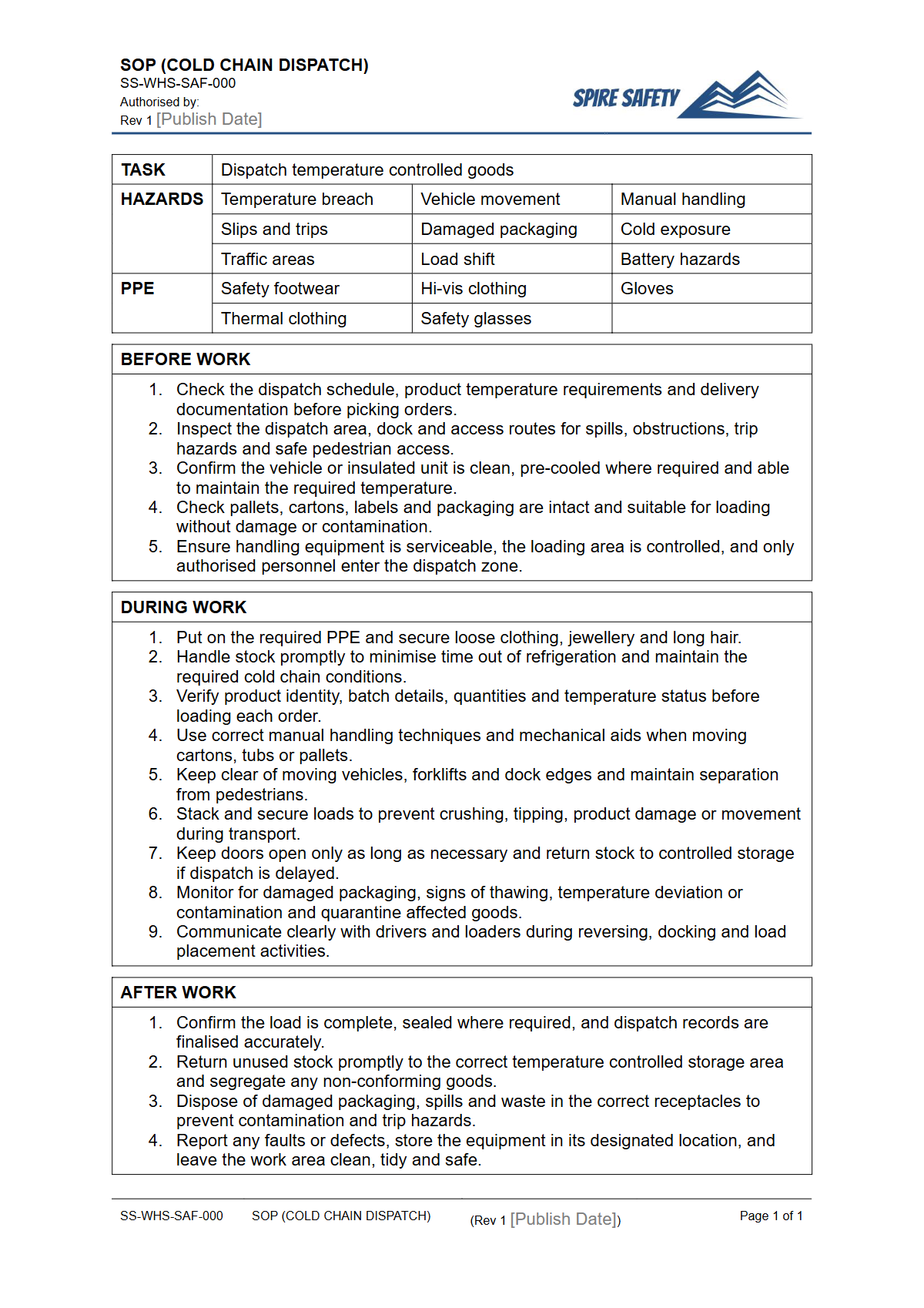
Maintaining the integrity of temperature-sensitive goods during dispatch is critical for safety, quality, and compliance. This Free Safe Operating Procedure (Cold Chain Dispatch) Template provides a structured framework for outlining the key steps and precautions required for safely and effectively managing this process.
Using a standardised procedure helps control hazards associated with vehicle movement, manual tasks, and thermal risks, ensuring product viability and worker safety. A documented SOP is a fundamental component of all effective and comprehensive WHS management systems, providing clarity for workers and a clear standard for supervision and training.
This template is designed to help your business:
- Establish a consistent, step-by-step process for all cold chain dispatch activities.
- Identify and control specific hazards, such as temperature excursions, equipment failure, and musculoskeletal injuries from manual handling.
- Provide a clear training document for new and existing employees involved in logistics and warehousing.
- Demonstrate a commitment to managing work health and safety risks as required by Australian WHS legislation.
- Minimise the risk of product spoilage, financial loss, and reputational damage.
Video walkthrough
How to use the Free Safe Operating Procedure (Cold Chain Dispatch) Template
This document is a template, not a finished procedure. To use it effectively, download the DOCX file and adapt it to the unique circumstances of your workplace.
Effective customisation involves consulting with your workers—the ones who actually perform the tasks—to ensure the written procedure reflects the practical realities of the job. This consultation is a key part of the risk management process.
Important: You must customise this Safe Operating Procedure to your specific site, equipment (e.g., specific models of refrigerated vehicles, data loggers), products being handled, and personnel. We are not responsible for any incidents that may occur from the use of this document.
It is the responsibility of the Person Conducting a Business or Undertaking (PCBU) to ensure the final SOP is suitable for their workplace and that all control measures are implemented and maintained. Regular reviews of the SOP, often prompted by WHS compliance audits, are essential to ensure its ongoing relevance and effectiveness.
What this Safe Operating Procedure covers
Our template provides a clear, logical structure for you to build upon. It prompts you to detail essential safety information across several key areas, including:
- Required PPE: Specifies personal protective equipment needed for the task, such as high-visibility clothing, safety footwear, and thermal gloves.
- Pre-operational Checks: Outlines checks for refrigeration units, vehicle cleanliness, and data logger functionality before loading begins.
- Step-by-step Procedure: A sequence for safely loading goods, setting and verifying temperatures, securing loads, and completing documentation. This section should detail the safe use of any plant involved, which might be covered by a specific document like our FREE Telehandler SOP (Safe Operating Procedure) Template.
- Emergency Procedures: Critical steps to take in the event of refrigeration failure, temperature alarms, or vehicle breakdown. These procedures should link to your broader site emergency plans, which may include the use of first aid equipment documented in resources like our Safe Operating Procedure (Defibrillator Operation) template.
When to use it
A Safe Operating Procedure for cold chain dispatch should be used every time temperature-sensitive products are loaded and dispatched from your facility. It serves as a checklist and a guide for workers before and during the task.
It should be a core part of the induction for new warehouse or transport personnel and be readily available in the dispatch area for easy reference. The SOP should also be reviewed during toolbox talks, especially when there are changes to processes or equipment.
Who should use it
This SOP should be used by all personnel directly involved in the cold chain dispatch process. This includes:
- Warehouse and dispatch staff responsible for picking and preparing orders.
- Forklift operators and other plant operators involved in loading vehicles.
- Truck drivers who are responsible for the goods in transit.
- Supervisors and managers who oversee dispatch operations and are responsible for ensuring procedures are followed correctly.
- Workers may need to access areas that require specific safety measures, such as those outlined in our FREE Step Ladder SOP (Safe Operating Procedure) Template, to complete their tasks.
By implementing and enforcing this SOP, you create a safer and more reliable dispatch environment. To discover more templates and checklists to support your safety management system, explore our complete free WHS resources library.
Common mistakes
Common mistakes to avoid
- Failing to customise the template with site-specific vehicle, product, and equipment details.
- Neglecting to provide practical, hands-on training for all staff on the finalised SOP.
- Skipping or pencil-whipping pre-start checks for refrigeration units and data loggers.
- Forgetting to review and update the SOP after an incident, near miss, or change in process.
Legal references
Legal considerations
The following legal requirements may be relevant to this type of work.
- Work Health and Safety Act (Harmonised) — Provides the primary duties for protecting workers and other people from work health and safety risks.
- Work Health and Safety Regulations (Harmonised) — Sets out requirements supporting the management of workplace hazards and risks.
The following codes may be relevant to this type of work.
- Managing WHS Risks Code of Practice — Provides practical guidance on identifying hazards, assessing risks and applying effective controls.
- Work Health and Safety Consultation, Cooperation and Coordination Code of Practice — Provides practical guidance on consulting workers and coordinating with other duty holders.
- Managing the Work Environment and Facilities Code of Practice — Provides practical guidance on safe work environments, workplace facilities and related controls.
Did you know
Temperature Excursions
A single breach in the cold chain, known as a 'temperature excursion', can compromise an entire shipment of sensitive goods, leading to millions of dollars in losses and significant public health risks.
Musculoskeletal Risks
The transport, postal, and warehousing industry has one of the highest rates of serious workers' compensation claims in Australia, with body stressing and manual handling being primary causes of injury.
FAQ
Frequently asked questions
01What is a cold chain in logistics?
02Why is an SOP critical for cold chain dispatch?
03Who is responsible for implementing this Cold Chain Dispatch SOP?
04Is this free template enough to ensure WHS compliance?
Share this resource
Free Safe Operating Procedure (Cold Chain Dispatch) Template
Browse Categories
How To Use It
- 1Download and open in Word or PDF.
- 2Replace the placeholders with your business details.
- 3Get it reviewed by a WHS specialist before rollout.
Need it customised?
Our WHS consultants can adapt this template to your site, run a gap analysis, or audit what you already have in place.
Book a Free Consultation WHS consulting servicesor call 1300 156 382
Related templates
- Free Safe Operating Procedure (Cold Chain Receiving) Template
- Free Safe Operating Procedure (Cold Cutting Pipe) Template
- Free Safe Operating Procedure (Cold Room Cleaning) Template
- Free Safe Operating Procedure (Cold Saw) Template
- Free Safe Operating Procedure (Combi Oven) Template
- Free Safe Operating Procedure (Commercial Bin Pickup) Template