
Free Safe Operating Procedure (Cold Cutting Pipe) Template
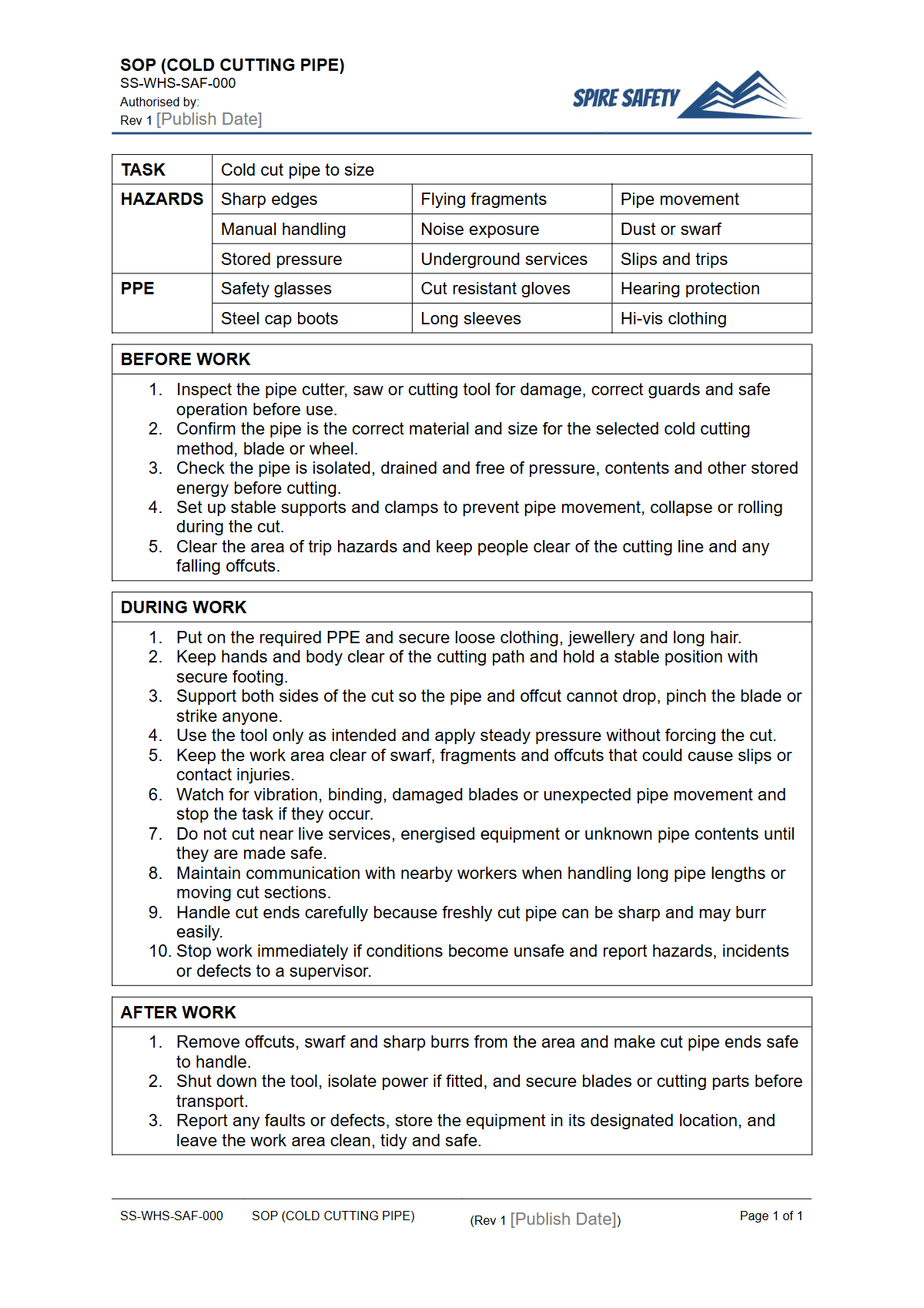
Download our free Safe Operating Procedure (Cold Cutting Pipe) Template. This customisable DOCX and PDF helps you document safe work steps for your team.
Free Safe Operating Procedure (Cold Cutting Pipe) Template
DOCX • 126 KB + PDF
Updated Oct 2026
No signup required
Purpose of the Free Safe Operating Procedure (Cold Cutting Pipe) Template
Cold cutting pipe is a common but high-risk task that requires a formal, documented process to ensure worker safety. This Free Safe Operating Procedure (Cold Cutting Pipe) Template provides a structured starting point for your organisation to outline the required steps, identify potential hazards, and implement effective risk controls.
Using a clear SOP helps standardise your work methods, assists in worker training and induction, and demonstrates a commitment to managing safety risks methodically.
A well-developed SOP is a fundamental component of effective WHS management systems. It translates your risk assessments into practical, on-the-ground actions that workers can follow, ensuring that safety controls for tasks like pipe cutting are consistently applied across all shifts and teams. This template helps you detail everything from pre-start checks and required PPE to the cutting sequence and clean-up procedures.
Video walkthrough
How to use the Free Safe Operating Procedure (Cold Cutting Pipe) Template
To use our Free Safe Operating Procedure (Cold Cutting Pipe) Template, simply download the DOCX file and open it in Microsoft Word or a compatible program. The PDF version is also available for easy printing and distribution.
The document is structured with sections for you to populate with your site-specific details, including the types of pipe, cutting equipment used, and unique environmental hazards.
Important: This template is a guide, not a finished document. We provide this as a starting point, but you must customise it to reflect the specific machinery, work environment, personnel, and processes used in your workplace.
A generic procedure is not sufficient; it must be adapted through consultation with your workers to be effective and align with your WHS duties. Consider it alongside other task-specific documents, such as our free Plasma Cutter SOP, to build a comprehensive library of procedures.
When to use a Safe Operating Procedure
A Safe Operating Procedure for cold cutting pipe should be used as a key reference document before and during the task. It is integral to the planning phase, where supervisors and workers can review the steps and confirm all safety measures are in place.
It should be readily accessible in the work area for reference and used during pre-start meetings or toolbox talks to brief the team on the day's specific cutting activities.
Furthermore, the SOP is a critical tool for training new employees or verifying the ongoing competency of existing workers. Regular reviews and updates to the SOP, especially after an incident or when new equipment is introduced, are essential for maintaining a safe system of work.
The existence and proper use of such procedures are often a key focus during a WHS compliance auditing process.
Who should use this Safe Operating Procedure
This SOP template is designed for use by multiple roles within an organisation. Persons Conducting a Business or Undertaking (PCBUs) are responsible for providing safe systems of work, and this template helps them fulfil that duty.
Supervisors and Managers should use the finalised SOP to train, induct, and supervise workers performing pipe cutting tasks, ensuring the documented procedures are followed correctly.
Workers are the primary end-users of the SOP. They must be trained on its contents and follow the prescribed steps to ensure their own safety and that of their colleagues.
The development of the SOP should also involve consultation with these workers, as their hands-on experience is invaluable for identifying practical hazards and effective controls. Just as our free Circular Saw SOP is vital for carpenters, this document is essential for pipefitters and maintenance crews.
If you require assistance in tailoring this template or developing a suite of SOPs for your operations, our expert WHS consulting team can provide guidance. Many cutting tasks also rely on supporting equipment, so it is wise to have procedures for those as well, such as our free Air Compressor SOP if pneumatic tools are involved.
By implementing a robust SOP, you create a safer, more predictable work environment. Explore our complete free WHS resources library for more templates and guides to support your safety management system.
Common mistakes
Common mistakes to avoid
- Failing to properly secure and support the pipe on both sides of the cut before starting.
- Using worn, damaged, or incorrect cutting discs, blades, or chains for the specific pipe material and thickness.
- Neglecting to wear appropriate PPE, especially high-impact eye/face protection, cut-resistant gloves, and hearing protection.
- Inadequate inspection of the cutting equipment and work area during pre-start checks.
Legal references
Legal considerations
The following legal requirements may be relevant to this type of work.
- Work Health and Safety Act (Harmonised) — Provides the primary duties for protecting workers and other people from work health and safety risks.
- Work Health and Safety Regulations (Harmonised) — Sets out requirements supporting the management of workplace hazards and risks.
The following codes may be relevant to this type of work.
- Managing WHS Risks Code of Practice — Provides practical guidance on identifying hazards, assessing risks and applying effective controls.
- Work Health and Safety Consultation, Cooperation and Coordination Code of Practice — Provides practical guidance on consulting workers and coordinating with other duty holders.
- Managing the Work Environment and Facilities Code of Practice — Provides practical guidance on safe work environments, workplace facilities and related controls.
Did you know
No Spark Zone
Cold cutting techniques like abrasive waterjet or diamond wire cutting generate virtually no sparks, making them the default choice for maintenance in live oil and gas pipelines where hot work is prohibited.
Pinch Point Dangers
Improperly supported pipes can shift, sag, or roll during a cut, creating powerful pinch points. These unexpected movements are a leading cause of serious hand, finger, and limb injuries in pipefitting tasks.
FAQ
Frequently asked questions
01What hazards are involved in cold cutting pipe?
02Is an SOP legally required for cold cutting pipe?
03What is the main benefit of cold cutting over hot cutting?
04Who can perform cold cutting operations?
Share this resource
Free Safe Operating Procedure (Cold Cutting Pipe) Template
Browse Categories
How To Use It
- 1Download and open in Word or PDF.
- 2Replace the placeholders with your business details.
- 3Get it reviewed by a WHS specialist before rollout.
Need it customised?
Our WHS consultants can adapt this template to your site, run a gap analysis, or audit what you already have in place.
Book a Free Consultation WHS consulting servicesor call 1300 156 382
Related templates
- Free Safe Operating Procedure (Cold Room Cleaning) Template
- Free Safe Operating Procedure (Cold Saw) Template
- Free Safe Operating Procedure (Combi Oven) Template
- Free Safe Operating Procedure (Commercial Bin Pickup) Template
- Free Safe Operating Procedure (Commercial Blender) Template
- Free Safe Operating Procedure (Commercial Dryer) Template