
Free Safe Operating Procedure (Electrical Isolation) Template
Download our free Safe Operating Procedure (Electrical Isolation) Template to manage electrical hazards.
Free Safe Operating Procedure (Electrical Isolation) Template
DOCX • 126 KB + PDF
Updated Oct 2026
No signup required
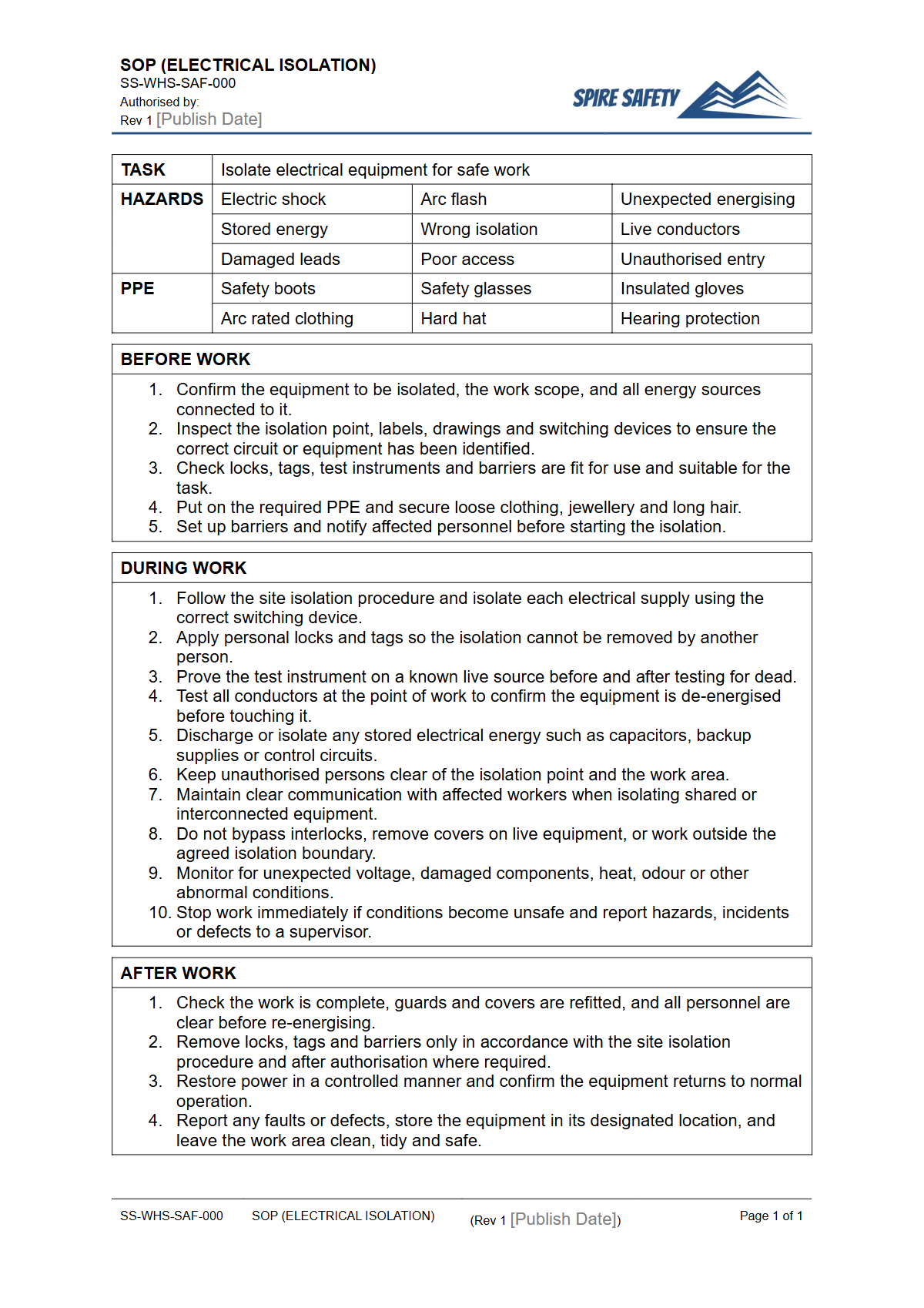
Purpose of the Free Safe Operating Procedure (Electrical Isolation) Template
Effectively managing electrical risks is a critical duty for any Australian workplace. This Free Safe Operating Procedure (Electrical Isolation) Template provides a structured starting point for documenting the process of de-energising and securing machinery or equipment before maintenance, cleaning, or repair work.
An SOP is a fundamental control measure that outlines a logical sequence of steps to perform a task safely. Using a formal procedure helps ensure that all energy sources are identified, isolated, and locked out, preventing accidental re-energisation and protecting workers from electric shock, burns, and other severe injuries.
Implementing robust SOPs is a key component of effective WHS management systems, demonstrating a commitment to proactive risk management.
Video walkthrough
How to use the Free Safe Operating Procedure (Electrical Isolation) Template
This template is provided in both DOCX and PDF formats. The DOCX file is fully editable, allowing you to tailor the procedure to your specific operational needs.
A generic template cannot account for every unique workplace hazard, so customisation is essential for it to be effective. The procedure should detail the specific steps for isolating particular plant or equipment, such as that covered in our FREE Conveyer System SOP.
Please note: This document is a template and must be customised to suit the specific equipment, personnel, and risks present in your workplace. We recommend consulting with competent persons, such as qualified electricians and the equipment operators, during its development.
Key Sections to Customise
- Equipment Details: Clearly identify the plant or machinery the SOP applies to, including its location and identification number.
- Required PPE: List all personal protective equipment necessary for the task, such as electrical gloves, eye protection, or insulated tools.
- Isolation Steps (Lockout/Tagout): Detail the precise sequence for shutting down the equipment, identifying all energy sources (electrical, hydraulic, pneumatic), isolating them, and applying locks and tags.
- Verification of Isolation: This is a critical step. Describe the 'test-for-dead' process to confirm the equipment is fully de-energised before any work begins.
- De-isolation Steps: Outline the process for safely removing locks and tags and re-energising the equipment once work is complete.
When to Implement an Electrical Isolation SOP
An electrical isolation procedure is required whenever a worker needs to perform tasks on or near energised parts of equipment. This includes activities where the unexpected start-up of the machinery or release of stored energy could cause injury. Common scenarios include:
- Performing maintenance, repairs, or servicing.
- Cleaning or making adjustments to machinery.
- Inspecting or testing electrical components.
- Clearing blockages or jams.
- Installing new plant or equipment.
- Licensed Electricians
- Maintenance Technicians and Fitters
- Service Personnel
- Supervisors overseeing the work
For example, maintenance on powered equipment like a workshop compressor would require following a strict isolation procedure, which is a core component of our Free Air Compressor SOP.
Who Should Use This Safe Operating Procedure
This SOP should be used by all personnel authorised to perform electrical isolation and work on de-energised equipment. This typically includes:
PCBUs (Persons Conducting a Business or Undertaking) are responsible for ensuring these procedures are developed, implemented, and followed. Regular reviews and checks, often part of a formal WHS compliance auditing program, help verify that authorised workers understand and correctly apply the procedure.
All relevant workers must receive training on the specific isolation procedures for the equipment they work on.
Benefits of a Formal Electrical Isolation Procedure
A documented and enforced electrical isolation SOP is more than just a piece of paper; it's a vital safety tool. It standardises the isolation process, reducing the chance of human error and ensuring no critical steps are missed.
This is as true for complex industrial plant as it is for smaller powered tools like those covered in our FREE Circular Saw SOP. A formal procedure provides a clear reference for training new employees and serves as a checklist for experienced workers, reinforcing safe work habits and fostering a strong safety culture. For more templates and safety documents, browse our complete free WHS resources library.
Common mistakes
Common mistakes to avoid
- Failing to verify isolation by 'testing for dead' before starting work.
- Assuming a single control switch de-energises all parts of the equipment.
- Removing another worker's personal lock or tag without following a specific, documented procedure.
- Poor communication between workers during group isolation tasks.
Legal references
Legal considerations
The following legal requirements may be relevant to this type of work.
- Work Health and Safety Act (Harmonised) — Provides the primary duties for protecting workers and other people from work health and safety risks.
- Work Health and Safety Regulations (Harmonised) — Sets out requirements supporting the management of workplace hazards and risks.
The following codes may be relevant to this type of work.
- Managing WHS Risks Code of Practice — Provides practical guidance on identifying hazards, assessing risks and applying effective controls.
- Work Health and Safety Consultation, Cooperation and Coordination Code of Practice — Provides practical guidance on consulting workers and coordinating with other duty holders.
- Managing the Work Environment and Facilities Code of Practice — Provides practical guidance on safe work environments, workplace facilities and related controls.
Did you know
The Golden Rule
The principle of 'Test for Dead' is a non-negotiable step in any electrical isolation procedure. It means using a properly functioning and rated test instrument to verify that no voltage is present after isolating and before touching any components.
Stored Energy
Electrical isolation isn't just about turning off the main switch. Many machines contain stored energy in capacitors, springs, or hydraulic systems that must also be safely dissipated or restrained to prevent injury.
FAQ
Frequently asked questions
01What is the difference between lockout and tagout?
02Does every piece of equipment need a specific electrical isolation SOP?
03Who is authorised to perform electrical isolation?
04How often should an electrical isolation procedure be reviewed?
Share this resource
Free Safe Operating Procedure (Electrical Isolation) Template
Browse Categories
How To Use It
- 1Download and open in Word or PDF.
- 2Replace the placeholders with your business details.
- 3Get it reviewed by a WHS specialist before rollout.
Need it customised?
Our WHS consultants can adapt this template to your site, run a gap analysis, or audit what you already have in place.
Book a Free Consultation WHS consulting servicesor call 1300 156 382
Related templates
- Free Safe Operating Procedure (Electrical Test Bench) Template
- Free Safe Operating Procedure (Electrode Oven) Template
- Free Safe Operating Procedure (Electroplating) Template
- Free Safe Operating Procedure (Embroidery Machine) Template
- Free Safe Operating Procedure (Emergency Beacon) Template
- Free Safe Operating Procedure (Emergency Exit Check) Template