
Free Safe Operating Procedure (Equipment Tag Cleaning) Template
Document clear steps for safely cleaning equipment tags to maintain asset visibility and compliance.
Free Safe Operating Procedure (Equipment Tag Cleaning) Template
DOCX • 126 KB + PDF
Updated Oct 2026
No signup required
Purpose of the Free Safe Operating Procedure (Equipment Tag Cleaning) Template
This Free Safe Operating Procedure (Equipment Tag Cleaning) Template provides a structured framework for ensuring that identification, safety, and maintenance tags on all workplace equipment remain legible and secure. Clear equipment tags are crucial for effective asset management, allowing workers to quickly identify machinery, verify maintenance status, and confirm safety checks are complete.
Implementing a standardised procedure minimises risks associated with misidentified equipment, ensuring that lockout/tagout procedures, pre-start checks, and service schedules are followed correctly. This document helps your organisation formalise a process that is often overlooked but is fundamental to a safe system of work.
Video walkthrough
How to use the Free Safe Operating Procedure (Equipment Tag Cleaning) Template
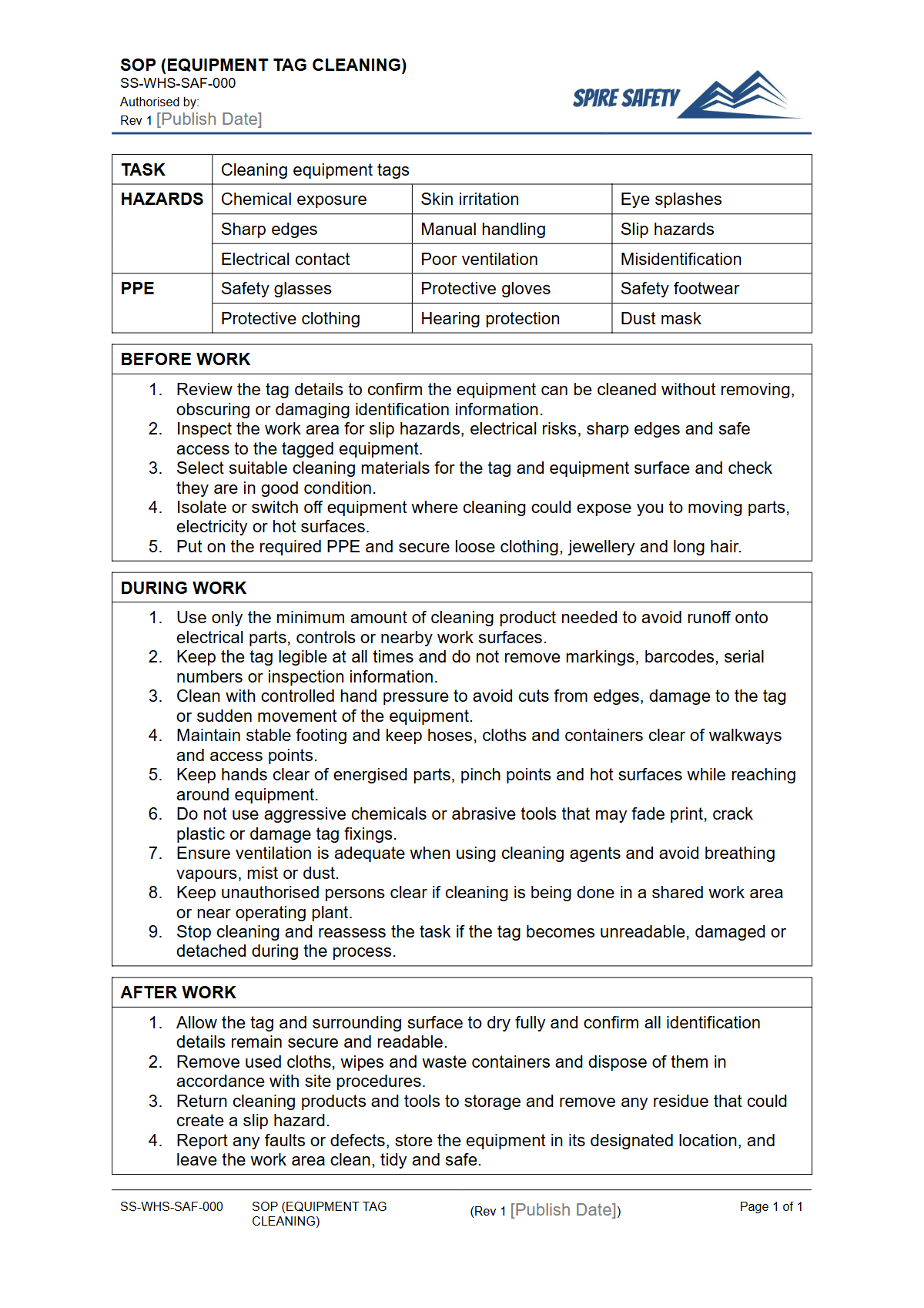
To use this Safe Operating Procedure template, simply download the DOCX file and tailor it to the specific context of your workplace. The template is pre-formatted with sections for outlining PPE, potential hazards, and a step-by-step process.
You will need to add details about the specific cleaning agents, tools, and types of equipment relevant to your operations. For example, the procedure for cleaning tags on heavy machinery exposed to grease and mud will differ from that for kitchen equipment. Many worksites also use compressed air for cleaning tasks, which requires specific safety protocols detailed in documents like our Free Air Compressor SOP.
A Note on Customisation
Important: This is a template only. You must customise this Safe Operating Procedure to suit the unique hazards, equipment, and operating environment of your workplace.
We recommend a consultation process with workers and supervisors to ensure the final document is practical and effective.
When to use a Safe Operating Procedure for Equipment Tag Cleaning
This Safe Operating Procedure should be implemented as part of your organisation's regular maintenance and housekeeping schedules. It is particularly important in environments where tags are frequently obscured by dirt, dust, grease, chemicals, or other contaminants.
Specific triggers for using the SOP include: during scheduled preventative maintenance, as part of a pre-operational check on mobile plant like a telehandler, after equipment has been used in particularly muddy or dirty conditions, and before any major repair or overhaul. Integrating this task into routine activities for complex machinery, as outlined in our FREE Telehandler SOP Template, ensures it becomes standard practice.
Who should use this procedure
This procedure is designed for use by any personnel responsible for the maintenance, inspection, or operation of equipment. This typically includes maintenance fitters, equipment operators, trade assistants, and workshop apprentices.
Supervisors and managers also have a responsibility to ensure that the SOP is understood, followed, and regularly reviewed for effectiveness. A consistent approach to all documented safety procedures is a key feature of robust WHS management systems, ensuring everyone knows their role in maintaining a safe workplace.
Key Elements of an Equipment Tag Cleaning SOP
Our template prompts you to consider several critical components for a comprehensive SOP. These include:
- Personal Protective Equipment (PPE): Specifying required PPE, such as gloves and safety glasses, to protect against cleaning chemicals or debris.
- Hazard Identification: Listing potential risks like chemical exposure, slips from spills, or musculoskeletal injuries from awkward postures.
- Step-by-Step Instructions: Providing a clear, sequential guide from preparing the area to the final inspection of the cleaned tag.
- Post-Cleaning Checks: Ensuring workers verify the tag is still legible, securely attached, and has not been damaged by the cleaning process.
Integrating Tag Cleaning into Your Maintenance Schedule
An SOP for cleaning equipment tags should not exist in isolation. It is most effective when integrated directly into your site's overall Plant and Equipment Maintenance Program.
Link this procedure to pre-start checklists, preventative maintenance job cards, and workshop housekeeping routines. This ensures the task is not forgotten and reinforces its importance.
The effectiveness of these integrated systems can be verified through regular WHS compliance auditing, which helps identify gaps and opportunities for improvement in your safety processes.
Why Clear Equipment Tags Matter for Workplace Safety
Unreadable or missing equipment tags introduce significant risk. An obscured tag could lead a worker to operate a machine that has been 'Out of Service' or is overdue for critical maintenance.
In a commercial kitchen, for example, unclear tags on appliances could lead to incorrect cleaning or operation, creating fire or burn hazards. Using a specific deep fryer SOP alongside this tag cleaning procedure ensures all safety aspects are covered.
Ultimately, legible tags are a simple but vital communication tool that supports your entire safety system. By formalising this simple but essential task, you enhance the reliability of your asset management and safety programs. For more templates and safety documents, browse our complete free WHS resources library.
Common mistakes
Common mistakes to avoid
- Using abrasive cloths, scourers, or tools that scratch and damage the tag's surface.
- Forgetting to check that the tag is still securely fastened to the equipment after cleaning.
- Neglecting to wear appropriate PPE, such as gloves and eye protection, when using cleaning agents.
- Failing to fully dry the tag and surrounding area, which can attract dirt more quickly.
Legal references
Legal considerations
The following legal requirements may be relevant to this type of work.
- Work Health and Safety Act (Harmonised) — Provides the primary duties for protecting workers and other people from work health and safety risks.
- Work Health and Safety Regulations (Harmonised) — Sets out requirements supporting the management of workplace hazards and risks.
The following codes may be relevant to this type of work.
- Managing WHS Risks Code of Practice — Provides practical guidance on identifying hazards, assessing risks and applying effective controls.
- Work Health and Safety Consultation, Cooperation and Coordination Code of Practice — Provides practical guidance on consulting workers and coordinating with other duty holders.
- Managing the Work Environment and Facilities Code of Practice — Provides practical guidance on safe work environments, workplace facilities and related controls.
Did you know
Colour-Coding Systems
Many industries use a colour-coded tag system to provide at-a-glance information about an asset's status. For example, a green tag might mean 'safe to use', yellow for 'use with caution/under restriction', and red for 'out of service'.
Asset Management Standards
The ISO 55000 series of standards for asset management provides a global framework for managing the entire lifecycle of physical assets, including their identification and tracking through clear and durable tagging.
FAQ
Frequently asked questions
01What information should be on an equipment tag?
02How often should equipment tags be cleaned?
03What are the risks of using harsh chemicals to clean equipment tags?
04Can this Safe Operating Procedure be used for electronic or RFID tags?
Share this resource
Free Safe Operating Procedure (Equipment Tag Cleaning) Template
Browse Categories
How To Use It
- 1Download and open in Word or PDF.
- 2Replace the placeholders with your business details.
- 3Get it reviewed by a WHS specialist before rollout.
Need it customised?
Our WHS consultants can adapt this template to your site, run a gap analysis, or audit what you already have in place.
Book a Free Consultation WHS consulting servicesor call 1300 156 382
Related templates
- Free Safe Operating Procedure (Escalator Cleaning) Template
- Free Safe Operating Procedure (Escalator Isolation) Template
- Free Safe Operating Procedure (Espresso Machine Clean) Template
- Free Safe Operating Procedure (EV Charging) Template
- Free Safe Operating Procedure (Evacuation Chair Check) Template
- Free Safe Operating Procedure (Event Barrier Setup) Template