
Free Safe Operating Procedure (Glass Canopy Cleaning) Template
Download our free Safe Operating Procedure (Glass Canopy Cleaning) Template.
Free Safe Operating Procedure (Glass Canopy Cleaning) Template
DOCX • 126 KB + PDF
Updated Oct 2026
No signup required
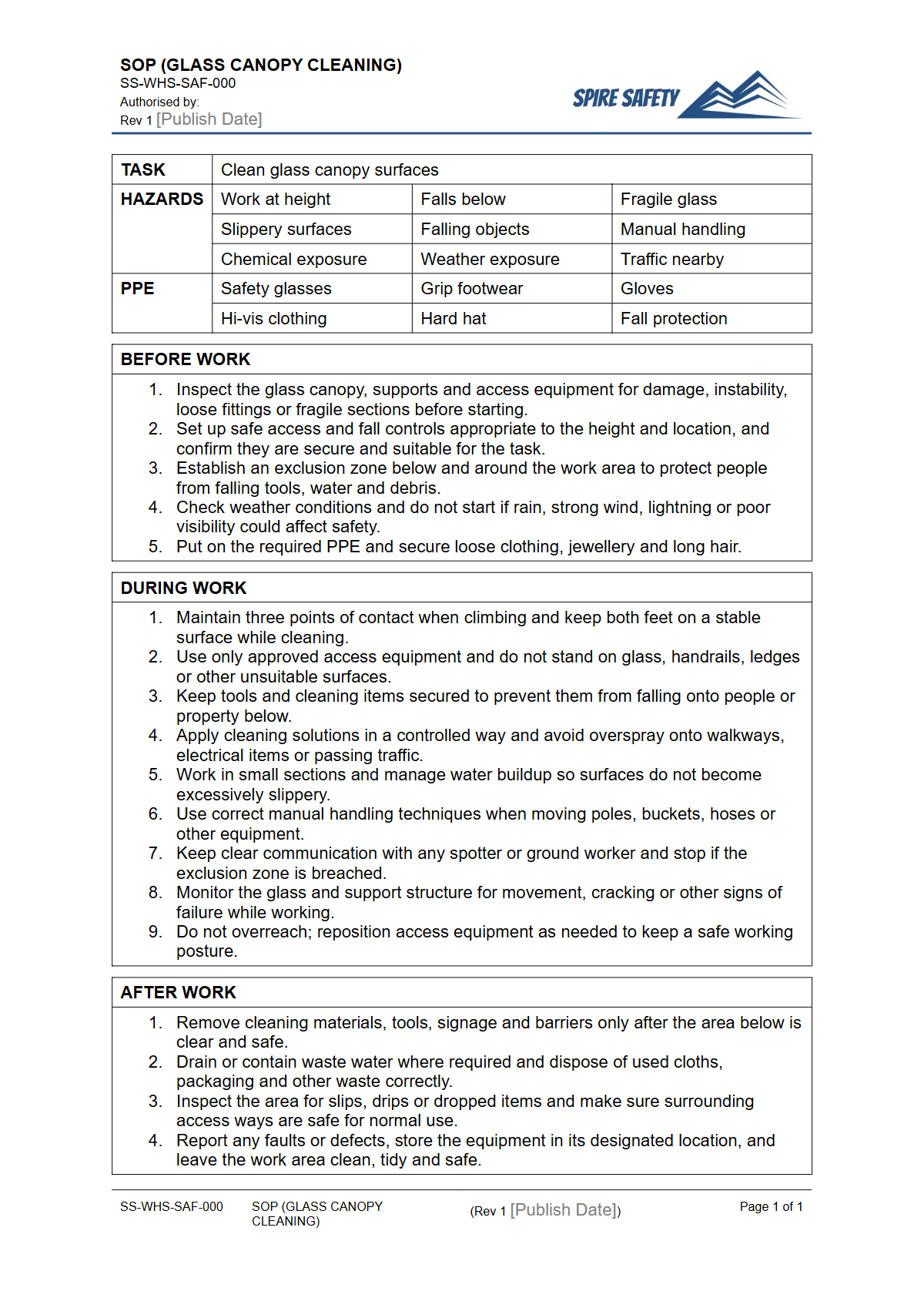
Purpose of the Free Safe Operating Procedure (Glass Canopy Cleaning) Template
Effectively managing safety when cleaning architectural glass canopies requires a clear, documented process. This free Safe Operating Procedure (Glass Canopy Cleaning) Template provides a structured starting point for your organisation to formalise its approach to this high-risk task.
The purpose of this SOP is to outline a step-by-step sequence of work that minimises risks to health and safety, ensuring all workers understand the hazards and the required control measures before work begins. It standardises your method for tasks like equipment setup, chemical handling, working at heights, and emergency response.
By implementing a documented procedure, you create a reliable reference for training, supervision, and operational consistency. A robust SOP is a fundamental component of broader WHS management systems, demonstrating a commitment to proactive risk management.
It helps control major hazards associated with canopy cleaning, including falls from height, chemical exposure, slips and trips, and musculoskeletal injuries from hazardous manual tasks.
Video walkthrough
How to use the Free Safe Operating Procedure (Glass Canopy Cleaning) Template
This template is provided as a foundation for you to build upon. It is not a complete, ready-to-use document.
You must download the DOCX file and thoroughly customise it to reflect the specific realities of your workplace. This involves conducting a risk assessment for the glass canopy cleaning task at your site and incorporating the findings into the SOP.
Detail the specific types of canopies, the cleaning agents used, the access methods employed, and the personal protective equipment (PPE) required.
When customising the document, clearly describe the pre-start checks, operational steps, and shutdown procedures relevant to your equipment. For instance, if using ladders, the procedure must align with best practices for ladder safety and may be supplemented by a specific step ladder SOP. This ensures the instructions are practical and directly applicable to the tasks your workers perform.
For tasks involving more complex machinery like elevated work platforms (EWPs) or telehandlers with man-cages, a dedicated and detailed procedure is critical. You can adapt this SOP or reference other specific procedures, such as our free Telehandler SOP template, to ensure all machine-related hazards are controlled.
Remember to consult with the workers who perform the job, as their practical experience is invaluable for creating an effective and realistic procedure.
When to use it
A Safe Operating Procedure for glass canopy cleaning should be used as a primary reference document before any such task is undertaken. It is an essential tool for worker training and induction, ensuring every team member is aware of the approved work method and safety requirements.
The SOP should also be readily available at the work location for supervisors and operators to consult during the task. It serves as a checklist to verify that all safety controls, from securing the work area to performing final equipment checks, are in place.
The SOP should also be reviewed and used during toolbox talks before a shift begins, especially if environmental conditions like wind or rain could impact safety. It can be paired with other procedural documents, such as a free Air Compressor SOP if compressed air is used to clear debris from channels before washing, to form a comprehensive work pack.
Who should use it
This SOP template is designed for use by a range of personnel within an organisation. WHS Managers, Safety Advisors, and Compliance Officers can use it to develop and standardise workplace procedures.
Supervisors and Team Leaders are responsible for implementing the SOP, using it to instruct workers and monitor adherence to the safe work method. Most importantly, the operators and cleaners who perform the glass canopy cleaning must use the final, customised SOP to guide their work practices and ensure their own safety and the safety of others.
Periodically reviewing the effectiveness of the SOP is a key responsibility for supervisors and management. This can be done through direct observation, worker consultation, and formal reviews.
Incorporating feedback and observations from these activities helps maintain the document's relevance and effectiveness, a process that can be verified during WHS compliance auditing. Find more templates and checklists like this one in our free WHS resources library to continue building your safety system.
Common mistakes
Common mistakes to avoid
- Using a generic SOP without customising it for the specific site, access equipment, and chemicals.
- Failing to adequately check and account for weather conditions like high winds, rain, or lightning before starting.
- Neglecting to cordon off the area below the work zone to protect pedestrians from falling objects or water.
- Assuming workers are competent on access equipment without providing specific training and verification.
Legal references
Legal considerations
The following legal requirements may be relevant to this type of work.
- Work Health and Safety Act (Harmonised) — Provides the primary duties for protecting workers and other people from work health and safety risks.
- Work Health and Safety Regulations (Harmonised) — Sets out requirements supporting the management of workplace hazards and risks.
The following codes may be relevant to this type of work.
- Managing WHS Risks Code of Practice — Provides practical guidance on identifying hazards, assessing risks and applying effective controls.
- Work Health and Safety Consultation, Cooperation and Coordination Code of Practice — Provides practical guidance on consulting workers and coordinating with other duty holders.
- Managing the Work Environment and Facilities Code of Practice — Provides practical guidance on safe work environments, workplace facilities and related controls.
Did you know
A Leading Cause of Injury
Falls from height remain a leading cause of workplace fatalities and serious injuries in Australia. Most serious fall-related injuries result from falls of three metres or less.
Working from the Ground
Modern water-fed pole systems can often allow operators to clean canopies and multi-storey windows from the ground, significantly reducing risks by minimising the need to work at height.
FAQ
Frequently asked questions
01What are the main hazards in glass canopy cleaning?
02Is a Safe Work Method Statement (SWMS) required for cleaning glass canopies?
03Can I use this SOP template for rope access cleaning?
04How often should an SOP for glass canopy cleaning be reviewed?
Share this resource
Free Safe Operating Procedure (Glass Canopy Cleaning) Template
Browse Categories
How To Use It
- 1Download and open in Word or PDF.
- 2Replace the placeholders with your business details.
- 3Get it reviewed by a WHS specialist before rollout.
Need it customised?
Our WHS consultants can adapt this template to your site, run a gap analysis, or audit what you already have in place.
Book a Free Consultation WHS consulting servicesor call 1300 156 382
Related templates
- Free Safe Operating Procedure (Glass Crusher) Template
- Free Safe Operating Procedure (Glass Door Cleaning) Template
- Free Safe Operating Procedure (Glass Installation) Template
- Free Safe Operating Procedure (Glass Lifter) Template
- Free Safe Operating Procedure (Glass Partition Clean) Template
- Free Safe Operating Procedure (Glass Polisher) Template