
Free Safe Operating Procedure (Hose Crimp Machine) Template
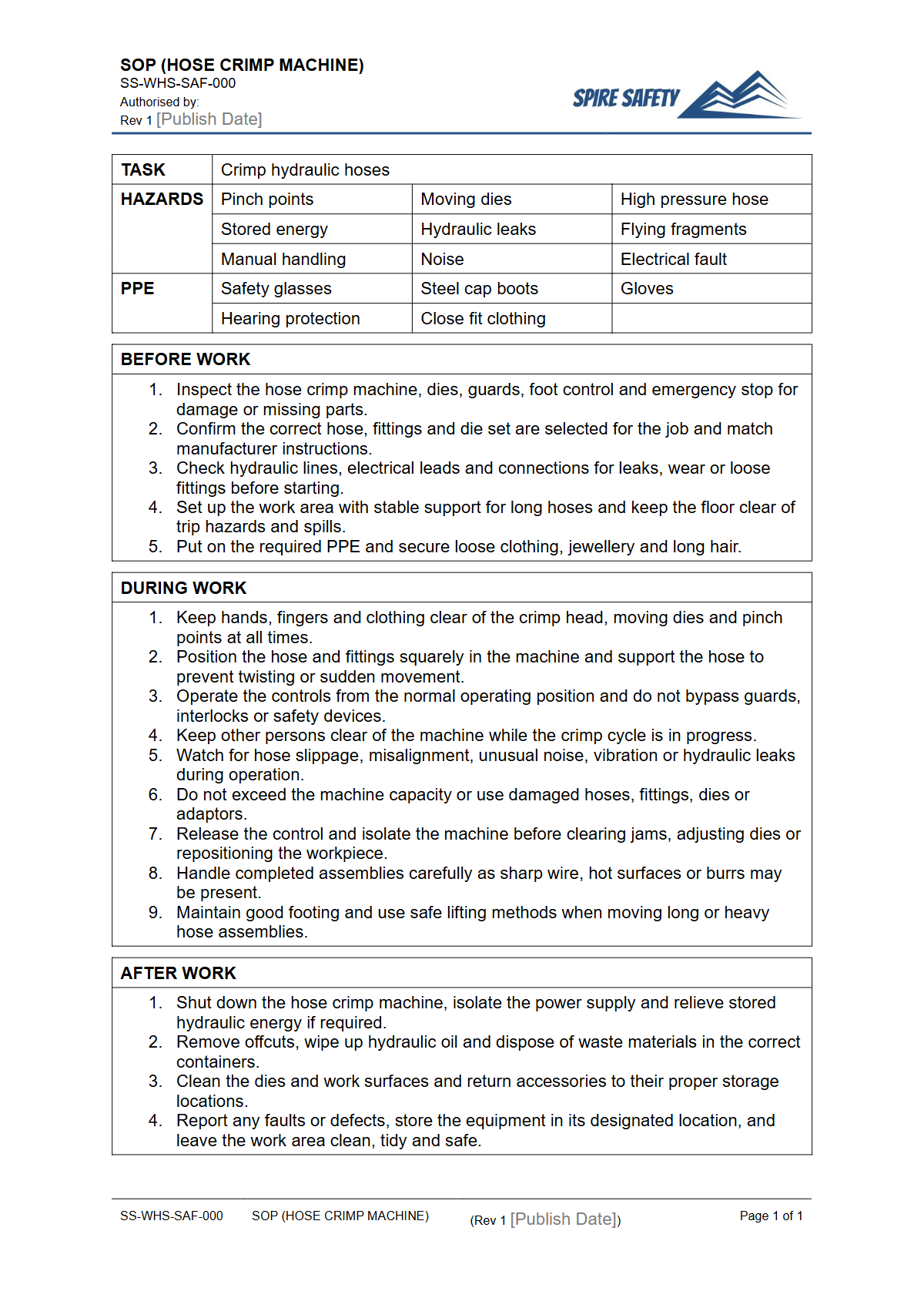
Download our free Safe Operating Procedure (Hose Crimp Machine) Template to formalise safe work practices. This customisable DOCX helps manage plant risks.
Free Safe Operating Procedure (Hose Crimp Machine) Template
DOCX • 126 KB + PDF
Updated Oct 2026
No signup required
Purpose of the Free Safe Operating Procedure (Hose Crimp Machine) Template
Operating a hose crimping machine involves significant risks, including high-pressure fluid injection, entanglement, and crushing hazards. This free Safe Operating Procedure (Hose Crimp Machine) Template provides a structured framework for documenting the required steps to operate the equipment safely.
A well-developed SOP is a critical tool for any Person Conducting a Business or Undertaking (PCBU) to meet their primary duty of care. It helps standardise work methods, ensures workers are aware of known hazards, and details the control measures needed to minimise the risk of injury.
Using this template as a starting point helps formalise your safety processes and demonstrates a commitment to workplace health and safety.
By clearly outlining pre-start checks, operational steps, and shutdown procedures, this document becomes an essential part of your training and risk management program. It supports consistent, safe work behaviour and provides a clear reference for operators and supervisors.
Proper documentation is a cornerstone of an effective safety management system, helping to prevent incidents before they occur. These procedures are also vital for other workshop equipment; our Free Air Compressor SOP Template provides a similar framework for another common piece of plant.
Video walkthrough
How to use the Free Safe Operating Procedure (Hose Crimp Machine) Template
This document is a template, not a finished procedure. To use it effectively, you must adapt it to your specific operational context.
Download the DOCX file and systematically work through each section, customising the content to match the make and model of your hose crimping machine, the types of hoses and fittings used, and your site-specific environment. It is crucial to consult with the workers who actually operate the machinery during this customisation process, as their experience is invaluable for identifying practical hazards and effective controls.
Important Note
We have created this template as a guide. You must customise it to reflect the specific equipment, processes, and risks in your workplace. A generic procedure is not sufficient to meet your WHS obligations. Ensure the final document is reviewed, approved by management, and made readily accessible to all relevant personnel. It should be used as a key resource for training new operators and for regular refresher sessions.
When to use a Safe Operating Procedure
A Safe Operating Procedure for a hose crimp machine should be used in several key situations. It is fundamental for inducting and training new employees or those unfamiliar with the specific equipment.
It also serves as a day-to-day reference guide for operators to ensure they follow the correct, safe sequence of tasks. Furthermore, SOPs are invaluable tools during incident investigations, helping to determine if procedural deviations contributed to the event.
They are a core component of proactive WHS management systems, providing a clear benchmark for expected safe performance.
Key Hazards of Hose Crimping
While customising the template, pay close attention to documenting controls for the primary hazards associated with hose crimping machines, including:
- High-Pressure Fluid Injection: A pinhole leak in a hydraulic hose can inject fluid into the skin at extremely high pressure, causing severe and often limb-threatening injuries.
- Crushing and Pinch Points: The crimping head, die sets, and moving parts create significant crushing and pinching hazards for fingers and hands.
- Entanglement: Loose clothing, jewellery, or long hair can become entangled in moving parts of the machine.
- Electrical Hazards: Faulty wiring or improper grounding can pose a risk of electric shock, particularly in machines with electric hydraulic pumps.
- Manual Handling: Lifting heavy hose reels or machine components can lead to musculoskeletal injuries if not done correctly. Maintaining equipment that uses hydraulic hoses, such as a telehandler, requires its own documented procedures, which you can structure using our FREE Telehandler SOP Template.
Who should use this SOP Template
This template is designed for use by anyone responsible for workplace safety and operational management. This includes WHS Managers, Safety Advisors, Site Supervisors, and Workshop Foremen.
They are responsible for adapting the template, ensuring its accuracy, and implementing it within the workplace. Operators of hose crimping machines are the primary end-users of the finished procedure, relying on it for guidance during their work.
Business owners and PCBUs should also endorse the use of such documents to fulfil their legal and ethical obligations to provide a safe system of work. Periodic reviews can be supported by external WHS compliance auditing to verify that documented procedures are being followed effectively in practice.
Implementing clear, documented procedures for all workshop equipment is a sign of a mature safety culture. You can apply the same principles to other tools by using resources like our free Circular Saw SOP to manage associated risks.
You can browse our complete free WHS resources library for more templates to support your safety management system.
Common mistakes
Common mistakes to avoid
- Using mismatched hose and fitting components from different brands.
- Failing to wear appropriate personal protective equipment (PPE), especially safety glasses with side shields.
- Neglecting to perform pre-operational safety checks on the machine's guards and controls.
- Attempting to clear a jam or perform maintenance without de-energising and isolating the machine from all power sources.
Legal references
Legal considerations
The following legal requirements may be relevant to this type of work.
- Work Health and Safety Act (Harmonised) — Provides the primary duties for protecting workers and other people from work health and safety risks.
- Work Health and Safety Regulations (Harmonised) — Sets out requirements supporting the management of workplace hazards and risks.
The following codes may be relevant to this type of work.
- Managing WHS Risks Code of Practice — Provides practical guidance on identifying hazards, assessing risks and applying effective controls.
- Work Health and Safety Consultation, Cooperation and Coordination Code of Practice — Provides practical guidance on consulting workers and coordinating with other duty holders.
- Managing the Work Environment and Facilities Code of Practice — Provides practical guidance on safe work environments, workplace facilities and related controls.
Did you know
Fluid Injection Hazard
A pinhole leak in a hydraulic hose can eject fluid at over 600 feet per second. This high-pressure fluid can easily penetrate the skin, causing severe tissue damage, gangrene, and potentially requiring amputation if not treated immediately as a surgical emergency.
Matching is Critical
Not all hydraulic hoses and fittings are compatible, even if they appear to fit. Using mismatched components from different manufacturers can lead to catastrophic failure under pressure, as crimp specifications are highly precise and proprietary.
FAQ
Frequently asked questions
01What should be included in a Hose Crimp Machine SOP?
02Is training required to operate a hose crimping machine?
03How often should an SOP for a hose crimper be reviewed?
04Who is responsible for creating a Hose Crimp Machine SOP?
Share this resource
Free Safe Operating Procedure (Hose Crimp Machine) Template
Browse Categories
How To Use It
- 1Download and open in Word or PDF.
- 2Replace the placeholders with your business details.
- 3Get it reviewed by a WHS specialist before rollout.
Need it customised?
Our WHS consultants can adapt this template to your site, run a gap analysis, or audit what you already have in place.
Book a Free Consultation WHS consulting servicesor call 1300 156 382
Related templates
- Free Safe Operating Procedure (Hose Cutoff Saw) Template
- Free Safe Operating Procedure (Hose Flushing) Template
- Free Safe Operating Procedure (Hose Reel Use) Template
- Free Safe Operating Procedure (Hose Skiving Machine) Template
- Free Safe Operating Procedure (Hospital Bed Movement) Template
- Free Safe Operating Procedure (Hospital Cot Cleaning) Template