
Free Safe Operating Procedure (Lawn Repair) Template
Download our free Safe Operating Procedure (Lawn Repair) Template.
Free Safe Operating Procedure (Lawn Repair) Template
DOCX • 126 KB + PDF
Updated Oct 2026
No signup required
Purpose of the Free Safe Operating Procedure (Lawn Repair) Template
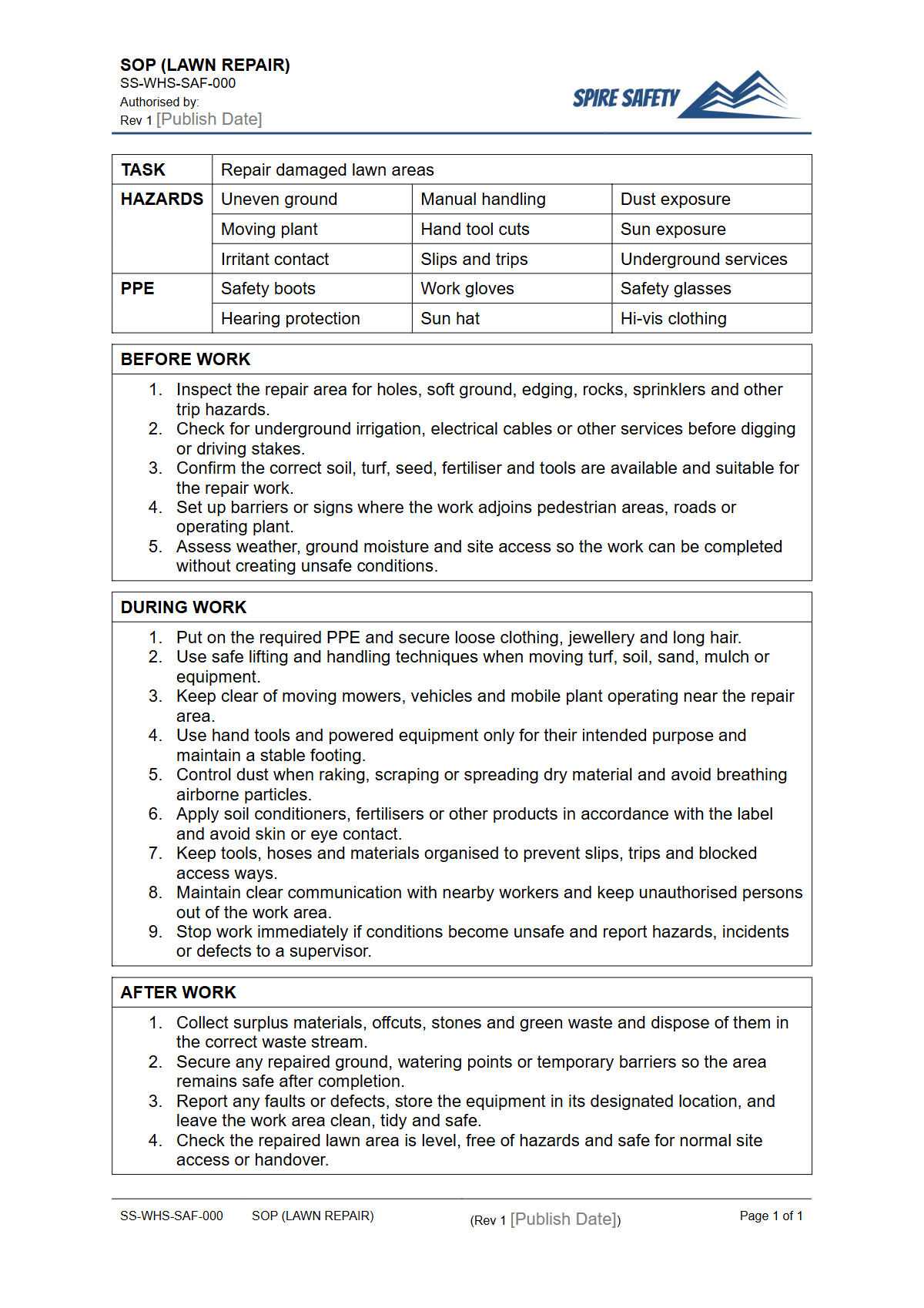
Standardise your safety protocols for groundskeeping and landscaping tasks with our free Safe Operating Procedure (Lawn Repair) Template. This resource provides a clear, structured framework for identifying hazards and outlining control measures associated with repairing turf, from patching small areas to larger reseeding projects.
It helps businesses formalise their commitment to worker safety, reduce the risk of incidents, and demonstrate due diligence. This document is an essential tool for any organisation involved in property maintenance or horticultural services, establishing a safe system of work that everyone can follow.
A Safe Operating Procedure (SOP) is a foundational document for managing high-risk tasks. For lawn repair, this includes addressing hazards such as manual handling of soil and turf, operation of small plant like aerators, exposure to chemicals like fertilisers and herbicides, UV radiation, and environmental risks like snakes or biting insects.
Using this template helps ensure these risks are systematically considered and controlled.
Video walkthrough
How to use the Free Safe Operating Procedure (Lawn Repair) Template
This Safe Operating Procedure for lawn repair is designed for immediate use and easy customisation. Simply download the template in your preferred format (DOCX for easy editing or PDF) and adapt it to your specific operational context.
It is essential to review and modify the content to align with the actual tools, equipment, chemicals, and site conditions at your workplace. This ensures the procedure is relevant and effective for your team.
Please note: This template is a starting point. We have provided a comprehensive framework based on Australian WHS principles, but it is crucial that you customise this document to reflect the specific hazards and control measures relevant to your operations.
Your final SOP should be a practical tool developed in consultation with the workers who will be using it.
What's Included in the Template?
Our template is structured to guide you through the key elements of a comprehensive SOP. It includes dedicated sections for:
- Required Personal Protective Equipment (PPE)
- Pre-operational checks for tools and equipment
- A step-by-step guide to performing the lawn repair task safely
- Emergency procedures and contacts
- Post-task cleanup and storage requirements
The template helps you document emergency responses, including guidance for situations that may require using a first aid kit or implementing a defibrillator operation procedure.
When to use it
A Safe Operating Procedure for lawn repair should be a core part of your daily safety management. It should be used during the planning phase of any lawn repair job to ensure all safety considerations have been addressed before work commences.
It is also an invaluable tool for worker training, inductions for new employees, and toolbox talks. Referencing the SOP regularly reinforces safe work habits and ensures procedures are fresh in workers' minds.
An SOP is a living document within your safety framework and should be integrated into your broader WHS management systems. It serves as evidence of your risk management process and the control measures you have implemented to protect your workers.
Who should use it
This Safe Operating Procedure is intended for all personnel involved in lawn repair and grounds maintenance. This includes:
- Workers and Operators: The primary users who perform the lawn repair tasks and must follow the outlined steps to ensure their own safety and the safety of others.
- Supervisors and Team Leaders: Responsible for ensuring workers are trained on the SOP, understand its contents, and adhere to it during work. They also use it to conduct pre-start briefings and monitor work.
- WHS Managers and Advisors: Responsible for developing, reviewing, and implementing safety procedures as part of the organisation's overall WHS management system.
If you need assistance tailoring this template or developing a comprehensive set of SOPs for your operations, engaging professional WHS consulting can provide expert guidance and ensure your systems are robust and practical.
Integrating the SOP with Risk Management
An SOP is most effective when it is the direct output of a thorough risk assessment. For complex repairs involving extensive soil work, such as installing drainage or irrigation, you may need a specialised FREE Trencher SOP Template to manage associated machinery risks. Likewise, even simple tasks that may seem low-risk, such as retrieving stored materials, carry hazards that must be managed. Ensure procedures are in place for all equipment, including a dedicated FREE Step Ladder SOP Template where applicable. This template is just one of many documents available in our free WHS resources library, designed to support Australian businesses in managing workplace safety.
Common mistakes
Common mistakes to avoid
- Using a generic SOP without customising it for specific site conditions and equipment.
- Failing to consult with and properly train workers on the finalised procedure.
- Not reviewing or updating the SOP after an incident or when new tools are introduced.
- Neglecting to specify correct PPE for handling specific chemicals like herbicides or fertilisers.
Legal references
Legal considerations
The following legal requirements may be relevant to this type of work.
- Work Health and Safety Act (Harmonised) — Provides the primary duties for protecting workers and other people from work health and safety risks.
- Work Health and Safety Regulations (Harmonised) — Sets out requirements supporting the management of workplace hazards and risks.
The following codes may be relevant to this type of work.
- Managing WHS Risks Code of Practice — Provides practical guidance on identifying hazards, assessing risks and applying effective controls.
- Work Health and Safety Consultation, Cooperation and Coordination Code of Practice — Provides practical guidance on consulting workers and coordinating with other duty holders.
- Managing the Work Environment and Facilities Code of Practice — Provides practical guidance on safe work environments, workplace facilities and related controls.
Did you know
Manual Handling Risks
According to Safe Work Australia, the agriculture, forestry, and fishing industry, which includes many groundskeeping activities, has one of the highest rates of serious claims for workplace injuries, with manual handling being a primary cause.
Soil Bacteria
Soil can contain harmful bacteria, such as Legionella longbeachae, which can cause Legionnaires' disease. Wearing gloves and washing hands thoroughly after handling soil, compost, and potting mix are crucial control measures.
FAQ
Frequently asked questions
01What is a Safe Operating Procedure (SOP) for lawn repair?
02Is this free lawn repair SOP template enough to be WHS-aligned?
03What common hazards does a lawn repair SOP address?
04How often should we review our Safe Operating Procedures?
Share this resource
Free Safe Operating Procedure (Lawn Repair) Template
Browse Categories
How To Use It
- 1Download and open in Word or PDF.
- 2Replace the placeholders with your business details.
- 3Get it reviewed by a WHS specialist before rollout.
Need it customised?
Our WHS consultants can adapt this template to your site, run a gap analysis, or audit what you already have in place.
Book a Free Consultation WHS consulting servicesor call 1300 156 382
Related templates
- Free Safe Operating Procedure (Lawn Top Dressing) Template
- Free Safe Operating Procedure (Leachate Area Check) Template
- Free Safe Operating Procedure (Leachate Spill Cleanup) Template
- Free Safe Operating Procedure (Lead Acid Battery Work) Template
- Free Safe Operating Procedure (Lead Paint Removal) Template
- Free Safe Operating Procedure (Leaf Blower) Template