
Free Safe Operating Procedure (Power Shears) Template
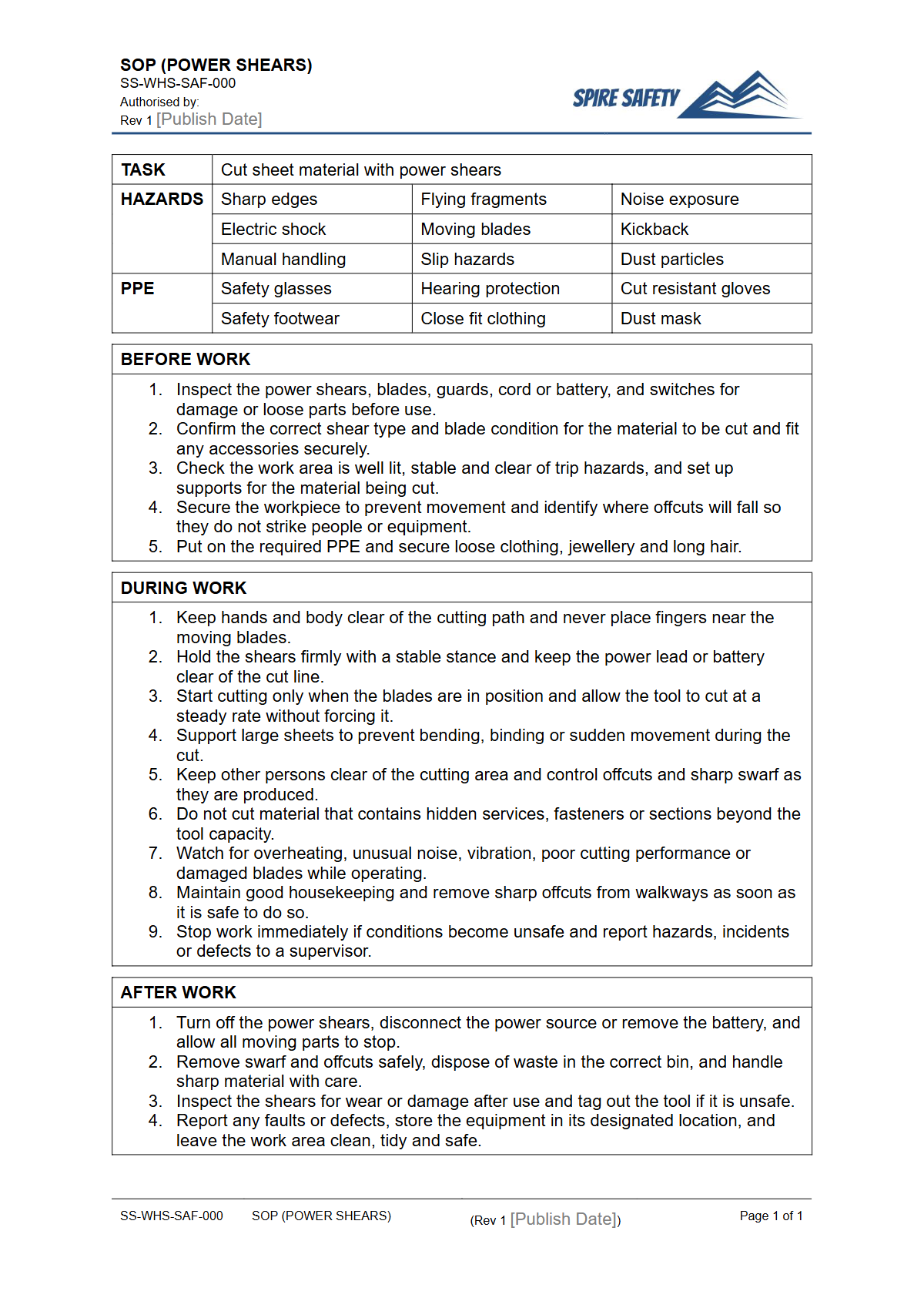
Download our free Safe Operating Procedure (Power Shears) template. This document provides a solid starting point for managing high-risk plant safety.
Free Safe Operating Procedure (Power Shears) Template
DOCX • 126 KB + PDF
Updated Oct 2026
No signup required
Purpose of the Free Safe Operating Procedure (Power Shears) Template
Operating power shears, whether hydraulic, pneumatic, or mechanical, introduces significant workplace hazards, including severe cuts, amputations, crushing injuries, and entanglement. This Free Safe Operating Procedure (Power Shears) Template provides a structured framework for documenting the required steps to operate this machinery safely.
It helps organisations fulfil their primary duty of care by outlining controls for identified risks, formalising operational sequences, and establishing clear safety protocols for workers. A documented SOP is a critical tool for standardising work practices and reducing the likelihood of incidents.
By implementing a specific SOP for power shears, you can systematically address risks associated with the point of operation, material handling, energy sources, and maintenance. This formalised approach is fundamental to managing high-risk plant and equipment.
For other types of cutting equipment, our free Circular Saw SOP offers a similar structured approach to safety.
Video walkthrough
How to use the Free Safe Operating Procedure (Power Shears) Template
This template is provided in both DOCX and PDF formats to suit your organisation's needs. The DOCX file is fully editable, allowing you to tailor the content to the specific make and model of power shears used in your workplace, as well as your unique operational environment and risk profile. To use it effectively:
- Download the document and open the DOCX file.
- Review each section and customise the content in consultation with operators, supervisors, and health and safety representatives.
- Insert site-specific details, such as machinery model numbers, emergency contact information, and required Personal Protective Equipment (PPE).
- Once finalised, use the SOP as a key document for training, competency assessments, and pre-start checks.
Note: This template is a starting point. To be effective, you must customise it to reflect the specific equipment and hazards present in your workplace.
We cannot guarantee that this document meets all your legal obligations, as this depends entirely on its implementation and customisation.
When to Use This SOP
A Safe Operating Procedure for power shears should be a living document integrated into your daily operations. It is essential for several key activities, including the initial training and induction of new operators to ensure they understand the correct, safe method of use from the start.
The SOP serves as a practical reference guide for pre-start inspections, reminding operators of the critical safety checks required before energising the equipment. It should also be used during refresher training sessions and whenever a process involving the power shears is reviewed or modified. Integrating such procedures is a core component of effective WHS management systems.
Who Should Use It
This SOP is designed for use by multiple roles within an organisation. WHS Managers and Supervisors are responsible for customising, implementing, and reviewing the procedure to ensure it remains current and effective.
They use it to train workers and enforce safe work practices. Plant Operators are the primary end-users, following the documented steps to perform their tasks safely and consistently.
Maintenance Personnel should also be familiar with the SOP, particularly the sections on isolation, lock-out/tag-out (LOTO), and safe maintenance procedures. In larger workshops, procedures for different equipment types are often managed together; a similar process can be followed with our free Air Compressor SOP for another common piece of plant.
Key Elements of an Effective Power Shears SOP
A comprehensive SOP should be clear, concise, and easy for operators to follow. Our template is structured around key safety sections aligned with Australian WHS principles, including:
- Required PPE: Specifies mandatory personal protective equipment such as safety glasses, hearing protection, and cut-resistant gloves.
- Hazard Identification: Lists potential risks like cutting, shearing, crushing, entanglement, noise, and ejected materials.
- Pre-Operational Safety Checks: Provides a checklist for inspecting machine guarding, emergency stops, controls, and the work area before use.
- Step-by-Step Operating Sequence: Outlines the safe process for starting the machine, feeding material, making cuts, and shutting down.
- Post-Operational Tasks: Details requirements for cleaning the machine and surrounding area.
- Emergency Procedures: Describes immediate actions to take in case of an incident, including shutdown and first aid response.
Regularly reviewing the effectiveness of implemented SOPs is crucial for continuous improvement. This can be verified through practical observation and formal WHS compliance audits to ensure the documented procedure matches actual work practices.
Managing a suite of SOPs ensures consistency across your operations. For example, the process for documenting procedures for material handling equipment can be standardised using resources like our Conveyer System SOP.
This resource is just one of many we offer. You can explore our full free WHS resources library for more templates, checklists, and guides to support your safety management system.
Common mistakes
Common mistakes to avoid
- Failing to ensure all guards, particularly at the point of operation, are in place and functional.
- Bypassing or defeating safety features like two-hand controls or light curtains to speed up work.
- Neglecting regular maintenance, leading to dull blades or hydraulic failures.
- Leaving the machine running and unattended, even for a short time.
Legal references
Legal considerations
The following legal requirements may be relevant to this type of work.
- Work Health and Safety Act (Harmonised) — Provides the primary duties for protecting workers and other people from work health and safety risks.
- Work Health and Safety Regulations (Harmonised) — Sets out requirements supporting the management of workplace hazards and risks.
The following codes may be relevant to this type of work.
- Managing WHS Risks Code of Practice — Provides practical guidance on identifying hazards, assessing risks and applying effective controls.
- Work Health and Safety Consultation, Cooperation and Coordination Code of Practice — Provides practical guidance on consulting workers and coordinating with other duty holders.
- Managing the Work Environment and Facilities Code of Practice — Provides practical guidance on safe work environments, workplace facilities and related controls.
Did you know
Guarding is Critical
According to Safe Work Australia, inadequate machine guarding is a leading cause of workplace injuries, with machinery-related incidents often resulting in serious injuries like amputations and fractures.
Noise Hazards
Power shears can generate noise levels well above the 85 dB(A) exposure standard. Without proper controls and hearing protection, operators are at risk of permanent noise-induced hearing loss.
FAQ
Frequently asked questions
01What key information should an SOP for power shears include?
02How often should our power shears SOP be reviewed?
03Is this free power shears SOP template compliant with Australian WHS laws?
04Who is responsible for training workers on the power shears SOP?
Share this resource
Free Safe Operating Procedure (Power Shears) Template
Browse Categories
How To Use It
- 1Download and open in Word or PDF.
- 2Replace the placeholders with your business details.
- 3Get it reviewed by a WHS specialist before rollout.
Need it customised?
Our WHS consultants can adapt this template to your site, run a gap analysis, or audit what you already have in place.
Book a Free Consultation WHS consulting servicesor call 1300 156 382
Related templates
- Free Safe Operating Procedure (Power Trowel) Template
- Free Safe Operating Procedure (Powered Pallet Mover) Template
- Free Safe Operating Procedure (Powered Respirator) Template
- Free Safe Operating Procedure (Pressure Calibrator) Template
- Free Safe Operating Procedure (Pressure Cleaning Setup) Template
- Free Safe Operating Procedure (Pressure Cushion Check) Template