
Free Safe Operating Procedure (Ship Cabin Cleaning) Template
A structured Safe Operating Procedure is vital for ensuring the health and safety of maritime cleaning staff.
Free Safe Operating Procedure (Ship Cabin Cleaning) Template
DOCX • 126 KB + PDF
Updated Oct 2026
No signup required
Purpose of the Free Safe Operating Procedure (Ship Cabin Cleaning) Template
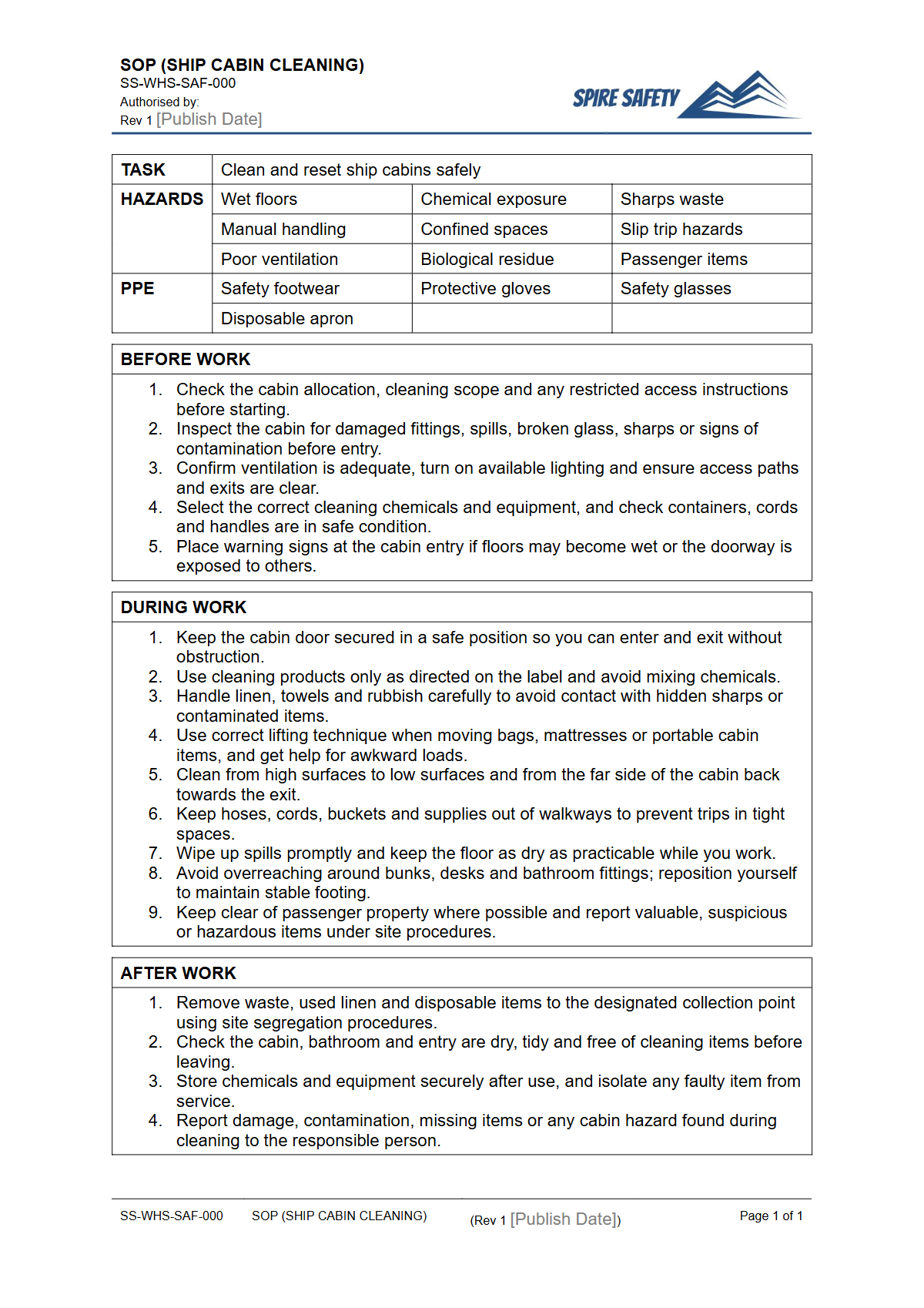
This Free Safe Operating Procedure (Ship Cabin Cleaning) Template provides a structured starting point for organisations to document the required steps for cleaning ship cabins safely and efficiently. The task involves significant hazards, including chemical exposure from cleaning agents, slips and trips on wet surfaces, manual handling injuries from moving furniture or equipment, and potential exposure to biological hazards.
A documented SOP is a fundamental tool for managing these risks and demonstrating due diligence.
Implementing clear, task-specific procedures is a cornerstone of effective WHS management systems. This template helps formalise a safe system of work, ensuring all personnel follow a consistent, risk-assessed process. It prompts consideration of hazard identification, risk assessment, and the implementation of robust control measures, which are essential for protecting workers in a dynamic maritime environment.
What's included in this Ship Cabin Cleaning SOP?
This customisable SOP template is aligned with Australian WHS principles and provides a framework covering:
- Designated responsibilities for workers and supervisors.
- A list of required Personal Protective Equipment (PPE) such as gloves, safety glasses, and appropriate footwear.
- Pre-operational checks, including assessing the area for immediate hazards.
- A step-by-step guide to the cleaning process, from preparation to waste disposal.
- Post-operational clean-up and storage requirements.
Video walkthrough
How to use the Free Safe Operating Procedure (Ship Cabin Cleaning) Template
To use this Safe Operating Procedure (Ship Cabin Cleaning) template, simply download the DOCX file and open it in a word processor. The document is designed to be adapted to your specific operational context.
It is crucial to review every section and add, remove, or modify content to reflect the unique layout of your vessel, the specific cleaning chemicals and equipment used, and your organisation's emergency procedures.
Important: This document is a template only. We are not WHS consultants, and this resource is not a substitute for professional advice.
You must customise it to your workplace. This involves conducting a site-specific risk assessment, consulting with your workers, and ensuring the final procedure is practical and understood by all users.
For complex operations, seeking specialist WHS consulting can provide valuable assurance and clarity.
Once customised, the SOP should be formally approved, and all relevant personnel must be trained on its contents. Regular reviews are essential to keep the document current, particularly after an incident or when processes change.
These reviews can be integrated into your schedule of WHS compliance audits to ensure ongoing relevance and effectiveness.
When to use it
A Safe Operating Procedure for ship cabin cleaning should be used consistently for all related tasks. It is most effective when integrated into daily operations.
Key times to use the SOP include during the induction and training of new cleaning staff, as a reference guide before starting a cleaning shift, and as a central document for toolbox talks on cleaning-related hazards. It establishes a clear benchmark for safe work practices, which is vital for any standardised task, whether it's cleaning cabins or following a specific guide like our deep fryer SOP in a galley.
Who should use it
This SOP is intended for several key roles within a maritime or facilities management organisation. Primary users are the cleaning personnel who perform the day-to-day tasks.
It provides them with clear, step-by-step instructions to follow to keep themselves and others safe. Supervisors and team leaders should use the SOP to train their teams, monitor work practices, and enforce safety standards.
The principles can also inform procedures for other tasks, such as those detailed in a Telehandler SOP for moving supplies.
WHS managers and officers will also use the document as part of the broader safety management system. They are often responsible for developing, reviewing, and updating SOPs in consultation with workers and management.
The process ensures that risks associated with cabin cleaning are formally identified and controlled. The same principles of procedural safety apply to other tasks involving machinery, for which resources like our free Air Compressor SOP provide a starting point.
Common mistakes
Common mistakes to avoid
- Using incorrect, unlabelled, or improperly diluted cleaning chemicals.
- Failing to use the specified Personal Protective Equipment (PPE), especially gloves and eye protection.
- Not allowing for adequate ventilation when working with chemicals in confined cabin spaces.
- Skipping or rushing safety steps, such as pre-cleaning hazard checks, to save time.
Legal references
Legal considerations
The following legal requirements may be relevant to this type of work.
- Work Health and Safety Act (Harmonised) — Provides the primary duties for protecting workers and other people from work health and safety risks.
- Work Health and Safety Regulations (Harmonised) — Sets out requirements supporting the management of workplace hazards and risks.
The following codes may be relevant to this type of work.
- Managing WHS Risks Code of Practice — Provides practical guidance on identifying hazards, assessing risks and applying effective controls.
- Work Health and Safety Consultation, Cooperation and Coordination Code of Practice — Provides practical guidance on consulting workers and coordinating with other duty holders.
- Managing the Work Environment and Facilities Code of Practice — Provides practical guidance on safe work environments, workplace facilities and related controls.
Did you know
Slips, Trips, and Falls
Slips, trips, and falls are a leading cause of serious workplace injuries in Australia. Effective housekeeping and managing wet surfaces, as detailed in a cleaning SOP, are critical control measures.
Maritime Regulations
The International Convention for the Prevention of Pollution from Ships (MARPOL) sets strict global rules for the disposal of garbage at sea, which includes all materials and residues from cleaning activities.
FAQ
Frequently asked questions
01What are the main hazards involved in ship cabin cleaning?
02How often should a Safe Operating Procedure for ship cabin cleaning be reviewed?
03Is this SOP template suitable for all types of vessels?
04Who is responsible for providing the PPE listed in the SOP?
Share this resource
Free Safe Operating Procedure (Ship Cabin Cleaning) Template
Browse Categories
How To Use It
- 1Download and open in Word or PDF.
- 2Replace the placeholders with your business details.
- 3Get it reviewed by a WHS specialist before rollout.
Need it customised?
Our WHS consultants can adapt this template to your site, run a gap analysis, or audit what you already have in place.
Book a Free Consultation WHS consulting servicesor call 1300 156 382
Related templates
- Free Safe Operating Procedure (Ship Galley Cleaning) Template
- Free Safe Operating Procedure (Ship Waste Handling) Template
- Free Safe Operating Procedure (Shock Absorber Change) Template
- Free Safe Operating Procedure (Shoe Press) Template
- Free Safe Operating Procedure (Shopping Basket Clean) Template
- Free Safe Operating Procedure (Shopping Trolley Return) Template