
Free WHS Inspection (Bowling Club) Template
Download our free WHS Inspection Template for Bowling Clubs. This structured DOCX & PDF helps you formalise safety audits and manage club risks. Get started.
Free WHS Inspection (Bowling Club) Template
DOCX • 129 KB + PDF
Updated Oct 2026
No signup required
Purpose of the Free WHS Inspection (Bowling Club) Template
Running a safe bowling club involves managing a diverse range of risks, from the greens and grounds to the clubhouse and kitchen. Our Free WHS Inspection (Bowling Club) Template provides a structured starting point for systematically identifying, assessing, and controlling hazards specific to your club's environment.
This document is designed to help you proactively manage safety, demonstrate due diligence, and foster a positive safety culture among staff, volunteers, members, and visitors. Using a formal inspection process helps integrate safety into your operational rhythm and is a key element of effective WHS management systems.
Video walkthrough
How to use the Free WHS Inspection (Bowling Club) Template
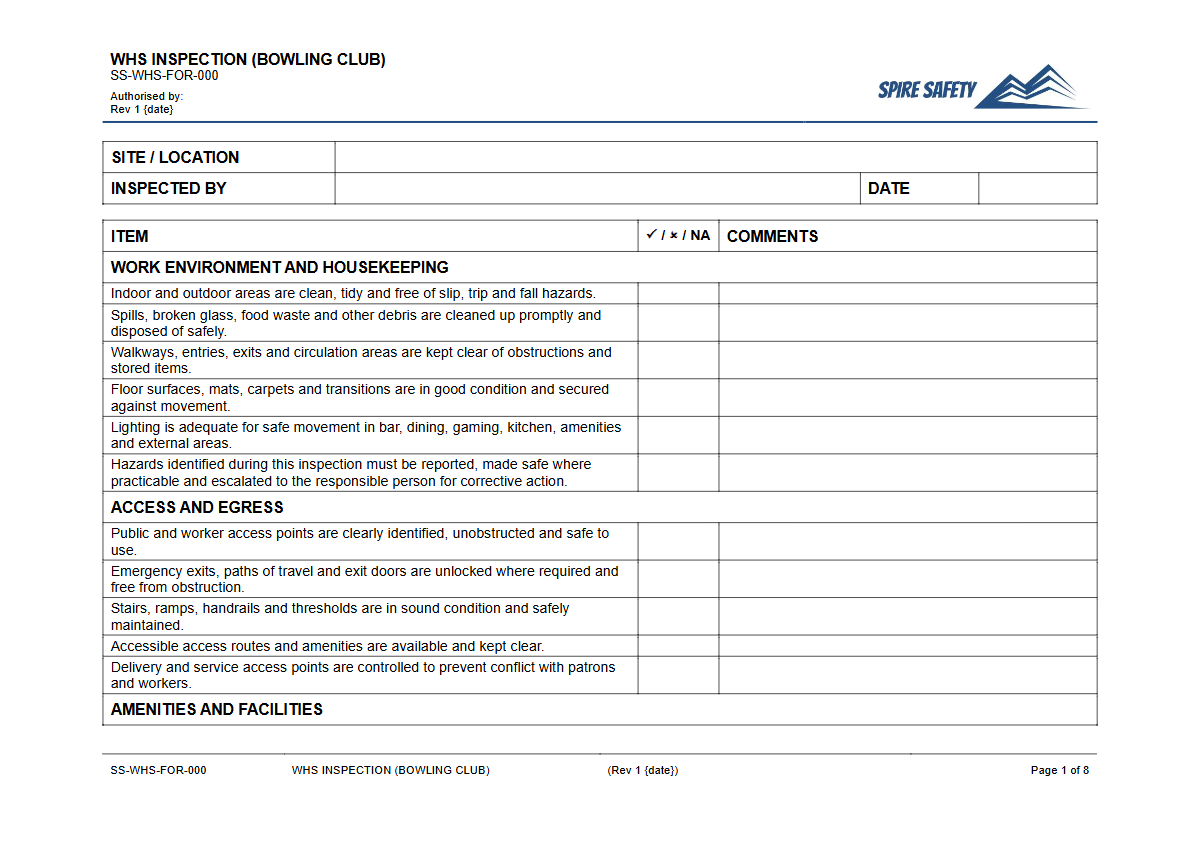
This Free WHS Inspection (Bowling Club) Template is a comprehensive starting point, not a final document. It includes common check items for areas like greens, machinery sheds, bar and hospitality areas, public amenities, and general building safety.
To use it effectively, download the DOCX file and adapt it to the unique layout, equipment, and activities of your specific club. A generic checklist is insufficient; you must ensure it reflects your actual workplace.
Important: This template must be customised to your specific workplace. We are not familiar with your unique site conditions, equipment, or operational procedures.
Therefore, you must review, add, and remove items to ensure the final document is entirely relevant to your club's activities before use.
Once customised, the inspection should be conducted by a competent person who understands the club's operations and potential hazards. Findings should be documented clearly, with corrective actions assigned to specific individuals and given clear deadlines.
Regularly review completed inspections to identify recurring issues or trends that may require a more in-depth risk assessment. This includes reviewing checks for specific machinery, such as those covered in our Free Pre-Start Checklist (Lawn Tractor) Template.
Your club may also use other specialised equipment for grounds maintenance that requires its own checks. For example, processes for grounds aeration should be regularly inspected to ensure they are being performed safely and with correctly maintained equipment. You can formalise this with our Free Pre-Start Checklist (Aerator) Template.
The physical security and access control points of your club, such as car parks, also fall under your WHS obligations. If your club uses automated barriers, their function and safety features should be part of your inspection schedule.
A specific checklist like the Free Pre-Start Checklist (Boom Gate) Template can assist with this task.
When to use this Inspection Template
Regular, scheduled inspections are crucial for maintaining a safe environment. The ideal frequency depends on the level of activity and risk at your club, but a common schedule is monthly or quarterly.
In addition to routine checks, this inspection should be performed after an incident or near miss, when new equipment or facilities are introduced, or when operational procedures change. These scheduled inspections can help prepare your organisation for a more formal WHS compliance auditing process.
Clubhouse hospitality areas contain their own unique hazards, particularly in the kitchen and bar. Daily checks are often required for specific appliances, but your general club inspection should also cover these areas. Ensure that equipment like walk-in cold rooms and freezers are safe, accessible, and functioning correctly by incorporating relevant checks from resources like our Free Pre-Start Checklist (Freezer) Template.
Who should use this Inspection Template
Responsibility for WHS in a bowling club is shared. This template is a valuable tool for several key roles:
- Club Managers or Secretaries: To oversee the WHS process, ensure inspections are completed, and verify that corrective actions are implemented.
- WHS Officers or Committee Members: To conduct the inspections, document findings, and report back to the management committee.
- Groundskeepers and Maintenance Staff: To provide input on hazards related to groundskeeping equipment, chemical storage, and maintenance tasks.
- Bar and Kitchen Managers: To ensure hospitality areas meet safety standards for food handling, electrical safety, and slip prevention.
By involving a range of personnel, you gain a more comprehensive view of the risks across the entire club. For more tools to support your safety processes, you can browse our complete free WHS resources library.
Common mistakes
Common mistakes to avoid
- Using a generic checklist without customising it for the club's specific facilities and equipment.
- Failing to document corrective actions or assign responsibility for fixing identified hazards.
- Neglecting to inspect less frequently used areas like storage sheds or plant rooms.
- Not training the person conducting the inspection on how to recognise potential hazards.
Legal references
Legal considerations
The following legal requirements may be relevant to this type of work.
- Work Health and Safety Act (Harmonised) — Provides the primary duties for protecting workers and other people from work health and safety risks.
- Work Health and Safety Regulations (Harmonised) — Sets out requirements supporting the management of workplace hazards and risks.
The following codes may be relevant to this type of work.
- Managing WHS Risks Code of Practice — Provides practical guidance on identifying hazards, assessing risks and applying effective controls.
- Work Health and Safety Consultation, Cooperation and Coordination Code of Practice — Provides practical guidance on consulting workers and coordinating with other duty holders.
- Managing the Work Environment and Facilities Code of Practice — Provides practical guidance on safe work environments, workplace facilities and related controls.
Did you know
Slips, Trips, and Falls
Slips, trips, and falls are a leading cause of injury in the hospitality and recreation sector. Uneven playing surfaces, wet floors in clubhouses, and poorly lit pathways are common culprits that regular inspections can help identify and mitigate.
FAQ
Frequently asked questions
01What are the most common WHS hazards at a bowling club?
02How often should a bowling club conduct a full WHS inspection?
03Is this WHS inspection template suitable for other types of sporting clubs?
04Who is legally responsible for safety at a volunteer-run bowling club?
Share this resource
Free WHS Inspection (Bowling Club) Template
Browse Categories
How To Use It
- 1Download and open in Word or PDF.
- 2Replace the placeholders with your business details.
- 3Get it reviewed by a WHS specialist before rollout.
Need it customised?
Our WHS consultants can adapt this template to your site, run a gap analysis, or audit what you already have in place.
Book a Free Consultation WHS consulting servicesor call 1300 156 382